The board at Terminal 5 didn’t flicker. It didn’t stutter. It simply changed, a silent, cascading wave of crimson text that transformed thousands of meticulously planned lives into a singular, collective state of limbo. "Cancelled."
Sarah, a fictional but representative composite of the thousands stranded this week, watched her flight to Dubai vanish from the screen. She wasn't thinking about the geopolitical chess match involving Iran and Israel. She wasn't calculating the projected earnings-per-share for Delta or Lufthansa. She was thinking about a wedding in Mumbai she was now destined to miss, and the three years of savings currently evaporating into a logistical void.
This is how a regional conflict becomes a global financial tremor. It starts with a missile trajectory and ends with a traveler’s heartbreak, but in between, it tears a hole through the balance sheets of the world’s most powerful corporations.
The Geography of Fear
When Iran launched its retaliatory strikes, the world looked up. But the markets looked at a map.
Airspace is not just empty wind and clouds. It is a complex, invisible grid of high-value real estate. For decades, the corridors over the Middle East have served as the vital connective tissue between the manufacturing hubs of Asia and the consumer engines of Europe and North America. When those corridors "go dark," the geometry of global travel breaks.
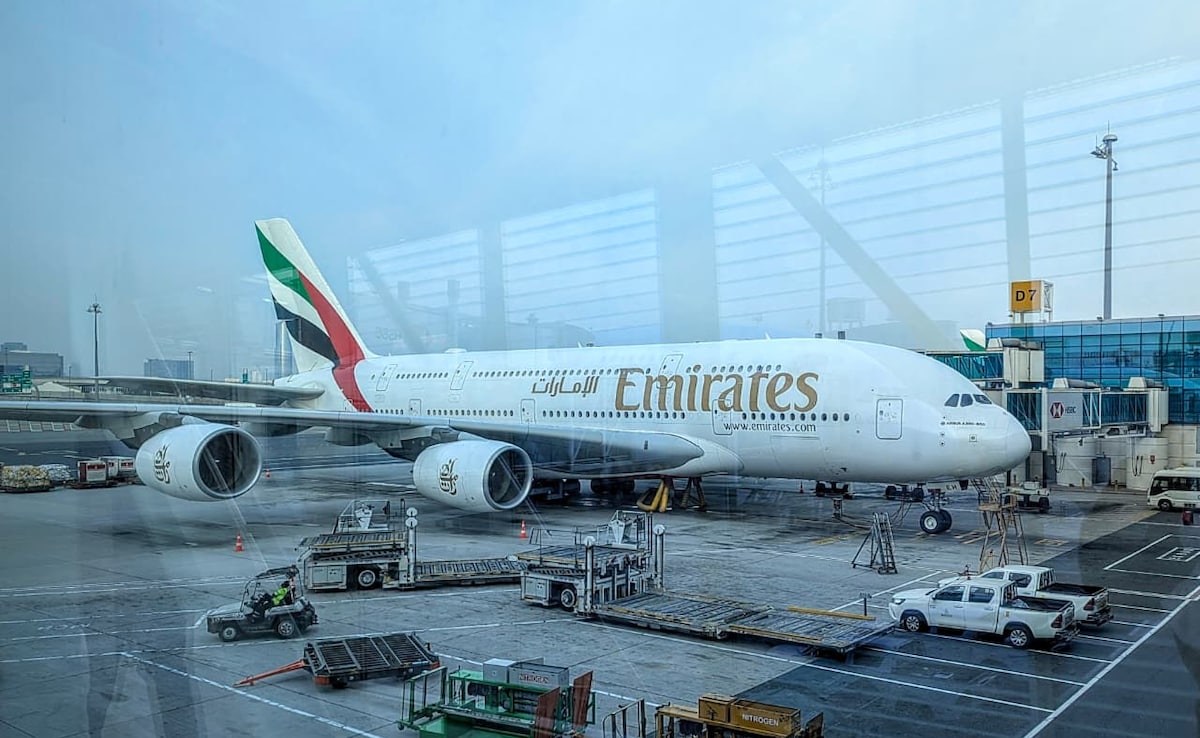
A flight that once took seven hours suddenly takes eleven. This isn't just an inconvenience for the person in seat 14B. It is a mathematical catastrophe for the airline. Those extra four hours require more fuel—thousands of gallons of it—at a time when crude oil prices are already twitching upward in response to the sound of sirens in Tehran. It requires extra crew rotations. It means a plane that was supposed to be in London for a morning departure is now stuck on a tarmac in Cyprus, triggering a butterfly effect of delays that will ripple through the system for a week.
Investors see this inefficiency instantly. They don't wait for the quarterly reports. They sell.
The Valuation of Uncertainty
By the time the markets opened on Monday, the damage was quantified in billions. United Airlines, American Airlines, and the European giants like Air France-KLM saw their tickers bleed. The logic is cold and relentless: travel is a business built on the illusion of stability.
We buy tickets months in advance because we believe the world will remain fundamentally the same between the day we click "purchase" and the day we board. When that belief is shattered, the "forward bookings" data—the lifeblood of airline valuation—goes into cardiac arrest.
Consider the psychology of a corporate travel manager. If your executive team is supposed to fly into a region where the GPS is being jammed and the skies are periodically closed, you don't just delay the trip. You cancel it. You move the meeting to Zoom. That high-margin, last-minute business class seat, the one that actually pays for the fuel for the entire plane, disappears.
The market isn't just reacting to the strikes themselves. It is reacting to the unknown duration of the tension. Finance hates a vacuum, and right now, the Middle Eastern sky is a massive, unpredictable void.
The Fuel Premise
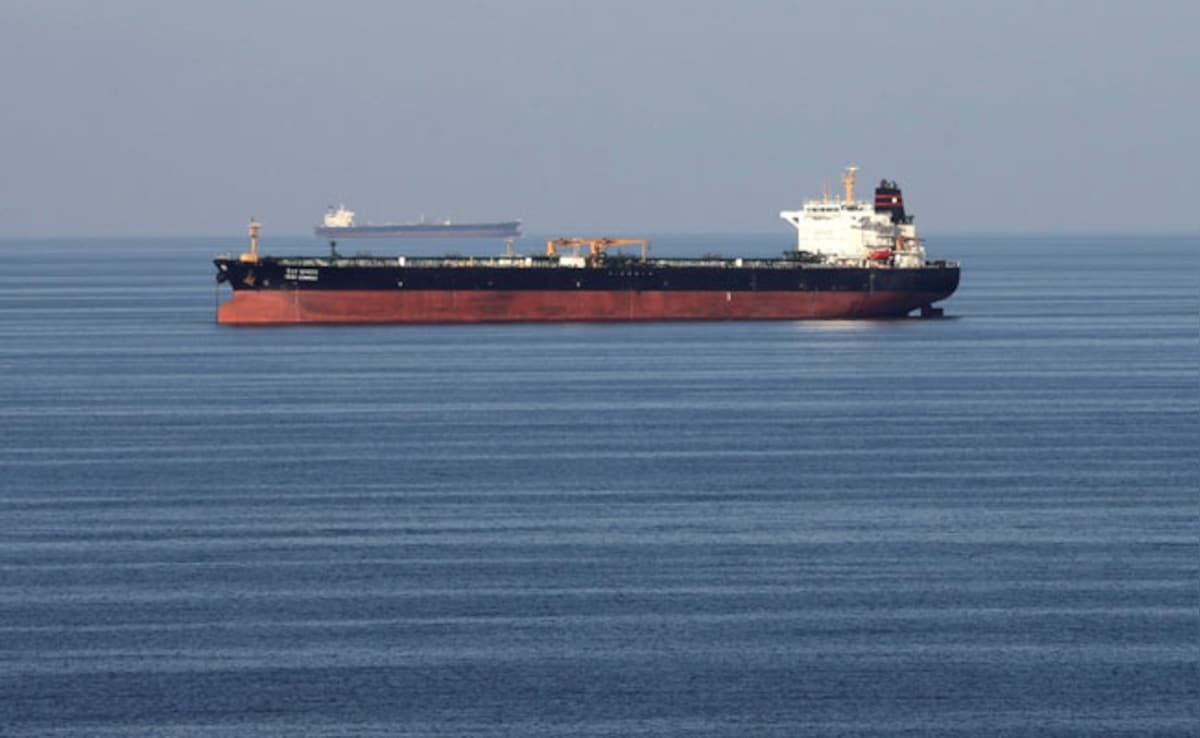
There is a secondary, more sinister gear turning beneath the surface of the travel sector: the price of Brent Crude.
Airlines are essentially fuel-burning machines that happen to serve tomato juice. Fuel accounts for roughly 25% to 30% of an airline's total operating costs. When conflict threatens the Strait of Hormuz or involves a major regional power like Iran, the "risk premium" on oil spikes.
Even if an airline isn't flying anywhere near the conflict zone, they are paying for it at the pump. This creates a double-squeeze. Revenue is falling because people are afraid to fly or can't get where they're going, while the primary cost of doing business is skyrocketing. It is a pincer movement that can crush even a robust carrier in a matter of weeks.
The Human Cost of the Hedge
Back at the terminal, Sarah isn't the only one losing money.
Behind the scenes, the "invisible" workers of the travel industry are feeling the tremors. The ground handlers, the caterers, and the hotel staff in hub cities like Istanbul and Doha. When flights are grounded, the secondary economy of travel—the billions spent on hotels, taxis, and duty-free—halts.
We often talk about "travel stocks" as if they are abstract numbers on a screen. They aren't. They are proxies for human movement. When United’s stock price drops 5%, it’s a reflection of the fact that the world has suddenly become a smaller, more frightened place. It’s a sign that the friction of moving from point A to point B has become too high for the global economy to lubricate.
The tragedy of the modern era is that we are more connected than ever, yet those connections are fragile, held together by the hope that the red lines on a general's map won't cross the flight paths on a pilot's chart.
Beyond the Ticker
The news will eventually move on. The "Iran strikes" will become a footnote in a larger historical narrative. But for the travel industry, the scar tissue remains.
Every time a major corridor closes, it reinforces a growing sense of deglobalization. It suggests that the era of effortless, borderless travel was perhaps a historical anomaly, a brief window of calm that is now being shuttered. Investors are beginning to price in a "permanent instability" factor.
This isn't just a bad week for Delta. It’s a fundamental shift in how we value the act of going somewhere. We are learning, painfully and in real-time, that the price of a plane ticket has never been just about the seat or the fuel. It was always about the peace required to fly.
Sarah eventually left the airport, not on a plane, but in a cab heading back to an apartment she thought she wouldn't see for two weeks. She checked her phone. The airline's stock was down again. She didn't own any shares, but as she looked at the empty sky above the highway, she realized she was paying for the crash anyway.
The silence of a grounded fleet is the loudest sound in the global economy. It is the sound of the world holding its breath, waiting to see if the horizon will clear or if the map will continue to bleed.