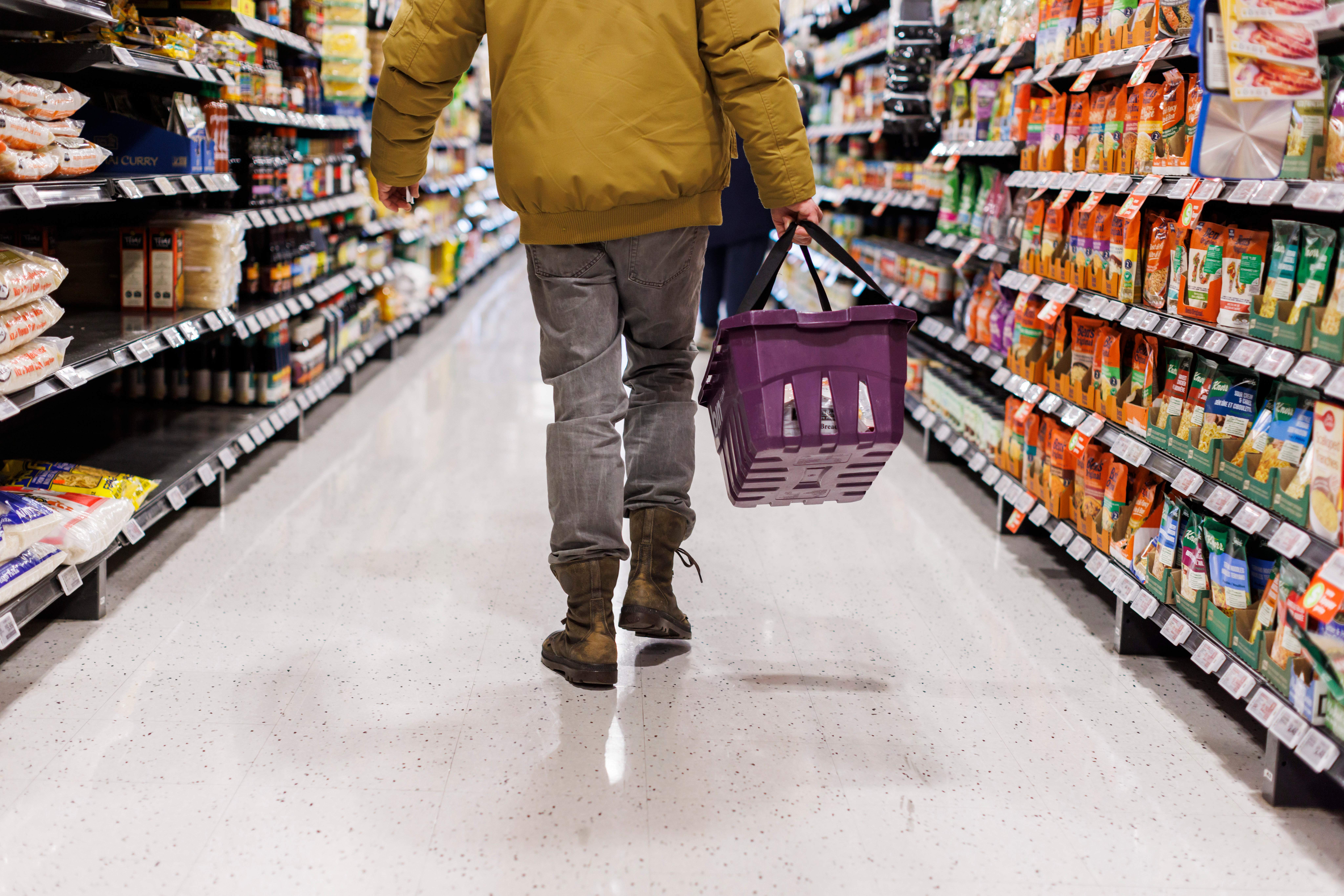
The fluorescent lights of the local grocery store hum with a mechanical indifference that masks the quiet panic unfolding in the aisles. A woman, let's call her Elena, stands before a wall of olive oil. She picks up a bottle, looks at the price tag, and sets it back down. Then she picks it up again. This isn't a choice between brands anymore. It is a choice between a staple of her heritage and the extra gallon of gas she needs to get to work on Tuesday.
Elena doesn’t follow the geopolitical chess matches of the Middle East. She doesn't track the fluctuations of the Brent Crude index or the shipping insurance premiums in the Strait of Hormuz. But she feels them. Every time a drone finds its mark or a diplomatic channel collapses half a world away, a phantom hand reaches into Elena’s purse and takes a few more cents. By the time she reaches the checkout counter, those cents have become dollars. By the end of the month, they have become a crisis.
We often talk about war in terms of geography and casualties. We speak of "the front lines." But in a globalized economy, the front line isn't just a trench in a desert; it’s the barcode scanner at your neighborhood supermarket.
The Ghost in the Supply Chain
The connection between a missile battery in Iran and the price of a head of lettuce in Ohio seems tenuous until you look at the circulatory system of our world. Think of the global supply chain as a massive, intricate web of veins. Crude oil is the blood.
When tension rises in the Persian Gulf, the world’s "blood pressure" spikes. Iran sits at the throat of the Strait of Hormuz. Roughly 20% of the world’s total petroleum consumption passes through that narrow strip of water. It is a geographic choke point that holds the global economy hostage.
Now, consider the journey of that lettuce. To get to Elena’s grocery store, it required a tractor to plow the field, a pump to provide the water, a truck to carry it to a processing plant, and another refrigerated truck to haul it across the country. Every single one of those steps is powered by diesel. When the threat of conflict in Iran sends oil prices upward, the cost of moving that lettuce increases before the crop is even harvested.
The farmer isn't being greedy. The trucking company isn't trying to price-gouge. They are simply passing on the "war tax" that started at the pump. This is a cold, mathematical reality: as the cost of energy rises, the cost of existence follows.
The Fertilizer Trap
The impact isn't limited to the gas tank. This is where the story gets darker and more complex. Most people don’t realize that we eat oil.
Modern industrial agriculture relies heavily on synthetic fertilizers. The primary ingredient in these fertilizers is ammonia, which is produced using natural gas. Iran is a massive player in the global energy market, and any disruption to the regional infrastructure—or the implementation of heavy sanctions—chokes the supply of the very elements that make our soil productive.
Imagine a farmer named David in the Midwest. David is already operating on razor-thin margins. When his fertilizer costs double because of a flare-up in the Middle East, he faces a choice. He can plant less, or he can raise his prices. If he plants less, the supply drops, and prices go up anyway. If he raises his prices, the grocery store passes that cost to Elena.
There is no escape from this cycle. We have built a food system that is fundamentally a derivative of the energy market. We aren't just buying calories; we are buying refined petroleum and natural gas in a more delicious form.
The Psychology of the Empty Shelf
Fear is a more potent economic force than any central bank policy. When the headlines turn red with news of escalating conflict, markets don't wait for the oil to stop flowing. They react to the possibility that it might.
This is "speculation," a word that sounds like a boardroom game but feels like a punch to the gut for the average consumer. Traders bet on future prices. If they think a war in Iran will make oil scarce three months from now, they buy it now. The price jumps instantly.
This creates a ripple effect of hoarding—not just by individuals, but by corporations. Manufacturers start buying up ingredients at current prices to avoid the predicted highs of next month. This artificial surge in demand creates the very scarcity they fear.
The result is a subtle, creeping erosion of the variety we take for granted. The "everything is going to go up" prophecy becomes self-fulfilling. You might notice your favorite cereal brand is suddenly $1.50 more expensive, or the "family size" bag of chips is noticeably lighter. This is "shrinkflation," the quiet cousin of inflation, where you pay the same for less. It is the sound of a consumer base being slowly bled dry by a conflict they didn't start and cannot end.
The Fragility of the "Just-in-Time" World
For decades, the business world has worshipped at the altar of "Just-in-Time" manufacturing. The idea was simple: don't keep a warehouse full of stuff; just have it arrive exactly when you need it. It’s efficient. It’s lean. It’s also incredibly fragile.
When a regional war threatens shipping lanes, that "just-in-time" delivery becomes "not-in-time." Ships are rerouted around the Cape of Good Hope to avoid the Red Sea or the Gulf, adding weeks to their journey and millions of dollars in fuel and labor costs.
Think about the spices in your pantry. The coffee in your mug. The grapes on your table in January. These are miracles of logistics that depend on a peaceful, open ocean. When those oceans become theaters of war, the miracle vanishes. We are left with the reality of a world that is much larger and more expensive than we remembered.
The Human Toll of the Decimal Point
It is easy to get lost in the numbers. We see 3% increases or 50-cent jumps and think they are manageable. But for a family living paycheck to paycheck, a 10% increase in the grocery bill isn't a statistic. It’s a crisis of calories.
It means the kids don't get the fresh berries they love. It means the "meatless Monday" becomes "meatless Monday, Wednesday, and Friday." It means the stress in the household rises as the balance in the bank account falls.
The most tragic part of the "Iran war impact" isn't the geopolitical shift of power. It’s the way it robs the most vulnerable people of their sense of security. It turns the simple act of feeding one's family into a high-stakes calculation.
We are all connected by an invisible thread to the events in the Middle East. When we look at a receipt, we aren't just looking at the price of bread. We are looking at a record of global stability. We are looking at the cost of peace.
Elena eventually buys the olive oil. She puts back the expensive cheese she wanted to try and walks to the register with a grim set to her jaw. She shouldn't have to know the name of a single Iranian general to be able to afford her dinner, yet their decisions are written in the ink of her total.
The hum of the grocery store continues. Outside, the world is on fire, and the smoke is blowing right through our front doors, settling on our kitchen tables, and flavoring everything we eat with the bitter taste of uncertainty.
Would you like me to analyze how specific agricultural commodities like wheat or corn are uniquely vulnerable to these energy price spikes?


