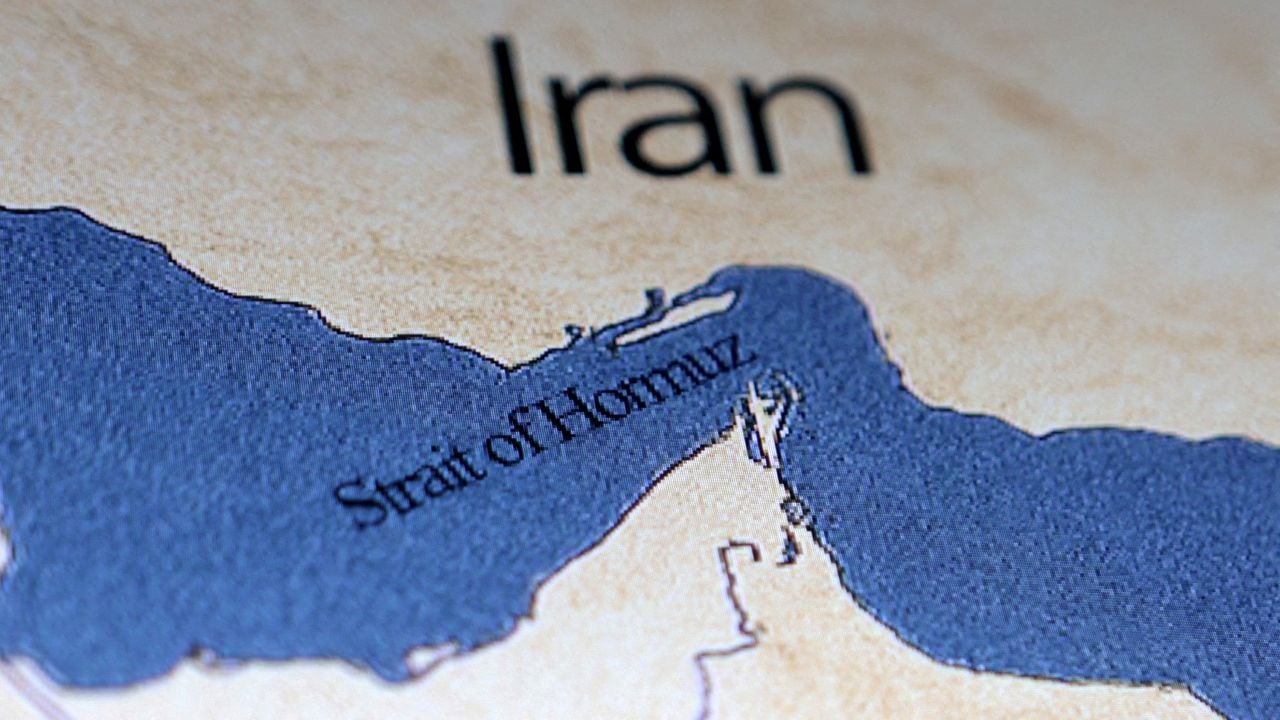
The Strait of Hormuz is not a body of water so much as it is a jugular vein.
If you look at a map, it appears as a narrow, hooked throat where the Persian Gulf gasps for air before meeting the open sea. Through this passage flows twenty percent of the world’s petroleum. To the captains of the massive VLCCs—Very Large Crude Carriers—the strait is a high-stakes gauntlet of jagged coastlines and shifting geopolitical winds. To the world’s economy, it is a single point of failure.
Recently, a whisper began to circulate through the shipping lanes and the halls of international trade. The rumor was precise, terrifying, and carried a price tag: $2 million. That was the reported fee Iran intended to levy on every vessel transiting the strait.
Imagine, for a moment, a captain named Elias. He is fictional, but his predicament is felt by every fleet manager from Singapore to Rotterdam. Elias stands on the bridge of a tanker carrying two million barrels of crude. His margins are calculated to the cent. Suddenly, he is told that passing through a stretch of water he has traversed for decades will now cost more than the value of some of the homes in the ports he visits. This isn't just a tax. It is a seismic shift in the cost of existence.
The Architecture of a Rumor
The story gained legs with the speed of a digital wildfire. Reports suggested that the Iranian government, squeezed by years of relentless sanctions, had finally decided to monetize its geography. If the world wanted the oil, the world would have to pay the gatekeeper.
But then came the rebuttal.
Abdolrahim Najafgholizadeh Kanani, the representative of Iran’s Supreme Leader in the Hormuzgan province, stepped into the fray to throw cold water on the fire. He didn't just deny the figures; he dismissed them as "speculation."
In the world of high diplomacy, words are chosen with the precision of a diamond cutter. To call something speculation is not necessarily to say it is impossible. It is to say that the conversation is unanchored. It is a way of lowering the temperature without shutting the door. Kanani’s intervention served a dual purpose: it calmed the immediate panic of the markets while reminding the world exactly who holds the keys to the gate.
The Math of Anxiety
Numbers like $2 million don't appear out of thin air. They are born from a collective anxiety about the fragility of global logistics.
Consider the ripple effect. If a $2 million fee were enacted, it would not be absorbed by the shipping giants. They are not in the business of charity. That cost would be passed to the refineries. The refineries would pass it to the distributors. By the time that "transit fee" reached your local gas station, it would be a ghost in the machine, a hidden tax on every gallon of fuel, every plastic toy, and every piece of fruit transported by truck.
The reality of the strait is that it is already expensive. Insurance premiums for vessels entering these waters can skyrocket overnight based on a single drone sighting or a heated speech in Tehran. We often think of global trade as a series of spreadsheets and automated contracts. It isn't. It is a human endeavor governed by fear, trust, and the physical reality of narrow places.
The Power of the Narrow Place
Why does this specific rumor carry such weight?
Because the Strait of Hormuz is a geographic anomaly that creates a political monopoly. At its narrowest point, the shipping lanes are only two miles wide in each direction. You cannot "go around" the strait if you are coming from Kuwait, Iraq, or the eastern coast of Saudi Arabia. You are funneled into a space where you can see the shore with the naked eye.
When Kanani speaks of speculation, he is operating within a long history of "strategic ambiguity." If Iran explicitly threatened a fee, it could be seen as an act of war or a violation of the United Nations Convention on the Law of the Sea (UNCLOS). By allowing rumors to circulate and then gently correcting them, the state maintains a psychological grip on the pulse of the West.
They remind us that the vein is right there. And they have the blade.
The Human Cost of High Stakes
We tend to discuss these events in terms of "geopolitics," a word so cold it strips the blood out of the story.
But look closer at the coastal villages of Hormuzgan. These are communities where the sea is everything. For the people Kanani represents, the strait isn't a line on a map or a line item in a budget. It is the horizon. When tensions rise, the fishing boats stay docked. The local markets quiet down. The presence of massive warships on the horizon becomes a daily wallpaper of dread.
The rumor of a $2 million fee is, in many ways, a distraction from the lived reality of those on the shores. Whether the fee is real or a phantom, the tension it creates has a very real cost. It creates a climate where investment withers and the threat of miscalculation grows. One nervous radar operator or one over-eager patrol boat captain is all it takes to turn "speculation" into a catastrophe.
The Language of Power
There is a specific rhythm to how these stories break.
First, a leak. Then, an outcry. Finally, a calculated denial.
Kanani’s dismissal of the $2 million figure as mere talk reflects a sophisticated understanding of how to manage an adversary's blood pressure. By labeling it speculation, he places the burden of proof back on the "rumormongers." He portrays Iran not as an aggressor looking to shake down the global economy, but as a misunderstood actor being slandered by outside interests.
Yet, the shadow remains.
The very fact that a $2 million fee sounds plausible is the real story. It is plausible because we know the pressure of the sanctions. It is plausible because we know the strategic value of the water. It is plausible because, in the modern world, geography is the only thing you can't outsource or digitize.
The Ghost in the Tanker
Elias, our hypothetical captain, continues his journey.
He watches the news feeds. He sees the denials. He hears the "speculation" labels. But he still feels the tension in his shoulders as he enters the narrowest part of the channel. He knows that in this part of the world, the distance between a rumor and a reality is sometimes only as wide as a politician's mood.
The $2 million figure might be a myth. It might be a trial balloon sent up to see how the world reacts. Or it might be a total fabrication. Regardless of its origin, it has served its purpose. It has reminded everyone—from the traders in New York to the drivers in Mumbai—that our comfort is built on a foundation of precarious pathways.
We live in an age where we believe we have conquered nature with technology. We think we have bypassed the limitations of the earth with fiber-optic cables and satellite uplinks. But then a man in a province we’ve never visited mentions a fee we can’t afford for a passage we can’t avoid.
The strait remains. The ships continue to move, heavy with the black blood of the earth, passing through a gateway where the price of admission is never truly settled.
The sea doesn't care about the speculation of men, but the men on the sea know better than to ignore the whispers from the shore. The silence that follows a denial is rarely peace; it is usually just the sound of everyone holding their breath, waiting for the next ripple to break the surface.


