The salt air in the Strait of Hormuz doesn't smell like a geopolitical crisis. It smells like dead fish, diesel exhaust, and the heavy, humid heat of a pressure cooker. On the deck of a commercial tanker, the world feels very small. You see the jagged coastline of Iran to the north and the jagged coastline of Oman to the south. Between them lies a narrow ribbon of water that acts as the jugular vein of the global economy.
When a giant vessel carrying two million barrels of crude oil moves through this passage, it isn't just transporting fuel. It is carrying the stability of a suburban morning in Ohio, the price of a loaf of bread in Berlin, and the very foundation of the post-war Western alliance.
For decades, the unspoken rule of the sea was simple. The United States Navy, often supported by a choir of NATO allies, kept the lights on. They were the neighborhood watch. If a tanker was harassed or a mine was spotted, the "big stick" of Western naval power swung into action. But the ground is shifting. The old certainties are dissolving into a new, transactional reality that could leave the most successful military alliance in history gasping for air.
The Price of Protection
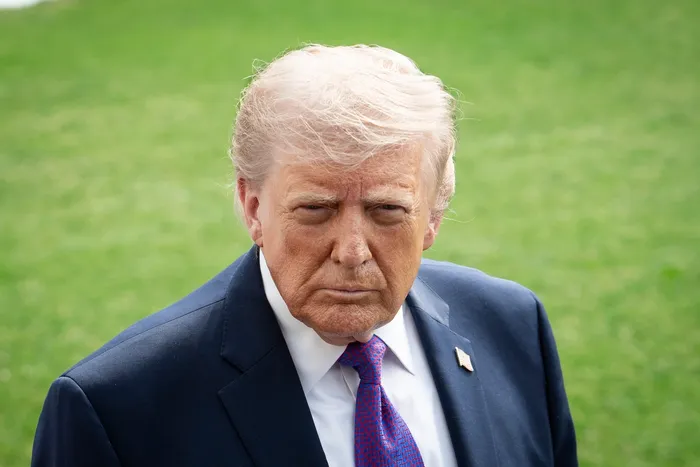
Donald Trump has never been one for the poetry of international relations. He views the world through the cold, hard lens of a ledger. To him, the Strait of Hormuz is not a sacred duty of the global commons. It is a service. And according to his recent warnings, the bill is long overdue.
His message to NATO allies is blunt: if you want the path cleared, you need to bring your own sweepers. Or, at the very least, you need to pay for the privilege of the American shield.
Imagine a shopkeeper who has relied on a private security firm for seventy years without ever seeing an invoice. Suddenly, the firm's new CEO knocks on the door. He isn't interested in the history of their friendship. He doesn't care that they once stood together against a common enemy in the 1940s. He wants to know why his guards are risking their lives to protect the shopkeeper's inventory while the shopkeeper sits inside, sipping tea and counting profits.
This isn't just about money. It is about the fundamental philosophy of "Common Defense."
A Fragile Chain of Command
To understand why this sends a shiver through the halls of Brussels and London, you have to look at the mechanics of a supply chain. Consider a hypothetical logistics manager named Elias in Hamburg. Elias doesn't think about the Strait of Hormuz every day. He thinks about his fleet of trucks. He thinks about the rising cost of petrol.
If the U.S. pulls back its primary support from the Gulf, the insurance premiums on those tankers skyrocket instantly. Ships stop moving. Elias sees his fuel costs double in a week. The factory he supplies slows its line. People get laid off. This is the "human element" of a naval withdrawal. It isn't just a headline about ships; it’s a direct hit to the kitchen table.
The American argument is that the United States is now energy independent. They have the shale. They have the reserves. Why, then, should American taxpayers fund the security of a waterway that primarily feeds the energy needs of China, Japan, and Western Europe?
It is a seductive logic. It appeals to a sense of fairness. But it ignores the invisible threads that bind the world together. If the U.S. exits the role of the global guarantor, it doesn't leave a vacuum for long. Power, like water, flows into the lowest point.
The NATO Identity Crisis
NATO was built on the idea that an attack on one is an attack on all. It was designed for a world of borders and tanks. It was never truly prepared for a world where the primary threat isn't a land invasion, but a slow strangulation of trade routes.
When Trump warns that it would be "very bad" for the future of NATO if allies don't step up in the Strait, he is attacking the core software of the alliance. He is suggesting that protection is no longer a right of membership, but a tiered service based on contribution.
This creates a terrifying precedent for smaller nations. If the Strait of Hormuz is "pay-to-play," what about the Baltic Sea? What about the North Atlantic? The moment the alliance becomes a series of individual transactions, it ceases to be an alliance. It becomes a mercenary contract.
The tension is visible in the eyes of diplomats who have spent their careers building these bridges. They know that once trust is fractured, it is almost impossible to glue back together. You can't be "kind of" committed to a mutual defense pact. You are either in the foxhole together, or you are looking for the exit.
The Ghost in the Machine
There is a psychological weight to this shift. For seventy years, the Western world lived under the assumption that the "Adults in the Room" would ensure the oil kept flowing and the sea remained open. That assumption allowed Europe to build massive social safety nets instead of massive navies. It allowed for the luxury of peace.
Now, the ghost of uncertainty has entered the room.
Consider the sailor on a British frigate or a French destroyer. They are now operating in a theater where the rules of engagement are being rewritten via social media posts and campaign speeches. If they get into a skirmish with an Iranian patrol boat, will the Americans have their back? Or will the White House check the ledger first to see if Paris or London has met their 2% GDP defense spending goal?
This doubt is a weapon in itself. It emboldens adversaries. It makes them wonder if they can poke the bear without waking the whole forest.
The Ripple in the Water
We often talk about "Geopolitics" as if it were a game of Risk played on a board. We forget that the board is made of people.
If the Strait of Hormuz becomes a flashpoint because the U.S. and NATO can't agree on who pays the bill, the consequences aren't just military. They are felt by the farmer in France who can’t afford fertilizer. They are felt by the tech worker in Bangalore whose commute becomes an impossibility. They are felt by the elderly couple in Maine who have to choose between heating their home and buying medicine.
The Strait is only twenty-one miles wide at its narrowest point. It is a tiny needle-eye through which the prosperity of the modern world must pass.
The warning from the American side is a demand for a new era of shared responsibility. It is a call for allies to stop being passengers and start being drivers. But the way the message is delivered—as a threat rather than a consultation—changes the flavor of the request. It turns a partnership into a protection racket.
The Long Shadow
As the sun sets over the Persian Gulf, the silhouettes of the tankers look like prehistoric monsters moving slowly through the haze. They are silent, oblivious to the shouting matches in Washington or the panicked meetings in the North Atlantic Council.
But their silence is deceptive.
Every wave they kick up carries the potential for a total reconfiguration of the world order. If NATO cannot find a way to reconcile the "America First" ledger with the "All for One" treaty, the alliance won't die with a bang. It will die with a shrug. It will die because someone decided that the cost of the guard was higher than the value of the peace.
The real danger isn't that the Strait will close. The danger is that the world will realize the people guarding it don't trust each other anymore. Once that realization takes root, no amount of naval power can fix the damage.
The water remains turquoise, beautiful, and deep. But beneath the surface, the tripwire is waiting. It isn't made of steel or explosives. It is made of broken promises and unpaid bills, and we are all drifting toward it together.
The engine of a tanker hums a low, vibrating note that you can feel in your teeth. It is the sound of a world that expects to keep moving. Whether it does or not depends on whether we still believe a friend is worth more than a line item on a spreadsheet.