The alarm clock on your nightstand doesn’t care about geopolitical posturing in the Strait of Hormuz. It rings at 6:30 AM regardless of whether a drone has crossed a contested line in the sand three continents away. You reach for your phone, the screen glowing with a soft blue light, and you check the headlines. A conflict that felt like a distant murmur for decades has suddenly sharpened into a scream. You might think, momentarily, about the tragedy of it all. Then you get out of bed, put on the kettle, and wonder why the price of bread jumped twenty cents overnight.
Geopolitics is often sold to us as a game of Risk played by men in suits in windowless rooms. We see maps with sweeping red arrows and shaded territories. We see charts. We see percentages of global oil output. But charts are cold. They don't capture the anxiety of a father in Ohio realizing his commute now costs as much as a week’s worth of groceries. They don't show the panicked board meetings of a shipping conglomerate in Copenhagen or the empty shelves in a supermarket in Cairo.
When a conflict between major powers like Iran and its regional adversaries ignites, it doesn't stay "over there." It travels through the wires, the pipes, and the shipping lanes that knit our world together. It is a ghost in the machine of your daily life.
The Choke Point in Your Gas Tank
To understand the stakes, you have to look at a narrow strip of water that looks like a pinched nerve on the map. The Strait of Hormuz. It is only about twenty-one miles wide at its narrowest point. Imagine a highway where every fifth car in the entire world must pass through a single toll booth. If that booth closes, the highway doesn't just slow down; the entire global economy begins to overheat.
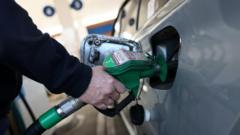
Let’s look at a hypothetical scenario involving a courier named Marcus. Marcus lives in a suburb of Atlanta. He drives for a living. To him, the "Iran situation" is a headline he skips to get to the sports scores. But as tensions escalate and tankers are diverted or insured at prohibitive rates, the price of Brent Crude spikes. Suddenly, the $45 it took to fill his van becomes $70. Over a month, that’s $500 gone. That is the cost of a daughter’s braces or a car repair.
This isn't just about gas. When energy costs rise, everything that requires energy to move—which is everything you own—becomes a premium item. The plastic in your toothbrush, the fertilizer for the corn in your cereal, and the electricity powering the server that holds your digital photos all trace their lineage back to the cost of a barrel of oil.
The Digital Siege
We often prepare for war by thinking of steel and gunpowder. But the modern front line is sitting in your pocket.
Consider Sarah, a freelance graphic designer who relies on a cloud-based project management tool to coordinate with clients in London and Singapore. In the event of an escalated conflict, the theater of war expands into the fiber-optic cables under the sea and the servers in the desert. Cyber warfare is the silent partner of kinetic conflict.
Iran has spent a decade honing its "soft war" capabilities. If state-sponsored actors decide to retaliate against global financial systems or Western infrastructure, the result isn't a mushroom cloud; it’s a spinning loading icon that never resolves. It’s a bank app that says "Service Temporarily Unavailable" when you’re trying to pay your rent.
The interconnectedness we celebrate as the "global village" is also a massive, shared nervous system. If you poke one end of it with a needle, the entire body flinches. We have built our lives on the assumption of 99.9% uptime. A regional war in the Middle East is the ultimate stress test for that assumption. It turns out that your ability to access your savings or send an encrypted message is tied, by a very thin thread, to the diplomatic stability of the Persian Gulf.
The Breadbasket and the Burning Field
There is a specific kind of cruelty to how modern conflict affects the dinner table. You might wonder what a desert climate like Iran’s has to do with the price of a loaf of sourdough in a Chicago bakery. The answer lies in the domino effect of logistics and chemical staples.
The Middle East is a massive transit hub. But more importantly, the energy produced there is the literal fuel for the global food supply. Natural gas is the primary feedstock for nitrogen-based fertilizers. When energy prices skyrocket because of regional instability, the cost of farming in the American Midwest or the plains of Europe follows suit.
Think of a farmer named Elias. He isn't thinking about foreign policy; he's thinking about his margins. If his fertilizer costs double because of a spike in global gas prices, he has two choices: plant less or charge more. He usually chooses both. By the time that decision reaches your local grocery store, it has transformed from a geopolitical "chart" into a "Buy One, Get One" sale that no longer exists.
The world’s most vulnerable populations feel this first and hardest. For someone in a developing nation, a 30% increase in the price of grain isn't an inconvenience; it’s a death sentence. For you, it might just be the reason you stop buying the "good" coffee. But the mechanism is the same. We are all eating from the same global pot, and that pot is sitting on a stove fueled by the very stability that is currently under threat.
The Psychology of the Perceived Threat
Beyond the cold reality of oil barrels and cyber-attacks, there is the fog of uncertainty. Markets hate a vacuum. When the future becomes unpredictable, the "fear premium" kicks in.
You see it in the stock market. Your 401(k) or your modest investment account isn't just a reflection of how well companies are doing; it’s a reflection of how safe investors feel about the next six months. A conflict involving Iran creates a tectonic shift in risk assessment. Global capital, which usually flows like water to the easiest path, suddenly freezes.
Projects are canceled. Hiring freezes are implemented. The tech startup that was going to hire fifty people in Austin decides to "wait and see." That "wait and see" is the sound of an economy holding its breath. You feel it in the air at the office. You see it in the cautious way people talk about the future. The war doesn't have to reach your shores to occupy your mind. It lives in the hesitation you feel before making a big purchase or the way you double-check your emergency fund.
The Human Cost of the Abstract
We talk about "interests" and "assets." We talk about "strategic depth." But at the center of every one of those five-way-affected-charts is a person.
There is the Iranian student in Los Angeles who can no longer receive money from home because of tightened sanctions and banking freezes, wondering if they’ll have to drop out of their final semester. There is the merchant mariner on a vessel in the Gulf of Oman, scanning the horizon for the wake of a fast-attack craft, his heart hammering against his ribs in the midday heat. There is the soldier’s spouse, staring at a silent phone, waiting for a text that says "I'm okay" while the news cycle churns out images of fire and smoke.
These are the invisible stakes. The charts don't show the sleepless nights. They don't show the way a "regional conflict" fractures families across borders or how it turns a neighbor against a neighbor as the rhetoric sharpens on social media.
The truth is that we have spent the last half-century building a world where no one is truly an island. We traded self-sufficiency for efficiency. We traded local resilience for global abundance. It was a magnificent bargain, right up until the moment the gears started to grind.
When you hear the pundits talk about the "implications" of a war with Iran, they are talking about your life. They are talking about the temperature of your home this winter. They are talking about the security of your job and the digital walls of your privacy. They are talking about the price of the milk in your fridge and the weight of the anxiety in your chest.
You are not an observer of this conflict. You are a participant in its consequences, linked by a thousand invisible wires to a part of the world you may never visit, but which touches everything you do.
The sun sets, and the news continues to crawl across the bottom of the screen. You turn off the television, but the world doesn't stop turning. Somewhere, a tanker moves through the dark water of the Strait. Somewhere else, a programmer enters a line of code. Somewhere, a price tag is being changed.
The quietest ripple in a distant sea eventually reaches every shore.
Would you like me to look into the specific ways recent changes in global shipping routes are affecting consumer prices in your specific region?