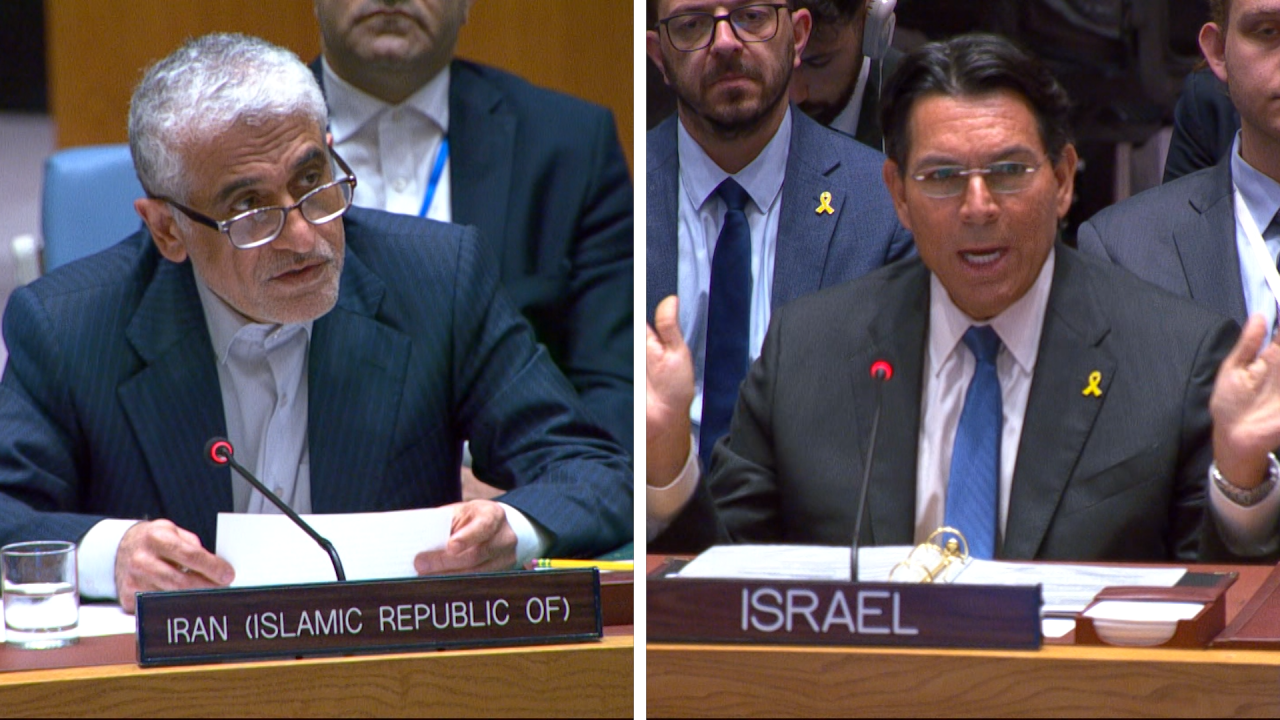
The United Nations Security Council is supposed to be the world's primary shield against chaos. It's the only body with the legal teeth to stop wars, impose sanctions, and keep the peace. But lately, those teeth look pretty blunt. Ambassador Amir Saeid Iravani, Iran’s permanent representative to the UN, recently didn't mince words when he called out the Council for what many see as a systemic failure to act. He’s essentially arguing that the UNSC has become a bystander while global stability slips through its fingers.
It's a bold stance. You might not agree with every facet of Iranian foreign policy, but the core of Iravani’s argument hits on a nerve that’s twitching in capitals all over the globe. The Council is paralyzed. Whether it's the veto power of the permanent five (P5) or a simple lack of political will, the "responsibility for protecting international peace" has become more of a suggestion than a mandate. Meanwhile, you can find similar developments here: The Cold Truth About Russias Crumbling Power Grid.
Why the Security Council is Stuck in Neutral
The UN Charter isn't a light read, but its intent is crystal clear. Article 24 gives the Security Council the "primary responsibility for the maintenance of international peace and security." Iravani’s point is that the Council isn't just failing to meet an expectation; it’s failing its legal obligation.
We see this play out in the Middle East almost daily. When the Council meets to discuss the ongoing devastation in Gaza or the rising tensions between regional powers, the result is usually a stalemate. One side proposes a resolution, another side vetoes it, and the cycle repeats. It’s a choreographed dance of inaction. Iravani’s critique highlights that this deadlock doesn't just hurt the people on the ground—it erodes the very idea of international law. To explore the bigger picture, we recommend the excellent report by NBC News.
If the body designed to enforce the rules can't even agree on what the rules are, why should anyone follow them? That’s the dangerous precedent being set right now. The Iranian envoy’s comments suggest that the UNSC must move beyond being a debating club for the P5 and start functioning as a legitimate executive body again.
The Veto Problem and Global Double Standards
You can't talk about the UNSC without talking about the veto. It’s the elephant in the room that’s been there since 1945. The US, UK, France, Russia, and China hold the power to kill any resolution, regardless of how much support it has from the rest of the world.
Iravani points to a perceived double standard in how this power is used. From Tehran’s perspective, the Council is quick to act when it suits Western interests but stays silent or obstructed when those same interests are the ones being challenged. It’s a common grievance among Global South nations. They feel like the rules are applied selectively.
Take the humanitarian crisis in Gaza. While the world watches the civilian death toll climb, the Council has struggled to produce a unified, enforceable demand for a permanent ceasefire that actually sticks. To critics like Iravani, this isn't just a political disagreement. It’s a moral and legal bankruptcy. The Council is "accepting responsibility" in theory, but in practice, it’s passing the buck.
Regional Stability Depends on Accountability
Iran’s push for UNSC accountability isn't just about high-level diplomacy. It’s about the reality of regional security. The Middle East is a powder keg. Without a functioning international arbiter, countries are left to fend for themselves, which usually leads to an arms race and "tit-for-tat" military strikes.
Iravani emphasizes that the Council’s silence or ineffective resolutions actually embolden those who violate international law. When there are no consequences for attacking diplomatic premises—referring to the strike on the Iranian consulate in Damascus—or for the disproportionate use of force against civilians, the "law of the jungle" starts to take over.
Security isn't something you can achieve in a vacuum. It requires a collective agreement that certain lines cannot be crossed. Iravani’s message to the UN is that if the Council doesn't start drawing those lines and enforcing them, it will lose whatever shred of relevance it has left. He’s calling for a return to the fundamentals of the UN Charter, where the Council acts as a neutral enforcer rather than a partisan player.
Beyond the Rhetoric
What does "accepting responsibility" actually look like? It’s more than just passing resolutions that get ignored. It means using the full suite of tools at the Council's disposal, including Chapter VII powers which allow for the use of force to maintain peace. It means holding every nation—including the P5—to the same standard.
Of course, this is easier said than done. The geopolitical rift between the West and Russia/China is wider than it’s been in decades. Expecting the Council to suddenly work together is a tall order. But Iravani’s point is that we don't have the luxury of waiting for a perfect geopolitical climate. The threats are happening now. The deaths are happening now.
How the International Community Can Move Forward
The current paralysis isn't sustainable. If the UNSC remains a hostage to the veto, we might see the rise of alternative security frameworks. We’re already seeing regional blocs taking more of a lead in mediation because they simply can't wait for the UN to get its act together.
If you’re following these developments, look for these specific shifts in the coming months. They'll tell you if the Council is actually listening to these calls for responsibility:
- General Assembly Momentum: Watch if the UN General Assembly starts taking a more active role through the "Uniting for Peace" mechanism to bypass Security Council deadlocks.
- Veto Accountability: Keep an eye on the requirement for P5 members to justify their vetoes before the General Assembly. It's a small step, but it puts them under the global spotlight.
- Expansion Debates: There’s a growing push to add more permanent members or limit veto use in cases of mass atrocities. This is the long-term fix, though it's incredibly hard to achieve.
The message from the Iranian envoy is a wake-up call. The world is changing, and the institutions built eighty years ago are failing to keep up. Accepting responsibility isn't about giving a good speech in the General Assembly. It’s about making the hard choices to stop conflicts before they consume entire regions. The Council needs to decide if it wants to be a shield or just a relic.
Start by tracking the voting records of the P5 on Middle East resolutions over the next quarter. Compare the rhetoric in their speeches to the actual impact of their votes on the ground. Real change starts when the global public demands that the "protectors of peace" actually do the protecting. Use the UN's own Digital Library to see the gap between proposed resolutions and final outcomes. That’s where the truth usually hides.