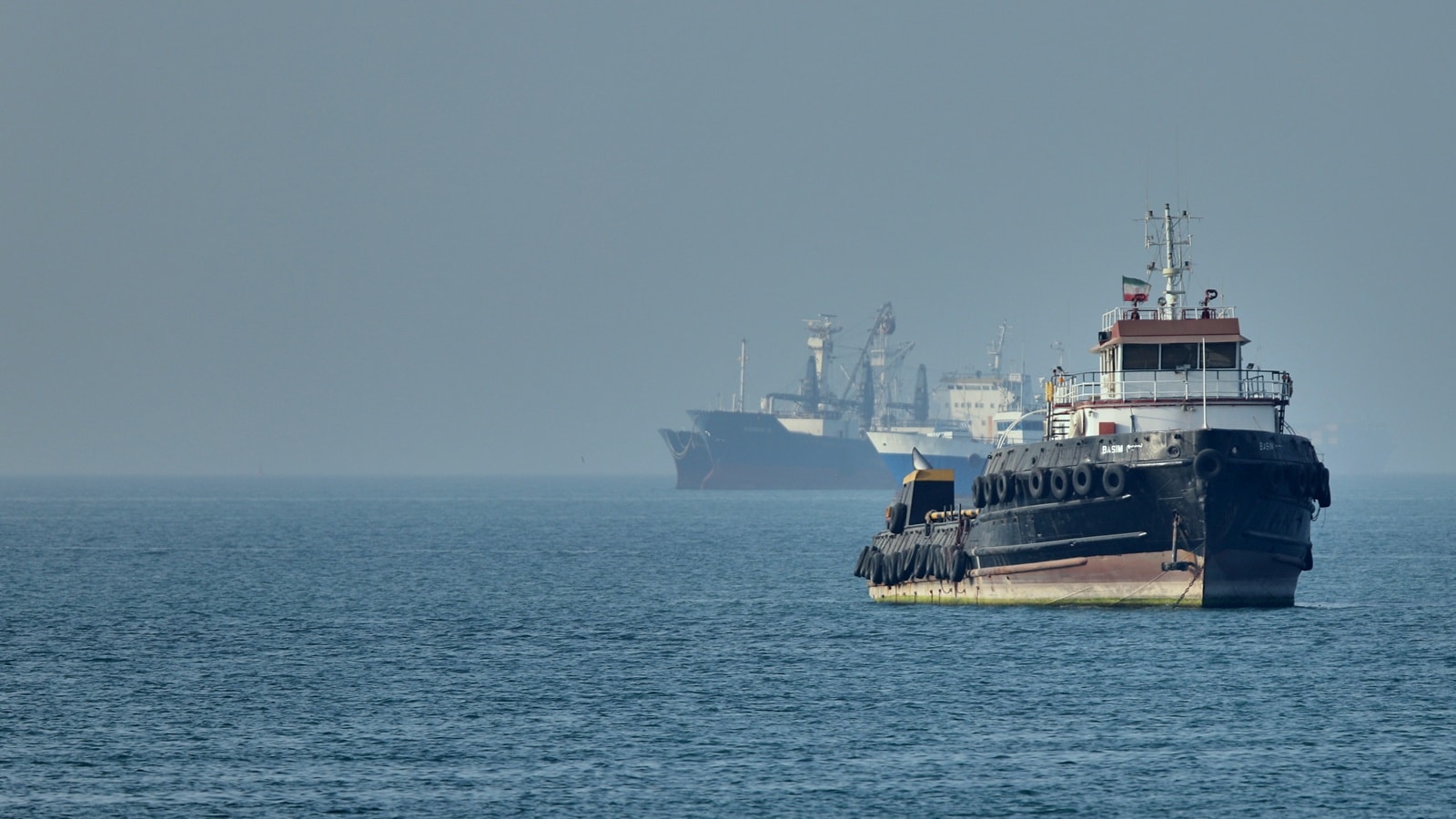
The headlines look like a typo. Iran’s navy just conducted a "specially planned operation" in the Sea of Oman to seize the Ocean Koi, a tanker carrying—wait for it—Iranian oil. It sounds like a landlord breaking into their own apartment to steal their own TV. But in the high-stakes world of sanctioned crude, this isn't a mistake. It’s a calculated message to the West and a desperate move to keep their lifeblood from being sold off by someone else.
If you’re wondering why oil prices aren’t behaving normally right now, this is why. We aren't just looking at a supply-demand chart anymore. We're looking at a maritime chess game where the board is on fire.
The weird logic of seizing your own cargo
The Ocean Koi isn't just any ship. It’s a US-sanctioned vessel that Tehran claims was trying to "damage and disrupt" its exports. Translate that from diplomatic-speak, and it basically means the ship was caught in the middle of a legal and physical tug-of-war between Iranian authorities and international sanctions enforcers.
You have to understand the "dark fleet" mechanics to see the full picture. Iran uses a web of middle-men, shell companies, and renamed vessels to move its oil despite heavy sanctions. When one of these ships gets flagged or "compromised" by Western intelligence, the cargo is at risk of being seized by the US, as we saw with the Suez Rajan (now the St Nikolas) back in 2023.
By seizing the Ocean Koi themselves, Iran is essentially saying, "If we can't sell it on our terms, nobody is taking it for free." They’re bringing the ship back to their own shores to prevent another legal forfeiture in a US court. It's a blunt-force way of protecting their assets before the Department of Justice can get a signature on a seizure warrant.
Why crude prices are twitching
Every time a hatch is boarded in the Sea of Oman, traders in London and New York have a mini-stroke. It’s not just about the volume on the Ocean Koi. It's about the Strait of Hormuz and the 20% of global oil that flows through that narrow chokepoint.
Here’s the current reality for oil markets in 2026:
- Brent Crude has been flirting with the $100 mark, driven by fears that these "special operations" will escalate into a full-blown blockade.
- Insurance premiums for tankers in the Gulf have hit record highs. Owners don't want to send their ships into a zone where they might be hijacked by the very people who sold them the oil.
- Supply disruptions are no longer theoretical. With the Strait of Hormuz effectively "shaky" due to recent clashes, even a minor seizure like the Ocean Koi adds a risk premium that hits you at the pump.
We’ve seen prices jump 5% in a single afternoon following news like this. It’s a "fear tax" that every consumer pays because the geopolitical stability of the Middle East is currently non-existent.
The shadow war on the high seas
This isn't an isolated incident. It’s part of a broader, nastier cycle of "tit-for-tat" maritime seizures. Earlier this year, we saw the US military intercepting tankers like the Majestic X and the Tiffany, both carrying Iranian crude. The US claims it's enforcing international law; Iran calls it piracy.
When Iran seizes a ship in response, they aren't always looking for their own oil. Sometimes they grab a ship carrying Iraqi crude or Kuwaiti fuel just to show they can. This creates a nightmare for shipping logistics.
"The Strait of Hormuz is the world's most important oil artery. If it clogs, the global economy gets a heart attack." — This isn't hyperbole; it's the baseline for every energy analyst right now.
The Ocean Koi seizure is unique because it's a defensive grab. It shows that Iran’s shadow network is under immense pressure. They’re losing the ability to hide their ships, so they’re resorting to overt military force to bring them home.
What happens next for energy markets
Don't expect oil prices to cool down anytime soon. The "peace deal" hopes that surfaced a few weeks ago are effectively dead. When ships are being redirected at gunpoint, diplomacy usually takes a backseat to damage control.
If you’re watching the markets, keep an eye on these factors:
- Refinery shifts: Asian buyers (especially China and India) are the primary customers for this oil. If they can't get it reliably from the Gulf, they’ll pivot to Russian or African grades, pushing those prices up too.
- US Navy Presence: Expect to see more carrier strike group activity in the region. The more "escort missions" required, the higher the tension.
- Domestic Fuel Caps: Countries like South Korea have already started imposing fuel price caps for the first time in decades. If this persists, expect more governments to step in to prevent total economic meltdown.
Honestly, the Ocean Koi incident is a signal that the "dark fleet" isn't as invisible as it used to be. Iran is having to work harder—and louder—to keep its economy afloat. For the rest of us, it means volatility is the new normal.
If you're an investor or just someone tired of high gas prices, stop looking at the Fed's interest rates for a moment and start looking at the ship-tracking data in the Sea of Oman. That’s where the real price discovery is happening. You should prepare for a sustained period of high energy costs; diversifying away from oil-heavy dependencies isn't just a "green" move anymore—it's a survival strategy.