The Islamic Revolutionary Guard Corps (IRGC) is no longer content with the traditional boundaries of the Strait of Hormuz. In a calculated shift of maritime doctrine, Iranian military officials now define this vital chokepoint as a significantly larger operational zone, stretching far beyond the narrowest point of the waterway. This is not a mere change in terminology. It is a strategic expansion designed to project power into the Gulf of Oman and the Arabian Sea, effectively moving the frontline of any potential naval conflict hundreds of miles away from the Iranian coast. For the global energy market and international shipping conglomerates, this means the "danger zone" has just tripled in size.
By broadening the definition of the Strait, Tehran is signaling its intent to exercise "sovereign control" over waters that have historically been treated as international transit corridors. This move seeks to normalize the presence of IRGC Navy (IRGCN) fast attack crafts and drone surveillance far outside the Persian Gulf.
The Strategy of Dispersed Deterrence
The traditional understanding of the Strait of Hormuz focuses on a 21-mile wide neck of water. Control that, and you control the flow of roughly 20% of the world's daily oil consumption. However, the IRGC has realized that bottlenecking themselves in such a confined space makes their own assets vulnerable to the superior firepower of the U.S. Fifth Fleet.
Instead of waiting for a confrontation in the shallows, the IRGC is pushing its perimeter outward. This expanded definition allows them to justify long-range patrols and the deployment of "smart" minefields in deeper waters. If they can disrupt shipping in the Gulf of Oman, they achieve the same economic strangulation without being trapped in the narrow confines of the Strait itself.
It is a classic move from the asymmetric warfare playbook. By widening the map, Iran forces its adversaries to spread their surveillance and escort assets thin. It is much harder to protect a tanker when the threat can emerge from any point across a thousand square miles of open sea rather than a single, predictable lane.
Weaponizing the Legal Gray Zone
International law, specifically the United Nations Convention on the Law of the Sea (UNCLOS), provides for "transit passage" through straits used for international navigation. Iran has signed but never ratified this convention. By redefining the geography of the Strait, they are effectively attempting to rewrite the rules of engagement.
The IRGC argues that if the "Strait" is larger, then their "territorial waters" and "contiguous zones" extend further out into the path of global commerce. They use this logic to justify the boarding of foreign vessels under the guise of environmental inspections or security protocols. These are not random acts of piracy. They are sovereign assertions.
When an IRGC commander states that the Strait now encompasses the entirety of the northern Indian Ocean approaches, they are creating a legal pretext for future seizures. If the world accepts the definition, it accepts the jurisdiction.
The Drone and Missile Factor
You cannot talk about maritime expansion without talking about the IRGC’s evolution in hardware. The shift in geographical definition coincides with the mass production of long-range loitering munitions and anti-ship ballistic missiles.
In the past, Iran needed to be within sight of a ship to sink it. That is no longer the case. With the Khalij Fars and other advanced missile systems, the IRGC can strike targets from mobile launchers hidden in the rugged mountains of the Iranian interior. By defining the Strait as a larger area, they are essentially aligning their "political" borders with their "missile" borders.
The Role of Asymmetric Hardware
- Fast Attack Craft: Small, nimble boats armed with rockets and torpedoes that swarm larger vessels.
- Suicide Drones: Low-cost, high-impact tools that can be launched from the shore or converted cargo ships.
- Subsurface Assets: Ghadir-class midget submarines designed specifically for the shallow, cluttered acoustic environment of the Gulf.
These tools are specifically designed to operate in the "expanded" Strait. A swarm of fifty boats is a nuisance in the open ocean but a nightmare in a defined "security zone" where merchant ships are restricted to specific lanes.
Economic Warfare by Projection
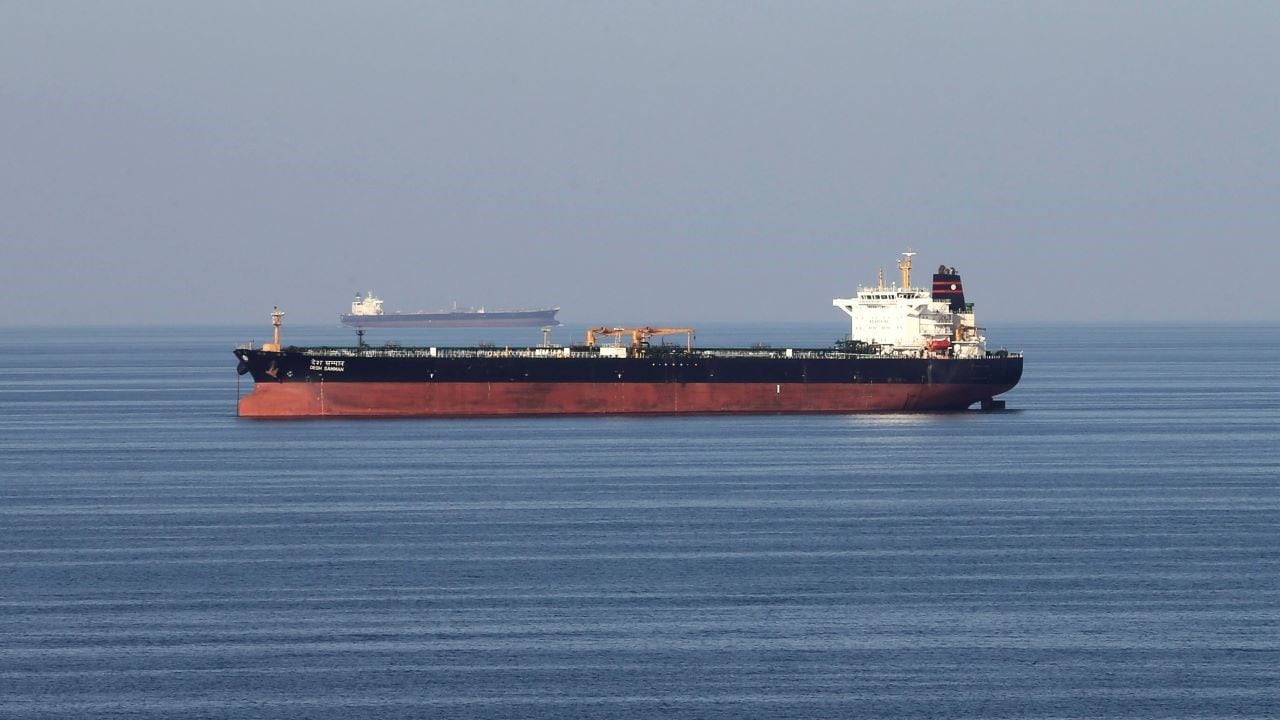
The mere announcement of an expanded security zone is enough to drive up insurance premiums for every Suezmax and VLCC (Very Large Crude Carrier) heading to markets in Asia and Europe. This is "soft" blockade. Iran does not need to fire a single shot to damage the global economy; they only need to create enough uncertainty that shipping companies begin to reroute or demand higher rates.
For years, the "Hormuz Risk" was a localized concern. Now, that risk is being exported to the wider Arabian Sea. This forces global powers to reconsider the viability of alternative routes, such as pipelines through Saudi Arabia or the UAE, which are already operating near capacity and remain within reach of Iranian-aligned drone strikes.
The Intelligence Blind Spot
Western intelligence has traditionally focused on the "gates" of the Gulf. Satellite imagery and signals intelligence are heavily concentrated on the Iranian ports of Bandar Abbas and Bushehr. By shifting their operational focus to a larger zone, the IRGC is moving into areas where Western maritime domain awareness is less granular.
It is a game of shadows. The IRGC often uses "dark" ships—vessels with their AIS (Automatic Identification System) turned off—to move equipment and personnel. In a larger operational area, finding these needles in the haystack becomes an order of magnitude more difficult for the U.S. Navy and its allies.
The End of the Status Quo
The international community is currently reacting to these developments with standard diplomatic protests, but the reality on the water is changing faster than the paperwork. The IRGC is not waiting for permission to expand its influence. They are building piers, landing strips, and monitoring stations on remote islands that serve as the anchors for this new, larger definition of the Strait.
This is a permanent shift in the regional security architecture. The idea of the Strait of Hormuz as a simple 21-mile gap is dead. It is now a sprawling, contested theater of operations where the line between international waters and an Iranian "security lake" has been intentionally blurred.
Naval commanders must now prepare for a reality where the "choke" in the chokepoint starts long before a ship ever sees the Iranian coast. The buffer zone is gone, replaced by a vast expanse of water where the IRGC claims the right to question, board, or strike anyone they deem a threat. Shipping lanes that were once considered safe harbor are now the front line of a silent, expanding siege. Strategies that relied on the narrowness of the Strait to contain Iranian influence are now obsolete because the target has moved. The map has been redrawn, and the cost of ignoring the new lines will be measured in the price of oil and the safety of the crews who sail these waters.