The headlines are screaming about a "widening Gulf war" and "oil supply woes" as Iran supposedly nears a crossroads on its next Supreme Leader. The mainstream financial press is doing what it does best: selling you a narrative of imminent catastrophe based on a fundamental misunderstanding of how power works in Tehran. They want you to believe that the passing of an 86-year-old cleric will trigger a chaotic power vacuum that chokes the Strait of Hormuz and sends Brent to $150.
They are wrong. They are lazily applying Western democratic "stability" metrics to a revolutionary state that has spent forty years perfecting the art of institutional continuity. If you’re trading oil or adjusting your geopolitical risk hedge based on the "uncertainty" of Iranian succession, you aren’t just late to the party—you’re at the wrong house entirely.
The Succession Is Already Over
The "Iran nears decision" narrative suggests a smoke-filled room of bickering ayatollahs unable to pick a winner. In reality, the Assembly of Experts is a rubber stamp for a decision that has already been codified by the two most powerful entities in the country: the Office of the Supreme Leader and the Islamic Revolutionary Guard Corps (IRGC).
We saw this in 1989. When Ruhollah Khomeini died, the world predicted a civil war. Instead, Ali Khamenei—then a mid-ranking cleric with limited religious credentials—was installed within twenty-four hours. The system values survival over theological purity. Today, the IRGC has evolved from a paramilitary force into a massive industrial-military conglomerate that controls roughly 30% of the Iranian economy. They don’t want chaos. Chaos is bad for their black-market oil exports and their regional construction contracts.
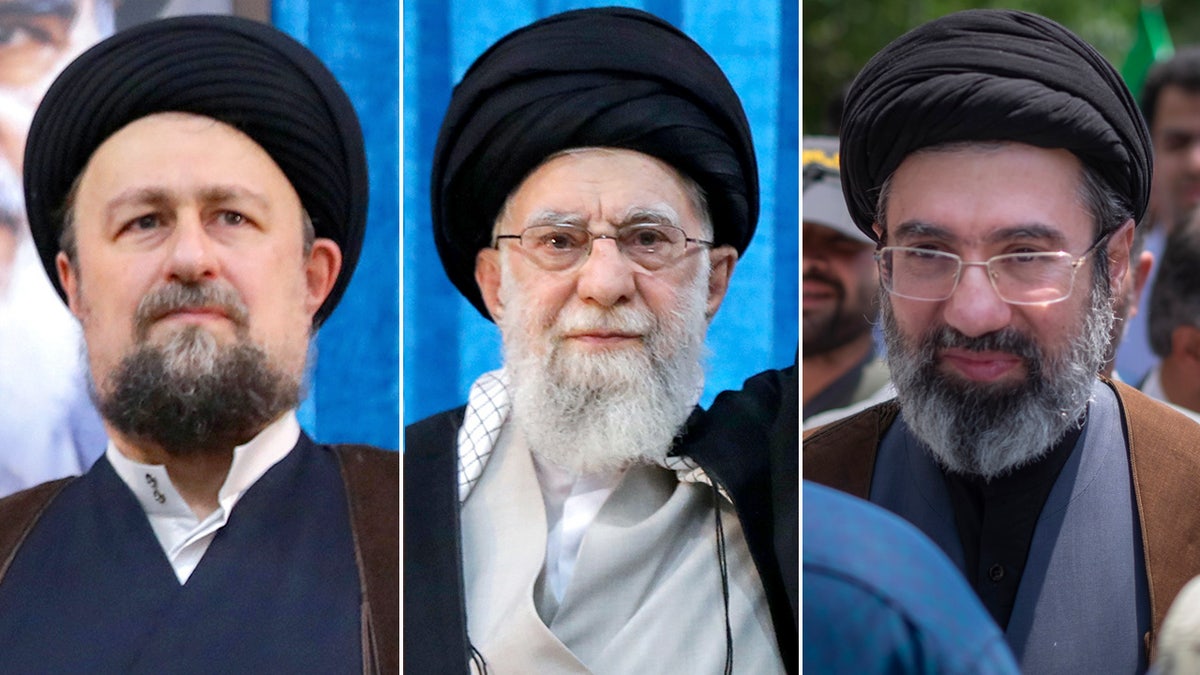
The successor—whether it is Mojtaba Khamenei or a dark-horse bureaucratic loyalist—is irrelevant to the bottom line. The policy is the product of the institution, not the individual. The "widening war" isn't a symptom of leadership anxiety; it's a calibrated lever of statecraft.
The "Oil Supply Woe" Delusion
Standard analysis claims that a leadership transition in Tehran equals a "supply shock." This assumes that Iran is a rational actor waiting for a new boss to decide whether or not to keep the lights on.
Iran’s oil strategy is dictated by one thing: the survival of the Rial. Despite sanctions, Iran has been pumping at near-five-year highs, largely through "ghost fleets" and ship-to-ship transfers in the South China Sea. If you think a new Supreme Leader is going to suddenly "close the Strait" and cut off his own oxygen supply, you don’t understand the desperate math of the Iranian budget.
The Real Math of the Strait of Hormuz
Let’s look at the numbers the pundits ignore. About 20% of the world's total petroleum consumption passes through the Strait. But look at who is buying: China is the primary destination for Iranian crude. Closing the Strait doesn't just "hurt the West." It creates a direct existential conflict with Beijing—Iran's only significant economic patron and the guarantor of its sanctions-evasion network.
- Self-Sabotage: Blocking the Strait strands Iran's own exports.
- The China Factor: Beijing will not tolerate a total energy freeze-out.
- The Spare Capacity Myth: Even if Iran "widens the war," OPEC+ (specifically Saudi Arabia and the UAE) is sitting on millions of barrels of spare capacity specifically designed to mitigate this exact scenario.
The threat of closure is a "paper tiger" used to keep the risk premium high. The moment Iran actually acts on it, they lose their leverage and their revenue. They are loud, but they aren't suicidal.
Why "Widening War" is a Marketing Term
The term "widening war" is used by desk analysts to describe tactical escalations as if they are strategic shifts. When a drone hits a tanker or a proxy fires a rocket, the media calls it a "new phase." In the industry, we call it Tuesday.
Since the 1980s Tanker War, the Gulf has operated under a "managed conflict" model. The players know the boundaries. The IRGC understands exactly how many provocations it can launch before a carrier group responds. This isn't a war spiraling out of control; it's a violent negotiation.
The danger isn't that the war widens; it’s that it normalizes. We are moving toward a permanent state of low-intensity maritime friction. If you’re waiting for a "return to peace" to lower oil prices, you’ll be waiting forever. If you’re waiting for a "total blowout" to spike them, you’ve already missed the peak.
Stop Asking About the Leader, Start Asking About the IRGC
If you want to understand the future of the region, stop looking at the turbans and start looking at the epaulettes. The true succession isn't religious; it's the transition of Iran from a theocracy to a military-industrial autocracy.
The IRGC doesn't care about the revolutionary fervor of the 1970s. They care about drones, ballistic missiles, and their grip on the port of Bandar Abbas. A "new leader" provides the perfect cover for the IRGC to further consolidate its hold on the state. This means more aggressive regional posturing—not because they are "unstable," but because regional tension justifies their massive budget and internal crackdowns.
The Contrarian Playbook for the "Gulf Crisis"
If you want to actually make money or protect assets during this transition, you have to ignore the "war" headlines and focus on the plumbing.
- Discount the "Succession Premium": The market prices in a 10-15% "uncertainty" hike every time Khamenei has a cold. This is a sell signal. The transition will be boring, scripted, and fast.
- Watch the Insurance, Not the Crude: The real indicator of "widening war" isn't the price of Brent; it's the War Risk Insurance premiums for VLCCs (Very Large Crude Carriers). If those stay steady while the news screams "War!", the news is lying.
- The Saudi-Iran Thaw is the Real Story: While the world watches for fire, look at the diplomatic backchannels. Riyadh and Tehran have more to gain from a high-price, low-volume environment than they do from blowing each other up. They are frenemies by necessity.
The Fatal Flaw in Your Analysis
Most analysts assume that because Iran can disrupt the world economy, it wants to. This is the "madman theory" of international relations, and it’s a rookie mistake. Iran’s leadership are survivors, not martyrs. They have watched Saddam, Gaddafi, and Nasrallah. They know that a "widened war" ends with their assets being liquidated—literally.
The "succession crisis" is a Western projection. We see a lack of a clear heir and assume weakness. The Iranian regime sees a blank canvas to paint a more efficient, military-led future. They aren't falling apart; they are hardening.
Stop looking for the explosion. Look for the consolidation. The real supply woe isn't that the oil will stop flowing; it's that the people controlling the tap are becoming more professional, more entrenched, and more immune to your "geopolitical shock" narratives.
Bet on the continuity of the system, not the collapse of the man.