The Propaganda Delusion
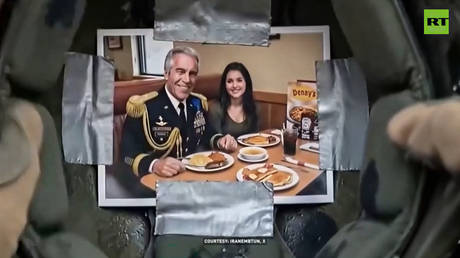
Western analysts are having a collective meltdown over Lego clips and AI-generated imagery of Jeffrey Epstein. They see a few viral TikToks and immediately scream about a "masterclass" in digital warfare. They claim Iran has cracked the code of Western psychology. They call it a sophisticated PR win.
They are wrong. Dead wrong.
What we are witnessing isn't an Iranian victory. It is a Western structural failure being misread as foreign brilliance. By obsessing over the "creativity" of Iranian-backed content, we are ignoring the reality of how influence actually works in 2026. This isn't a PR war won by Tehran; it is a fire sale of Western institutional trust where Iran is merely a bottom-feeder picking up the scraps.
The Viral Fallacy
The "lazy consensus" among digital forensics firms and think tanks is that high engagement equals high impact. This is the first mistake.
A video of Lego figures explaining Middle Eastern geopolitics might get 10 million views, but views are a vanity metric. In the world of psychological operations (PSYOP), there is a massive gulf between attention and persuasion.
I have spent a decade dissecting how state actors move the needle. True influence doesn't happen when someone likes a clever video. It happens when someone changes their behavior—their voting patterns, their spending, or their willingness to support a kinetic intervention.
Iran’s current "success" is purely aesthetic. They are tapping into pre-existing domestic grievances within the US and Europe. They aren't "winning" hearts and minds; they are just providing high-definition wallpaper for people who already hate the system.
If you think a deepfake of Epstein is "strategic communications," you don't understand strategy. You understand memes.
The Myth of the Sophisticated Adversary
Let's look at the actual mechanics of these campaigns. Most of the content being cited as "Iranian genius" is actually quite crude. It relies on the "firehose of falsehood" model—a term coined by the RAND Corporation to describe Russian tactics, which Iran has clumsily adopted.
The premise of the competitor's argument is that Iran has developed a unique, high-tech edge.
False.
Tehran is using off-the-shelf generative AI tools that any bored teenager in a basement can access. There is no "proprietary Iranian algorithm" behind this. The reason this content surfaces is not because the Iranian Cyber Army is full of geniuses; it’s because Western social media algorithms are built to prioritize conflict over truth.
When an Iranian troll farm pumps out a video that mocks Western hypocrisy, the algorithm sees "Engagement" (mostly from angry people arguing in the comments) and pushes it to the top. The tech platforms are doing 90% of the work for them. Iran is just the content creator; Big Tech is the PR agency.
Stop Asking "How Did They Do It?"
"People Also Ask" questions usually focus on the wrong thing: "How does Iran use AI for propaganda?" or "Is Iranian PR more effective than the West's?"
These questions assume the content is the variable that matters. It isn't. The variable that matters is the receptive audience.
Imagine a scenario where the US had a high level of institutional trust. If that were the case, an Iranian video about Lego-based jihad would be laughed off the internet. It wouldn't even trend. The only reason these messages land is because the audience is already primed for distrust.
The unconventional truth? You could shut down every Iranian server tomorrow, and the "PR war" would look exactly the same. Domestic actors would fill the vacuum within hours. Iran isn't the chef; they’re just one of many people throwing salt into a soup that’s already spoiled.
The Nuance of the "Epstein AI" Tactic
The use of Jeffrey Epstein in Iranian propaganda is a specific, cynical move to bridge the gap between "Anti-Zionist" and "Anti-Establishment" rhetoric. This is the one area where they are actually showing some tactical awareness.
By linking current geopolitical conflicts to the Epstein saga, they are trying to tap into the "Deep State" skepticism that is currently tearing Western politics apart.
- The Goal: Create a cognitive link between foreign policy and domestic corruption.
- The Reality: It’s a cheap trick that only works on the fringes.
The media loves to cover these stories because they are "clickable." A headline about AI Epstein sells more subscriptions than a dry analysis of Iranian drone supply chains in Russia. By over-reporting on these stunts, the media gives Iran exactly what it wants: the appearance of being a major player in the digital space.
The Cost of the "PR Masterstroke" Narrative
When we pretend Iran is "winning," we create a self-fulfilling prophecy. This narrative does three dangerous things:
- It justifies censorship. Under the guise of "fighting foreign interference," governments push for more control over digital speech, which only fuels more distrust.
- It ignores the physical. While we debate Lego videos, Iran is expanding its influence through actual, physical proxies—Hizballah, the Houthis, and various militias. Those are the real PR victories because they result in territorial and political shifts.
- It breeds defeatism. It suggests that Western democracy is too fragile to survive a few AI-generated images.
I’ve seen intelligence agencies spend millions of dollars on "counter-messaging" programs that are as stale as a week-old donut. They try to fight "cool" Iranian memes with "official" government infographics. It’s like bringing a spreadsheet to a knife fight.
The contrarian move? Stop fighting the content. You can't win a "PR war" against a state that doesn't care about the truth. You win by fixing the underlying fractures in your own society that make the propaganda appealing in the first place.
The Mechanics of Effective Influence
If you want to understand real power, look at Dr. Robert Cialdini’s principles of influence, particularly "Social Proof" and "Authority."
Iran’s digital strategy fails the "Authority" test. Everyone knows it’s them. It’s "Black Propaganda" that is easily identified. The only principle they are successfully hitting is "Social Proof"—making it seem like everyone agrees with them by using bot nets to inflate view counts.
When you see 100,000 likes on a video blaming the West for every global ill, you aren't seeing 100,000 converts. You are seeing a digital illusion designed to make the fringe feel like the majority.
The Downside of This Perspective
Admitting that Iran isn't a PR genius is uncomfortable. It’s much easier to blame a foreign boogeyman for our internal divisions than to admit we are doing this to ourselves.
If we acknowledge that Iranian propaganda is actually mediocre, then we have to explain why it’s working. And the answer to that is an indictment of our own educational systems, our media landscape, and our tech monopolies.
It’s much more "professional" to write a report about the "Rising Threat of Iranian AI" than to write a report about "The Total Collapse of Western Critical Thinking."
The Actionable Order
Stop sharing the "sophisticated" propaganda videos, even if you are doing it to mock them. Every time a major news outlet runs a segment on "How Iran is Winning TikTok," they are providing the reach that Tehran could never achieve on its own.
We need to de-mystify the "hacker-genius" trope. These aren't elite cyber-warriors. They are low-level government employees using Midjourney and CapCut. They are bureaucrats with a budget.
Treat them like the trolls they are, not the architects of a new world order.
The moment we stop being impressed by their "creativity" is the moment their influence dies. They are playing a game of smoke and mirrors, and the only reason it's working is because we've forgotten how to turn on the lights.
Stop looking at the Lego clips. Look at the hands holding the camera. They aren't as steady as you think.