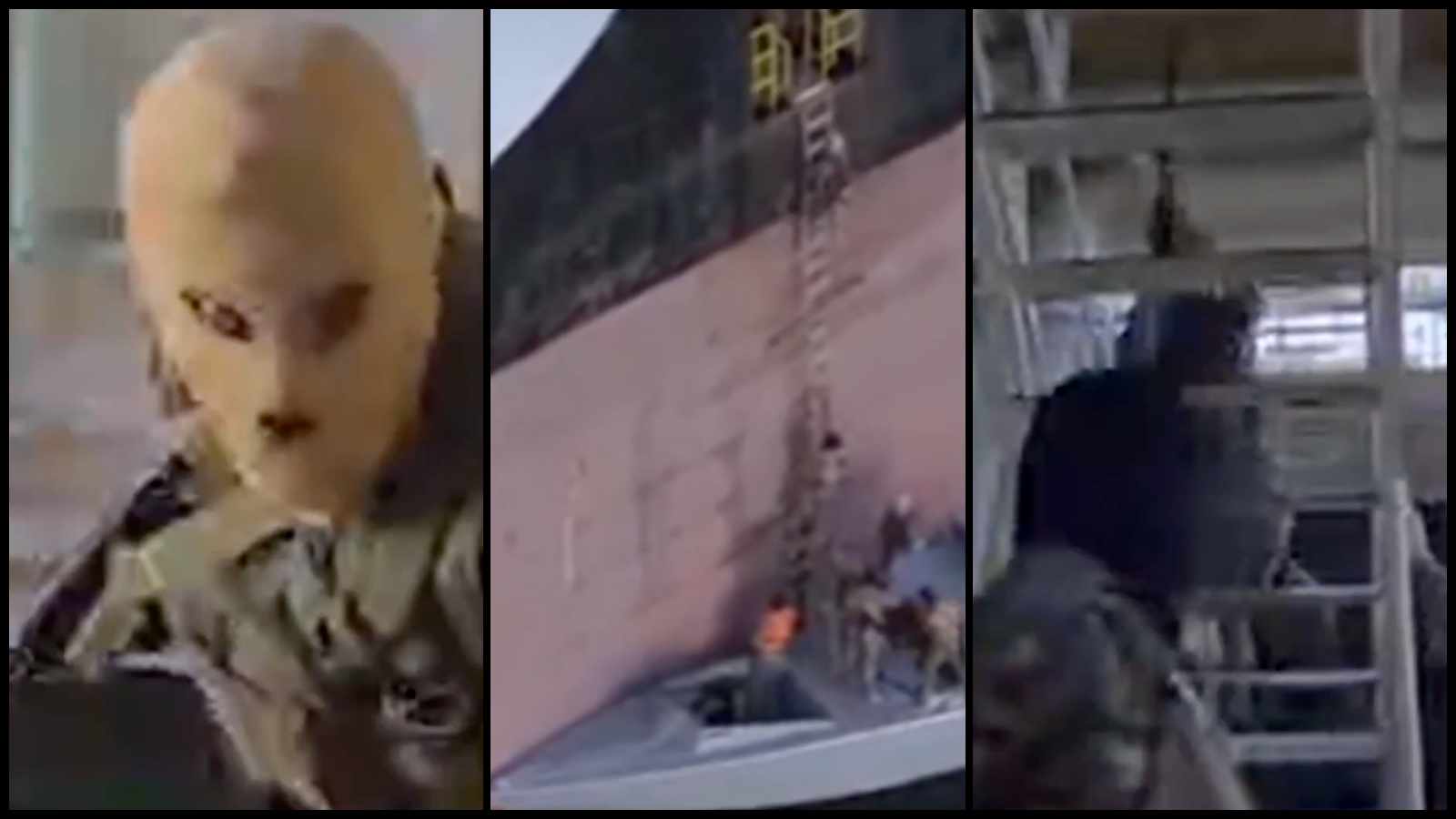
The footage released by Iranian state media is as cinematic as it is terrifying. Armed soldiers from the Islamic Revolutionary Guard Corps (IRGC) fast-roping onto the decks of massive container ships, their boots hitting metal while the vessel’s crew watches in stunned silence. It’s a scene we’ve grown accustomed to in the Persian Gulf, but don’t let the familiarity fool you. What happened this Thursday, April 23, 2026, isn't just another routine boarding. It’s a direct middle finger to the White House and a clear signal that the "stable instability" in the Middle East is about to get a lot more unstable.
For the first time since the war broke out back in February, Tehran has actually seized international vessels. They aren't just harassing tankers or firing warning shots anymore. They’re taking prisoners.
The Reality Behind the Seizures
The two ships in question, the Panama-flagged MSC Francesca and the Liberia-flagged Epaminondas, were intercepted in the early hours of Wednesday and Thursday. According to the IRGC, these ships were "violating regulations" and "tampering with navigation systems." That’s Tehran-speak for "you're in our backyard, and we’re the ones who decide who gets to play."
If you look at the vessel tracking data, the situation gets even murkier. The MSC Francesca was reportedly headed for Hambantota in Sri Lanka, while the Epaminondas was destined for Mundra, India. Neither ship is American. Neither is Israeli. Yet, Iran grabbed them anyway. Why? Because the U.S. naval blockade on Iranian ports, initiated by President Trump on April 13, is starting to hurt.
Iran is basically using these commercial giants as high-stakes poker chips. They’re telling the world that if they can’t export their oil, nobody’s cargo is safe. It’s a classic squeeze play.
A Ceasefire in Name Only
The timing here is what’s really frustrating. Just hours before these boardings, President Trump announced he was extending the ceasefire "indefinitely" to give peace talks in Islamabad a chance to breathe. But let's be real—a ceasefire where one side is blockading the other’s entire coastline and the other is hijacking commercial ships isn’t a ceasefire. It’s a siege by another name.
Mahdi Mohammadi, an advisor to the Iranian parliament, didn't mince words. He called the ceasefire extension a "ploy" and a "buy-time tactic." Honestly, looking at the IRGC’s actions, it’s clear the hardliners in Tehran have zero interest in waiting for diplomats to finish their coffee in Pakistan. They’re moving while the U.S. is hesitating.
- The Cost: Oil prices just spiked past $100 a barrel.
- The Impact: About 20% of the world’s oil and gas is currently trapped behind a wall of tension.
- The Risk: One itchy trigger finger on an IRGC gunboat could turn this "low-intensity conflict" into a regional firestorm.
The Tactics of Escalation
The UK Maritime Trade Operations (UKMTO) reported that an IRGC gunboat didn't just approach the Epaminondas—it opened fire. We’re talking about "heavy damage" to the ship’s bridge. Think about that for a second. These are merchant sailors, not combatants. Getting sprayed with gunfire while you’re just trying to navigate a narrow waterway is a nightmare scenario.
A third ship, the Euphoria, was also targeted but managed to escape. The fact that Iran is now targeting multiple vessels simultaneously suggests a coordinated campaign to completely shut down the Strait of Hormuz to anything that doesn't have Tehran’s explicit stamp of approval.
What This Means for Global Trade
You're probably wondering why you should care if you aren't a maritime insurance broker. The answer is your wallet. The International Energy Agency (IEA) is already calling this the "biggest energy crisis in history." When the Strait of Hormuz chokes, the global economy gasps for air.
We’ve seen Lloyd’s List report that dozens of ships are trying to bypass the blockade, but the "dark transit" game is getting dangerous. Iran is using sophisticated radar and drones to track every hull moving through those waters. If you're a shipping company right now, you're looking at skyrocketing insurance premiums and a very real chance your crew ends up in an Iranian port under armed guard.
Navigating the Fallout
The U.S. is in a tough spot. If they retaliate, the ceasefire is officially dead. If they don't, the blockade looks like a paper tiger. Admiral Brad Cooper and the CENTCOM team are currently patrolling the Gulf of Oman, but they can't be everywhere at once.
If you're involved in logistics or international trade, here's what you need to be doing:
- Divert immediately: Any cargo slated for the Strait of Hormuz needs to be rerouted or held in staging areas like Salalah or Fujairah until the situation de-escalates.
- Verify AIS Status: Ensure your vessels aren't "going dark" unless it's part of a coordinated security protocol. Iran is using "tampered navigation" as their primary legal excuse for these seizures.
- Monitor the Islamabad Talks: Watch for whether an Iranian delegation actually shows up in Pakistan. If they don't, expect the IRGC to ramp up seizures within the next 48 hours.
The Strait of Hormuz is no longer a neutral waterway. It’s a battlefield. Don't expect the "ceasefire" to protect your cargo when the people on the water have already decided the war never stopped.