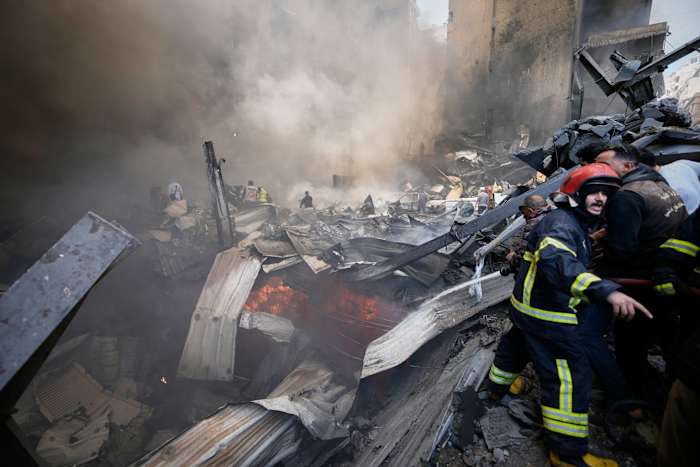
The ink on the Islamabad Accords was barely dry when the first Israeli munitions tore into central Beirut, vaporizing any hope that the two-week ceasefire between Washington and Tehran would translate to peace on the ground. Within hours of the Tuesday night announcement, the Israel Defense Forces launched Operation Eternal Darkness, a massive aerial bombardment that killed more than 250 people in Lebanon and effectively signaled that Jerusalem has no intention of honoring a truce it claims it never signed.
While diplomats in Pakistan celebrated a "breakthrough" to pause the five-week-old war, the reality is a dangerous disconnect in command and control. The United States and Iran may have agreed to stop the direct exchange of missiles, but the regional theater is now fracturing into a chaotic, multi-front scramble where the rules of engagement are being rewritten by the minute.
The Lebanon Loophole
The primary failure of the Islamabad Accords lies in their ambiguity regarding non-state actors. Pakistan, acting as the primary mediator, insisted the deal covered all theaters of the conflict, including Lebanon. Iran agreed, likely seeking a reprieve after the assassination of Supreme Leader Ali Khamenei in late February. However, Israeli Prime Minister Benjamin Netanyahu was swift to clarify that the ceasefire does not extend to Hezbollah.
From a strategic perspective, Israel views this two-week window not as a pause, but as a tactical opportunity. By intensifying strikes on Hezbollah's Radwan Force and intelligence centers in Beirut while Iran’s hands are nominally tied by the diplomacy in Islamabad, Israel is attempting to decapitate the "Axis of Resistance" before any permanent settlement can be reached. This is not a violation in the eyes of Jerusalem; it is an enforcement of their own security red lines.
The human cost of this semantic dispute is staggering. Wednesday’s strikes hit five different neighborhoods in Beirut during rush hour, flooding hospitals already reeling from a month of high-intensity conflict. For the Lebanese government, which has spent weeks trying to distance itself from Hezbollah’s rocket fire, the message is clear: the international community cannot protect them.
Subsurface Sabotage in the Hormuz
While the sky burns over Lebanon, the water is turning lethal in the Persian Gulf. Semiofficial Iranian news agencies, including ISNA and Tasnim, recently published charts that are more than just navigational aids. They are a threat. These maps depict a sprawling "danger zone" over the Traffic Separation Scheme—the international shipping lanes through the Strait of Hormuz—suggesting the Islamic Revolutionary Guard Corps (IRGC) has seeded the area with sea mines.
This is a classic Iranian pressure tactic. By forcing commercial shipping to abandon the standard lanes and hug the Iranian coast near Larak Island, the IRGC gains total control over who passes and who doesn't. Currently, only four or five ships are moving through the strait daily, down from the usual 20-30. Most of these are "non-hostile" vessels or tankers using the shadow fleet to move sanctioned Iranian crude.
The presence of mines, whether real or merely suggested by these "danger zone" charts, has effectively paralyzed global energy markets. Benchmark crude prices have already surged back toward $98 per barrel, erasing the brief relief felt when the ceasefire was first leaked. If the IRGC has indeed deployed mines, clearing them will take months, not weeks. A two-week ceasefire is irrelevant if the world's most vital energy chokepoint remains a minefield.
The Shadow of the 10 Points
The upcoming negotiations in Islamabad are expected to center on a 10-point Iranian proposal. These points, long considered non-starters by the White House, include demands for guaranteed uranium enrichment levels and permanent Iranian oversight of the Strait of Hormuz.
For the Trump administration, these demands are a bridge too far. The U.S. has maintained a massive naval presence in the region, with the President warning on social media that if a "real agreement" isn't reached, the "shootin' starts" on a scale never seen before. The White House is betting that the economic strangulation of the Hormuz blockade will eventually force Tehran to blink.
However, this ignores the internal pressure within Iran. Following the death of Khamenei, the IRGC's hardline factions have more to lose from a "humiliating" peace than from a continued, low-intensity conflict. They are using the ceasefire as a rearming period, moving missile batteries and replenishing drone stocks while the U.S. and its allies are tied up in diplomatic protocol.
Logistics of a Failed Truce
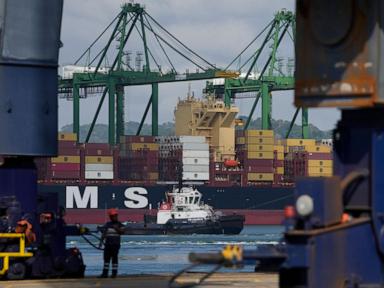
The maritime industry is currently the canary in the coal mine. There are approximately 2,000 vessels and 20,000 seafarers currently trapped within the Persian Gulf, unable to risk a transit through what may be a mined waterway. The International Maritime Organization is attempting to negotiate a safe passage corridor, but without a definitive end to the Israel-Hezbollah fighting, insurance premiums for these vessels remain prohibitively high.
We are seeing the emergence of a dual-corridor system.
- The Northern Route: Controlled entirely by the IRGC, requiring explicit permission and often involving Iranian "escorts."
- The Southern Route: Nominally international, but currently abandoned due to the threat of mines and Israeli-American naval activity.
This fragmentation of international law is the real "Eternal Darkness" Israel’s operation name alluded to. The collapse of the rules-based order in the Middle East has moved from the land to the sea. If the Islamabad talks fail this weekend, the transition from a shaky ceasefire back to total war will not be a gradual escalation. It will be an explosion.
The focus must remain on the fact that a ceasefire that only applies to some participants is not a ceasefire at all; it is a realignment of the target list. Israel’s strikes in Lebanon have proved that the Islamabad Accords are a paper shield. Until the issue of Hezbollah is integrated into the broader U.S.-Iran dialogue, Beirut will continue to burn, and the Strait of Hormuz will remain a graveyard for global trade.
Check the shipping manifests and the casualty counts. They tell a far more accurate story than the press releases coming out of Pakistan.