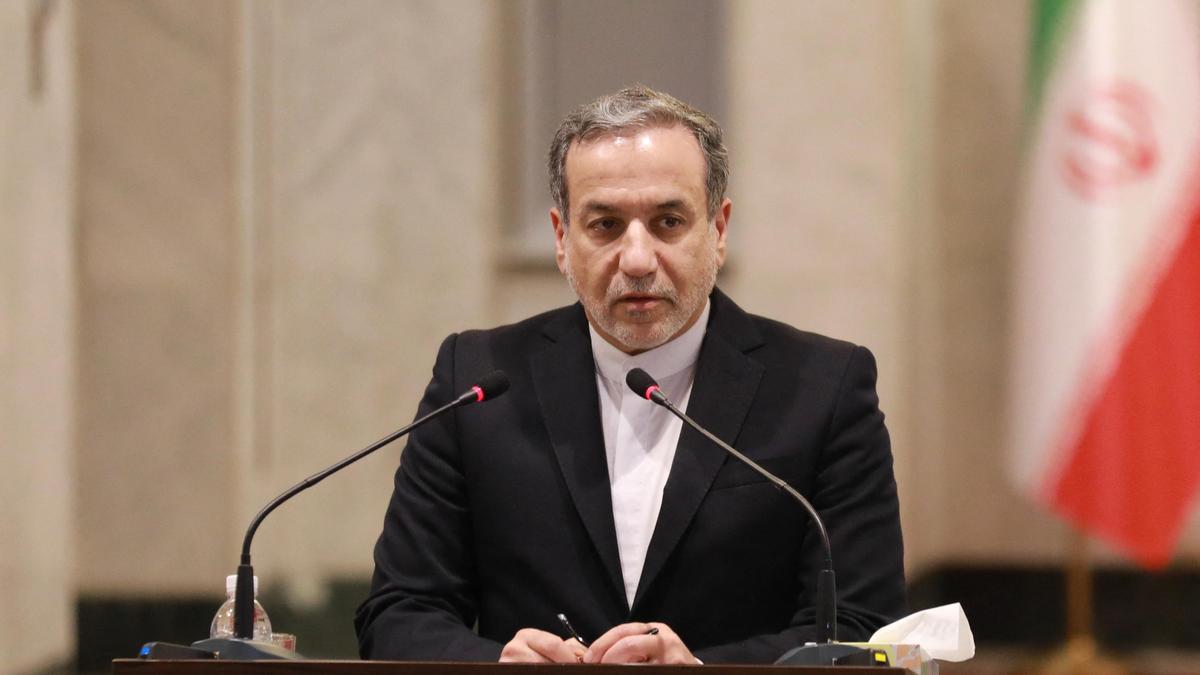
The headlines are singing a familiar, tired tune. Iran thanks Pakistan for its "mediation efforts." Islamabad plays the humble peacemaker. Washington watches from the sidelines with a skeptical eye. If you believe this diplomatic theater is actually moving the needle on a nuclear deal or regional stability, you aren’t just optimistic—you’re being played.
Pakistan isn't a bridge between Tehran and Washington. It’s a spectator trying to sell tickets to a show that was canceled a decade ago. For a more detailed analysis into similar topics, we recommend: this related article.
The mainstream press loves the narrative of the "Muslim middleman." It feels balanced. It feels strategic. It is, in reality, a fundamental misunderstanding of how power functions in the Persian Gulf and the South Asian corridor. We are witnessing a performance designed for domestic consumption in three different capitals, while the actual gears of geopolitics remain rusted shut.
The Myth of the Neutral Arbiter
To mediate, you need leverage over both parties. Pakistan has zero leverage over the United States and even less over Iran. For additional background on this development, in-depth coverage can be read at USA Today.
Let’s look at the balance sheet. Pakistan is currently navigating a crushing debt crisis, leaning heavily on IMF bailouts and Chinese infrastructure loans. When Islamabad speaks to Washington, it isn’t speaking as a peer or a power broker; it’s speaking as a petitioner. The U.S. State Department treats Pakistani mediation offers with polite "gratitude" because it costs nothing to be civil, but no high-level policy in the Biden or any subsequent administration is being shifted by a briefing from Islamabad.
On the flip side, Iran views Pakistan through a lens of deep-seated security suspicion. The border between the two—Sistan-Baluchestan—is a tinderbox of militant activity. Iran frequently accuses Pakistan of harboring Jaish al-Adl insurgents. Pakistan accuses Iran of allowing Indian influence to seep through its western flank.
When Iran "thanks" Pakistan, it isn't signaling a breakthrough. It is executing a standard diplomatic maneuver to annoy the Saudis and signal to the West that it has options. It’s a "thank you" for the effort, not for the result.
The Nuclear Elephant in the Room
The core of the U.S.-Iran friction is the Joint Comprehensive Plan of Action (JCPOA) and its various iterations. This is a technical, high-stakes nuclear standoff. Pakistan, a non-NPT nuclear state itself, is the last country the U.S. wants in the room when discussing enrichment levels and centrifuge counts.
The "lazy consensus" suggests that shared religion or regional proximity gives Pakistan a special key to the Iranian psyche. This is a patronizing and inaccurate view of Iranian statecraft. Tehran’s foreign policy is dictated by the Supreme Leader and the Islamic Revolutionary Guard Corps (IRGC), driven by a mix of Shiite clerical survivalism and Persian nationalism. They don’t care about "Muslim solidarity" when it comes to their survival. They care about sanctions relief and security guarantees—two things Pakistan can neither provide nor facilitate.
Follow the Money (Or the Lack of It)
If Pakistan were a true mediator, we would see trade integration. Instead, we see the Iran-Pakistan (IP) gas pipeline—a project discussed for twenty years—sitting as a graveyard of rusted pipes.
Pakistan won’t finish its side of the pipeline because it fears U.S. sanctions. If Islamabad cannot even manage to buy gas from its neighbor without trembling at a memo from the U.S. Treasury, how can it possibly mediate a grand bargain between those two powers?
- Fact: Pakistan faces billions in potential penalties for not completing the pipeline.
- Fact: The U.S. has explicitly refused to grant waivers for the project.
- Reality: Pakistan is a victim of the U.S.-Iran rivalry, not a solution to it.
The Saudi Shadow
You cannot talk about Islamabad and Tehran without mentioning Riyadh. Pakistan’s military and economy are deeply subsidized by Saudi Arabia. The House of Saud views any Iranian diplomatic "win" as a direct threat.
In the past, I’ve seen Pakistani officials try to dance between these two giants, only to end up alienating both. When Pakistan tries to play mediator, it’s often a desperate attempt to avoid choosing a side in the sectarian cold war. It is an act of self-preservation, not global leadership.
The idea that Pakistan can lead Iran to the table with the U.S. assumes that Iran wants to be led there by a cash-strapped neighbor. Iran prefers direct, back-channel communication in Oman or Switzerland. Those channels are quiet, professional, and actually result in prisoner swaps or frozen asset releases. Pakistan’s "efforts" are loud, public, and yield nothing but press releases.
The False Hope of the "Regional Solution"
"People Also Ask" online: Can regional neighbors fix the U.S.-Iran relationship? The answer is a brutal no. The U.S.-Iran conflict is not a regional misunderstanding. It is a global ideological and strategic collision. It involves Israel’s existential security, the global oil supply, and the future of nuclear proliferation.
Pakistan’s involvement actually complicates the math. It introduces the "India Factor." Every move Pakistan makes in the Middle East is calculated to counter New Delhi. If the U.S. leans too heavily on Pakistan for Iranian mediation, it risks upsetting its burgeoning strategic partnership with India. Washington has already made its choice: India is the long-term partner; Pakistan is the short-term complication.
The Strategy of Disruption
If you want to understand what’s actually happening, stop reading the official statements. Look at the movement of IRGC commanders and the specific language of U.S. Treasury sanctions.
The real mediation is happening in the shadows of Muscat. It’s happening through the Swiss diplomats who actually carry the mail. Pakistan’s role is that of a "theatrical facilitator." They provide the stage for a play that has no script.
We need to stop asking "How can Pakistan help?" and start asking "Why is Pakistan pretending to help?"
The answer is simple: It makes the current government look like a global player during a time when their domestic credibility is at an all-time low. It is a PR campaign masquerading as a peace process.
The Tactical Error of Optimism
Investors and political analysts who bake "regional mediation" into their models are setting themselves up for failure. The status quo is not being challenged by these talks; it is being reinforced.
Iran uses Pakistan to show the world it isn't isolated.
Pakistan uses Iran to show the U.S. it is still relevant.
The U.S. uses the whole situation to keep both in a holding pattern.
It’s a circular firing squad where everyone is holding a water gun.
If you are waiting for a breakthrough from this specific channel, you will be waiting for decades. The structural reality is that Iran and the U.S. will only resolve their issues when the cost of conflict exceeds the cost of compromise for both regimes. Pakistan cannot change that math. It doesn't have the financial carrot or the military stick required to move the needle.
The "thanks" offered by Tehran were polite. The "appreciation" from Washington was a formality. The "efforts" from Islamabad were a distraction.
Stop looking at the handshake. Look at the handcuffs.
The IP pipeline is dead. The nuclear deal is on life support. The border is a war zone. And no amount of "appreciation" from Tehran changes the fact that Islamabad is currently a passenger in a car driven by Washington and Beijing.
Diplomacy isn't about being nice; it's about being necessary. In the U.S.-Iran conflict, Pakistan is currently a luxury the principals can afford to ignore.
Go back to the basics. Power recognizes power. Everything else is just noise.



