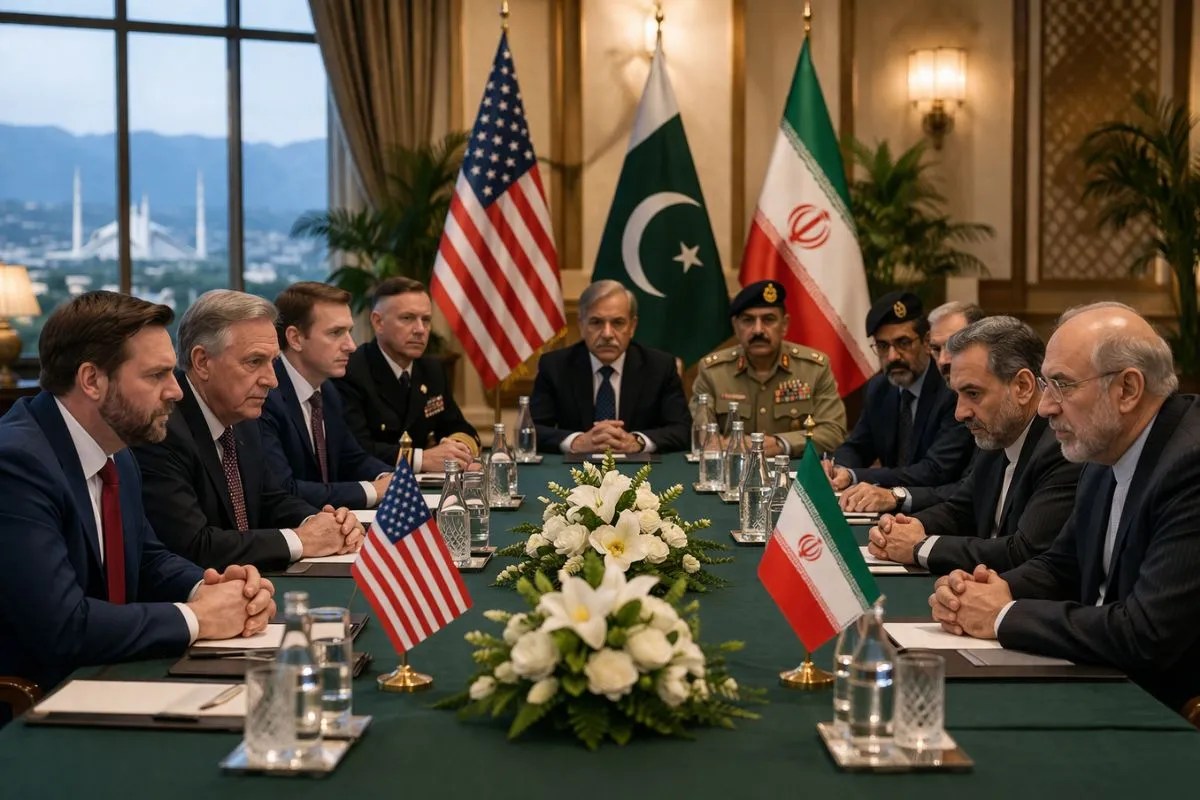
The world is holding its breath as Islamabad transforms into the unlikely epicenter of global diplomacy. If you've been following the news, you know the stakes couldn't be higher. After six weeks of a brutal, high-intensity conflict that has seen airstrikes carving paths of destruction across Iran and Lebanon, the United States and Iran are finally sitting in the same room.
Forget the vague diplomatic buzzwords. This isn't just another "summit." This is a desperate attempt to pull the Middle East back from a total collapse that has already claimed over 5,000 lives and paralyzed the global energy market. While the headlines focus on the "peace process," the reality on the ground in Islamabad is a mix of extreme tension, high-stakes demands, and a fragile ceasefire that feels like it could shatter at any second.
Who is actually at the table in Islamabad
The guest list for this meeting tells you everything you need to know about how serious—and how personal—this negotiation has become. We aren't seeing mid-level bureaucrats here. These are the heavy hitters.
The American Delegation
President Trump hasn't sent a typical State Department team. Instead, he’s dispatched a trio that signals a mix of political weight and personal trust.
- JD Vance: The Vice President is leading the charge, marking the highest-level face-to-face interaction between these two nations since the 1979 Revolution.
- Jared Kushner: His presence suggests the U.S. is looking to tie these talks into the broader Abraham Accords framework.
- Steve Witkoff: As Trump’s special envoy, Witkoff is there to handle the gritty details of the transactional diplomacy the current administration favors.
The Iranian Delegation
On the other side, Tehran has sent a team that represents the core of its wartime leadership.
- Mohammad Bagher Ghalibaf: The Speaker of Parliament is a pragmatist with deep military roots. He’s the one holding the "red lines" for the Islamic Republic.
- Abbas Araqchi: The Foreign Minister, a veteran negotiator who knows exactly how to dance around the technicalities of sanctions and nuclear protocols.
The Pakistani Hosts
Prime Minister Shehbaz Sharif and Field Marshal Asim Munir (the Chief of Army Staff) are playing the role of the ultimate "fixers." Pakistan has effectively turned Islamabad into a fortress to ensure nothing—and no one—disrupts these talks.
The 10 point proposal and the sticking points
Don't let the smiles for the cameras fool you. Iran arrived with a "10-point proposal" that is basically a list of everything they’ve wanted for the last 45 years. They aren't just asking for a ceasefire; they’re demanding compensation for wartime damage and the total removal of both primary and secondary sanctions.
Honestly, it’s a massive ask. The U.S. position is equally blunt. Trump has been vocal that Iran has "no cards" left to play, suggesting that the only reason they're at the table is because the military pressure worked. This kind of "maximum pressure" vs. "maximum resistance" dynamic makes for a volatile atmosphere.
The biggest immediate hurdle? Lebanon. Iran's delegation initially threatened to walk out unless Israel stopped its strikes on southern Lebanon. While a direct three-way meeting involving Pakistan eventually started on April 11, the trust level is basically zero.
What most people get wrong about the Islamabad meeting
I've seen plenty of analysts claiming this is about a "new era" of friendship. Let’s be real: it’s not. It’s about survival.
The Strait of Hormuz is effectively closed to most commercial traffic. UK airlines are warning of jet fuel shortages. Energy prices are skyrocketing. This isn't about two enemies suddenly deciding to like each other; it's about two economies that can't afford to keep punching each other.
People also overlook Pakistan’s role. This isn't just about regional prestige for Islamabad. They’ve been hit hard by the economic fallout of this war, and they need this to work more than almost anyone else. They aren't just "hosting"—they are active mediators pushing both sides to find a "middle path" because the alternative is a regional firestorm that won't respect any borders.
Why this matters to you right now
You might think a meeting in Pakistan between two old rivals doesn't affect your daily life, but you're wrong. If these talks fail, we’re looking at:
- Global Energy Shocks: If the Persian Gulf remains a no-go zone, your gas prices and shipping costs are going to stay in the stratosphere.
- Regional Contagion: We've already seen deaths in Gulf Arab states. If the ceasefire collapses, the conflict won't stay contained to Iran and Lebanon.
- Nuclear Escalation: This is the elephant in the room. Part of the 10-point plan involves the nuclear program. If diplomacy fails, both sides will likely double down on their most dangerous capabilities.
The move you should watch for
Keep your eyes on the "Lebanon condition." If the U.S. can’t or won't restrain Israeli strikes in Lebanon, Ghalibaf and his team will likely pull the plug on the Islamabad talks. Tehran needs to show its allies that it hasn't abandoned them in exchange for sanctions relief.
If you want to understand where this is heading, don't watch the formal press releases. Watch the movement of the delegations. If Vance and Ghalibaf stay in the same building for more than 48 hours, it means they're actually talking about the 10-point plan. If they leave early, start bracing for a very long and very expensive summer.
The next 72 hours will determine the map of the Middle East for the next decade. There’s no more room for error. Pay attention to whether a "framework for meaningful dialogue" actually emerges or if this was just a high-profile photo op before the next round of missiles.