The sea around Kharg Island does not look like a battlefield. Most days, it looks like a ledger. It is a place of heavy iron, the smell of brine mixed with the sulfurous tang of crude, and the low, rhythmic thrum of tankers that sit so deep in the water they seem to be holding their breath. Kharg is a small speck in the Persian Gulf, barely 15 square miles of rock and coral, yet it functions as the beating heart of an entire nation’s survival. It is where Iran breathes. If that heart stops, the ripples do not just stay in the Gulf. They wash up on every shoreline, from the gas stations of Ohio to the factory floors of Guangdong.
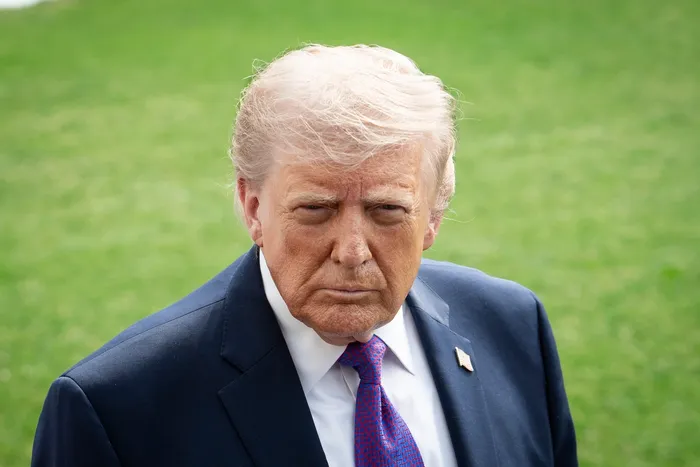
Donald Trump recently looked at this map and saw something different. He didn't see a ledger or a delicate ecosystem of global energy. He saw a target. Speaking with the casual cadence of someone suggesting a weekend hobby, the former president and current candidate suggested that the United States might hit the island "just for fun."
Fun.
It is a word that hangs heavy in the air, stripped of its innocence. When applied to a terminal that handles roughly 90% of Iran’s oil exports, "fun" takes on a jagged, terrifying edge.
The Concrete Reality of a Ghost Island
To understand what is at stake, you have to look past the political podiums. Imagine a dockworker named Abbas. He is a hypothetical man, but his reality is shared by thousands on Kharg. He lives in a world of high-pressure valves and rusted scaffolding. For him, the "fresh strikes" Trump mentions aren't abstract geopolitical maneuvers. They are the sound of a whistling sky and the realization that the ground beneath his feet—saturated with decades of oil seepage—is essentially a massive, slow-burning fuse.
Kharg is not just a port; it is a fortress of infrastructure. It holds massive storage tanks that can house millions of barrels of crude. If a missile finds its mark there, we aren't just talking about a headline. We are talking about an environmental and economic apocalypse. The Persian Gulf is a relatively shallow, enclosed body of water. An oil spill of that magnitude would choke the desalination plants that provide drinking water to millions across the Arabian Peninsula. It would kill the fisheries. It would turn a vital trade artery into a black, stagnant graveyard.
But the physical destruction is only the first act of the play.
The Invisible Chains of the Global Market
We often think of the economy as a series of numbers on a screen, but it is actually a web of physical dependencies. When a leader talks about striking a primary energy hub, they are pulling on a thread that connects to your morning commute.
The logic behind such a strike is usually presented as "maximum pressure." The idea is simple: if you destroy the regime's ability to fund itself, the regime collapses. It sounds clean on paper. It sounds like a surgical solution to a messy, decades-long cold war. Yet, history is rarely surgical. History is blunt, messy, and prone to infection.
Consider the "Tanker War" of the 1980s. During the Iran-Iraq conflict, both sides began targeting merchant ships and oil installations to dry up the other’s pocketbook. The result wasn't a quick victory. It was a chaotic escalation that eventually forced the U.S. Navy into the fray to protect global commerce. If Kharg Island goes up in flames, the "fun" ends the moment the first insurance company triples the premiums for every vessel entering the Strait of Hormuz.
Suddenly, the cost of shipping everything—not just oil, but grain, electronics, and medicine—skyrockets. The consumer at the end of that chain doesn't care about the political rhetoric of a campaign trail. They only know that their paycheck no longer covers their groceries.
The Psychology of the "Just Because" Doctrine
There is a specific kind of fear that arises when military force is decoupled from clear, strategic necessity and rebranded as a whim. Traditionally, the threat of force is a tool of deterrence. You tell your opponent, "If you do X, I will do Y." It is a grim, predictable dance.
However, when a potential Commander-in-Chief suggests striking a sovereign nation's most vital economic asset "just for fun," the rules of the dance change. Deterrence relies on the other side believing you are a rational actor. If the threat becomes perceived as impulsive or recreational, the opponent stops trying to avoid the "tripwire." Instead, they begin to prepare for the inevitable.
They dig in. They lash out. They decide that if the strike is coming regardless of their behavior, they might as well strike first. This is how small sparks in the Gulf turn into regional conflagrations. It is the transition from a managed conflict to an unguided explosion.
The Human Cost of High-Stakes Rhetoric
The rhetoric itself acts as a kind of soft violence. For the people living in the region—not just in Iran, but in the UAE, Kuwait, and Qatar—these words aren't "bold" or "refreshing." They are an alarm bell.
When we talk about Kharg, we are talking about a place where people work, eat, and sleep. We are talking about a global energy market that is already strained by conflicts in Ukraine and the Red Sea. To suggest a "fresh strike" on such a volatile node is to gamble with the stability of the modern world. It is a bet placed with other people's lives and other people's money.
The reality of modern warfare is that there are no isolated incidents. A missile hitting a storage tank on a tiny island in the Gulf vibrates through the floors of the New York Stock Exchange. It echoes in the halls of the Kremlin and the boardrooms of Beijing.
We live in an age where the distance between a "casual" comment on a stage and a global crisis has never been shorter. The iron of Kharg Island is cold, but the furnace it feeds is white-hot. To treat that furnace as a toy is to forget how easily a fire can spread once the wind starts to blow.
The tankers continue to move. The valves continue to turn. For now, the ledger remains balanced, however precariously. But the shadow of a "fun" strike looms over the water, a reminder that in the world of global power, the most dangerous thing isn't the weapon itself—it is the hand that views the trigger as a plaything.