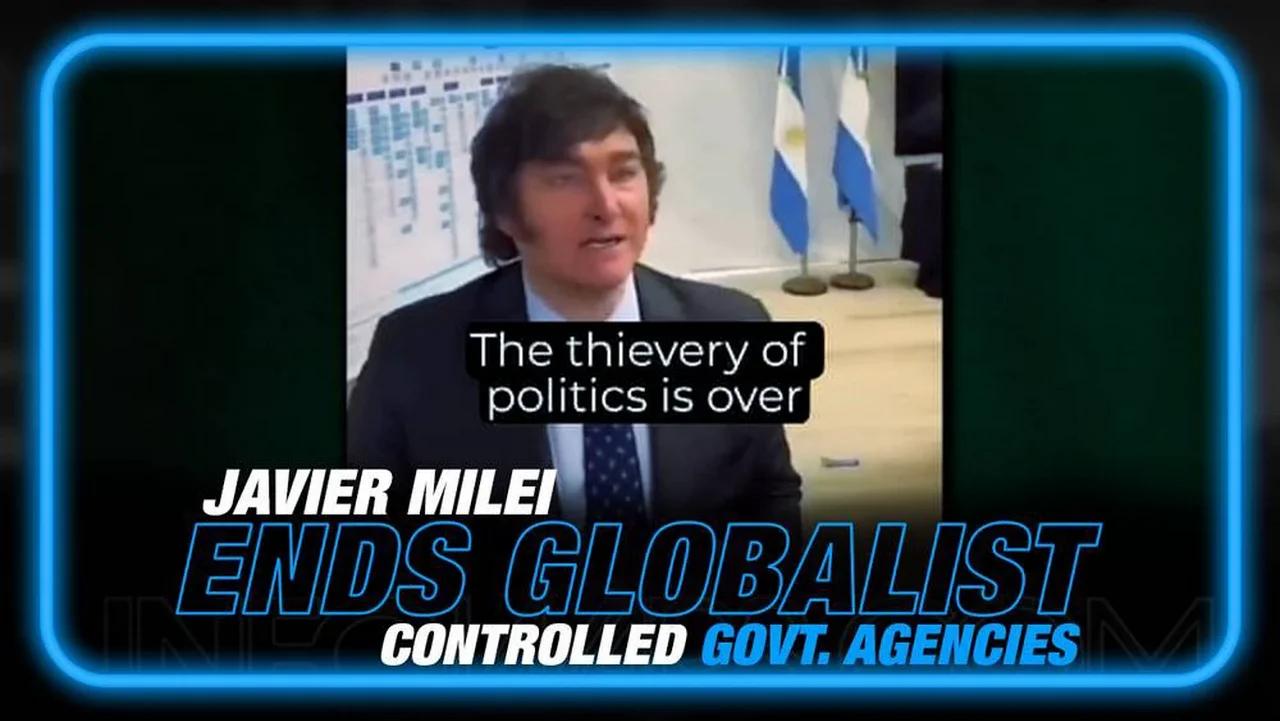
The mainstream media is obsessed with the optics of Javier Milei’s tears at the Western Wall. They see a performance. They see a shift in religious alignment or a desperate bid for Washington's approval. They are looking at the surface ripples while ignoring the tectonic shift underneath. Argentina isn't just "backing" a war; it is liquidating a century of failed non-alignment to join a specific, high-stakes geopolitical ledger.
For decades, the "lazy consensus" in Latin American diplomacy has been a cowardly form of strategic hedging. Stay quiet, trade with everyone, and pretend that what happens in the Middle East doesn't affect the price of soy in Rosario. Milei just set that playbook on fire. He isn't just visiting Jerusalem; he is signaling that Argentina is open for business as a Western outpost in a region that has flirted with Beijing and Tehran for too long.
The Myth of the Neutral Global South
The press frames Milei’s alignment with Israel and the US as a "gamble." This assumes that staying neutral was the safe bet. Look at the data. Decades of "neutrality" left Argentina with triple-digit inflation and the status of a global financial pariah. The previous administrations tried to play both sides, cozying up to the BRICS while begging the IMF for scraps. It didn't work.
Neutrality in the 21st century is a luxury for the powerful. For a bankrupt nation, it is a slow death. Milei understands that the world is decoupling. You are either in the Western financial and security architecture, or you are a vassal state for Eastern interests. By leaning into the US-Israel axis, he is choosing a side before the choice is made for him. This isn't about theology; it's about the cold, hard reality of credit markets and security guarantees.
Why the "War on Iran" Narrative is Shallow
Most analysts are framing this as Argentina dragging itself into a distant conflict. That is a fundamental misunderstanding of history. Iran is not a "distant" threat to Argentina. Any insider who has tracked the 1992 Israeli Embassy bombing or the 1994 AMIA tragedy knows that Tehran has had its fingerprints on Argentine soil for thirty years.
The "status quo" approach was to ignore this and hope the problem went away. Milei’s move to designate Hamas as a terrorist organization and align with Israel is a belated recognition of a domestic security reality. He isn't importing a foreign war; he is finally acknowledging a war that has been fought in the streets of Buenos Aires for three decades while the elite looked the other way.
The Liquidity of Loyalty
Let’s talk about the money. Wall Street doesn't care about Milei’s spiritual journey. They care about predictability. By aligning so aggressively with the US, Milei is attempting to buy something Argentina hasn't had in a generation: Trust.
When you are a country that has defaulted nine times, you don't get the benefit of the doubt. You have to overcompensate. This geopolitical shift is a form of collateral. He is telling the world's largest capital markets that Argentina is no longer a wild card. It is a predictable, if aggressive, partner.
- Trade deals: Expect a pivot toward tech and defense cooperation with Tel Aviv.
- Security: Argentina is positioning itself as the primary intelligence partner for the US in the Southern Cone.
- Energy: The Vaca Muerta shale deposits need Western investment, not Chinese state-owned debt traps.
Imagine a scenario where Argentina remains "neutral." It continues to drift into the orbit of failing autocracies, its currency becomes worthless, and its infrastructure is sold off to the highest bidder in exchange for temporary debt relief. Milei is betting that a hard pivot toward the West will provide a floor for the Argentine economy that no amount of soy exports ever could.
The Cost of the Contrarian Path
Is there a downside? Of course. I've seen leaders try to pivot too fast and get crushed by the backlash. Milei is opening Argentina up to retaliatory risks—both economic and kinetic. But the alternative is the status quo, and the status quo is a graveyard.
The critics claim he is alienating trade partners. They point to Brazil or China. But trade is based on necessity, not feelings. China will still buy Argentine beef because they need to eat. Brazil will still trade with Argentina because they are neighbors. What Milei is doing is separating commerce from alignment. You can sell to the East while standing with the West. It’s a distinction the previous regime was too terrified to make.
Dismantling the "Stability" Argument
People ask: "Won't this provoke more instability?"
This question is flawed because it assumes Argentina was stable to begin with. You cannot "destabilize" a country with 200% inflation and a 40% poverty rate. You can only transform it. Milei isn't looking for a smooth ride; he’s looking for a total system reboot.
If you want to understand the new Argentina, stop reading the op-eds about his "erratic" behavior. Start looking at the strategic necessity of his alliances. He is building a fortress. He is picking the strongest allies he can find because he knows he is about to go to war with his own bureaucracy.
The South American Chessboard
Look at the map. Chile is leaning left. Colombia is in a state of perpetual ideological flux. Brazil is trying to lead a "non-aligned" movement that looks suspiciously like a pro-China lobby. Argentina was the missing piece.
By planting a flag firmly in the pro-Western camp, Milei has created a counter-weight. This isn't just about Argentina; it's about the entire balance of power in the Western Hemisphere. The US has been asleep at the wheel in Latin America for twenty years. Milei just jumped into the driver's seat and started the engine.
The Brutal Reality of Choice
The world is no longer a place where you can sit in the middle and collect checks from both sides. The era of the "Global South" as a cohesive, neutral bloc is a fantasy. It is a collection of nations that are being forced to choose their primary operating system.
Milei chose the one that values private property, individual liberty, and Western security. It’s a radical departure from the populist socialism that gutted his country. The pundits call it "controversial." I call it the first sign of life in Argentine foreign policy since the 19th century.
Stop asking if Milei is "going too far." Start asking why no one else had the courage to go far enough.
Argentina isn't joining a war. It's finally ending its own surrender.