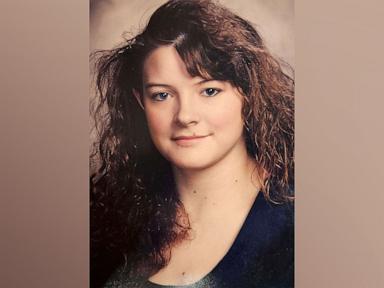
The Camaro was at the bottom of the lake. The woman was inside. The husband was free. Decades later, he is in handcuffs. The mainstream media treats this like a triumph of persistence, a cinematic arc where the arc of the moral universe finally bends toward a jail cell.
They are wrong.
What we are actually seeing in the prosecution of Pete Liske—and cases like it—isn't the inevitable victory of truth. It is the triumph of narrative over evidence. It is a terrifying testament to how easily "reasonable doubt" is smothered by the passage of time and the emotional weight of a cold case finally "solved."
When a car is pulled from the muck after thirty years, the forensics are gone. The witnesses are dead or senile. The physical reality of the crime scene has been digested by silt and rust. All that remains is a story. And in the modern courtroom, a good story is far more dangerous than a smoking gun.
The Myth of the "Fresh Set of Eyes"
The public loves the trope of the dogged investigator who sees what everyone else missed. It’s the foundational myth of every true crime podcast. But talk to anyone who has actually sat in a deposition or analyzed a decades-old file, and you’ll find a much darker reality.
A "fresh set of eyes" is often just a set of eyes looking for a specific outcome.
When a case sits cold for thirty years, the pressure to close it doesn't disappear; it metastasizes. It becomes a political necessity. The "new evidence" cited in these convictions is rarely a DNA breakthrough or a surprise confession. Instead, it is usually a re-interpretation of the same circumstantial facts that were deemed insufficient in 1990.
What changed? Not the facts. The culture changed.
In the 1980s and 90s, the legal standard for "circumstantial" was a high bar. Today, we live in a post-CSI world where juries expect a neat ending. If the prosecution can provide a villain, the jury will provide the conviction, even if the bridge between the two is made of nothing but "gut feelings" and "inconsistencies" in statements made during the Reagan administration.
Memory is a Failed Hard Drive
The most egregious tool in the cold case prosecutor’s kit is the "new witness."
Memory is not a video recording. It is a reconstructive process. Every time you remember an event, you rewrite the file. By the time a witness takes the stand thirty years after a woman went missing in a Camaro, they aren't remembering the night of the disappearance. They are remembering the last time they talked about the disappearance.
We have decades of research from experts like Elizabeth Loftus proving that memory is incredibly easy to contaminate. Suggestion, trauma, and the simple desire to be "the one who helps" can manufacture entire scenes that never happened.
Yet, when a witness says, "I remember him acting strange that night," a jury hears it as gospel. They don't account for the thirty years of local gossip, news reports, and societal shifts that have colored that witness's perception. We are sending people to prison based on "data" stored on a corrupted drive.
The Submerged Vehicle Trap
Let’s talk about the Camaro.
The discovery of a body in a submerged vehicle is the ultimate emotional trigger. It conjures images of terror and a slow, watery death. It is designed to bypass the logical brain.
In a standard homicide trial, the defense can argue about the timeline, the physics, and the biology. But when a car is recovered years later, the defense is fighting a ghost. You cannot cross-examine the water. You cannot re-test the fibers that have disintegrated.
The prosecution uses this void of information to build a "logic of exclusion." Their argument boils down to: How else could she have gotten there?
If the defense can’t provide a play-by-play alternative of an accident from 1994, the jury defaults to the most "satisfying" answer. Guilt. This isn't proving a case beyond a reasonable doubt; it’s demanding the defendant prove their innocence against the weight of three decades of silence.
The Industrialization of True Crime
There is a financial and social incentive to find "monsters" in these old files.
True crime is no longer a niche interest; it is a multi-billion dollar content machine. Cases like this aren't just legal proceedings; they are pilot episodes. The pressure on local DAs to provide a "resolution" is immense. A "solved" cold case is a career-maker. An acquittal is a PR disaster.
When we celebrate these "years later" convictions, we are incentivizing a system that prioritizes closure over certainty. We are telling prosecutors that if they wait long enough, the evidence will become so degraded that their narrative will be the only thing the jury can see.
The Cost of Narrative Justice
I have seen the inside of these machines. I have watched how a single, flawed witness statement from 1988 can be polished and presented as a "revelation" in 2024.
The danger isn't just that we might be convicting an innocent man—though that is a very real possibility when the evidence is thirty years of dust. The danger is that we are eroding the very concept of a fair trial.
A trial should be a clinical examination of facts. When we allow it to become a decades-long exercise in storytelling, we lose the guardrails of the law. We are trading the "presumption of innocence" for the "satisfaction of an ending."
If you think this is justice, you aren't looking at the law. You’re looking at the credits rolling.
Stop clapping for "cold case victories" that rely on the absence of evidence. Start asking why a case that was un-prosecutable when the trail was hot suddenly becomes "open and shut" when the trail is non-existent.
The Camaro stayed in the water for a reason. Sometimes, the truth does too. And no amount of "new perspectives" can change the fact that we are guessing at the past while pretending we are holding a scale.
Burn the script. Demand the data. Or admit that you just want a story to help you sleep at night.