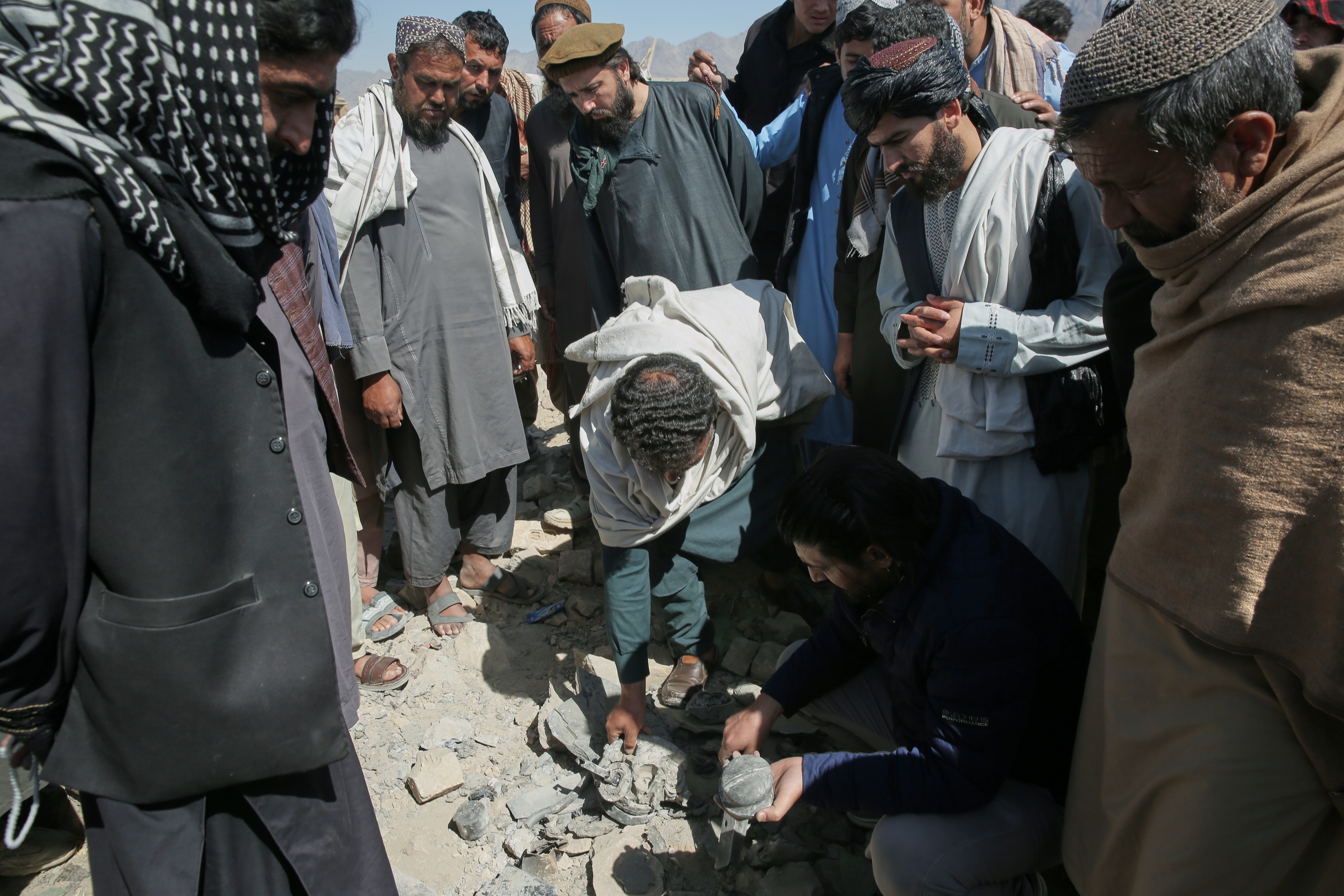
The reports emerging from Kabul describe a level of carnage that defies standard military logic. Afghan officials now state that 400 people died following a targeted strike on a major medical facility, an act they attribute directly to Pakistani forces. This event represents a catastrophic failure of the shaky "non-interference" pacts that have supposedly governed the Durand Line for the last two years. While Islamabad has historically utilized cross-border operations to neutralize insurgent pockets, the scale of this specific incident suggests a fundamental shift from tactical counter-terrorism to scorched-earth regional aggression.
The immediate fallout is a humanitarian vacuum. When a hospital becomes the epicenter of a kinetic strike, the casualty count is never limited to those killed by the initial blast. It includes the thousands who lose access to trauma care, the specialized staff who cannot be replaced, and the total breakdown of trust in protected "safe zones."
A Calculated Escalation in the Grey Zone
Military analysts have long watched the rising temperature between Kabul and Islamabad. This isn't a sudden flare-up. It is the result of months of stalled negotiations over the Tehrik-i-Taliban Pakistan (TTP) and the Afghan government's refusal to fence off specific sectors of the border. For years, Pakistan relied on drone technology and artillery to pick off high-value targets. Those strikes were surgical, or at least they were marketed that way to the international community.
Hitting a hospital in a densely populated urban center like Kabul is different. It is a loud, bloody signal.
By striking a high-visibility civilian target, the aggressor is banking on a specific psychological outcome: the total delegitimization of the current Afghan administration’s ability to provide basic security. If the state cannot protect its sick and wounded in the heart of the capital, it cannot claim sovereignty. This is "Grey Zone" warfare pushed to its absolute limit, where the lines between combatant and non-combatant are intentionally blurred to force a political surrender.
The Intelligence Failure or the Intentional Target
There are two ways to interpret the mechanics of this strike. The first is a colossal intelligence failure. In this scenario, the strike was intended for a nearby command-and-control center, and a guidance error or outdated coordinates led to the hospital’s destruction. However, modern precision-guided munitions rarely miss by the margins required to level an entire medical complex.
The second, more chilling interpretation is that the hospital was the target.
Intelligence circles in the region have whispered for weeks about "denied areas" within Kabul where TTP leadership was allegedly receiving medical treatment. If Pakistani planners believed that top-tier insurgents were being harbored within the hospital walls, the decision to strike may have been a cold-blooded assessment of "collateral" costs versus "strategic" gain. In the eyes of a hardline military strategist, 400 civilian lives might be viewed as a secondary concern if the strike successfully eliminated a shadow cabinet of insurgent leaders.
But this math is broken.
Killing 400 people to reach a handful of targets creates a recruitment windfall for the very groups the strike intended to weaken. It turns a local insurgency into a national cause. Every family member of the deceased now has a direct, personal reason to support any faction promising retaliation.
The Economic Aftermath of a Security Collapse
Beyond the immediate bloodletting, this strike creates a permanent scar on the Afghan economy. Investors—already skittish about the region's stability—view the destruction of a capital city's infrastructure as a terminal red flag. Foreign aid organizations, which provide the backbone of the Afghan healthcare system, are now forced to re-evaluate their presence.
- Insurance Premiums: Shipping and transport costs into the region will skyrocket as risk assessments are redrawn.
- Brain Drain: The few remaining medical professionals in Kabul will likely seek any available exit, fearing they are now standing on a bullseye.
- Trade Stagnation: Border crossings, already prone to arbitrary closures, will likely be locked down for months as both sides dig in.
The regional trade corridors that were supposed to link Central Asia to the sea are now blocked by the smoke of a burning hospital. You cannot build a "Silk Road" through a graveyard.
Shattered Sovereignty and the Role of External Powers
The international response has been predictably muted, consisting of the usual "deep concern" and calls for "restraint." This passivity is part of the problem. When the global community fails to enforce the protected status of medical facilities, it gives every mid-sized power a green light to use heavy weaponry in civilian corridors.
China and Russia, both of whom have vested interests in Afghan stability for their own security and resource needs, now find themselves in a bind. Supporting Pakistan's "right to defend itself" against cross-border terrorism becomes impossible when the defense involves a 400-person massacre. Conversely, backing the Afghan administration risks alienating a nuclear-armed Islamabad.
The reality is that Afghanistan has become a laboratory for a new kind of brutal, unmonitored warfare. Without a functioning UN presence or a coalition of neutral observers on the ground, the narrative is controlled by whoever has the loudest megaphone and the most drones.
The Mechanics of Retaliation
Kabul is not without its own levers. While they lack a traditional air force to strike back in kind, their specialty is asymmetric warfare. We should expect a sharp increase in "insider attacks" and urban IED campaigns within Pakistani borders. This is the tragic cycle of the region: an air strike in Kabul leads to a suicide bombing in Peshawar.
The 400 people killed in this strike are not just statistics; they are the fuel for the next decade of conflict.
Military commanders often talk about "mowing the grass"—the idea that you have to periodically kill insurgents to keep their numbers down. This strike didn't mow the grass. It poisoned the soil. When you hit a hospital, you aren't just fighting a war; you are admitting that you have no other way to win.
The immediate priority for the international community shouldn't be another round of useless sanctions. It should be the establishment of an independent forensic team to verify the munitions used and the exact chain of command that authorized the launch. Transparency is the only thing that can blunt the urge for blind revenge. Without a clear accounting of how 400 people were vaporized in a place of healing, the border between these two nations will remain a permanent, active front line.
Check the tail numbers of the drones spotted over Kabul yesterday and compare them with known regional inventories before the evidence is cleared.