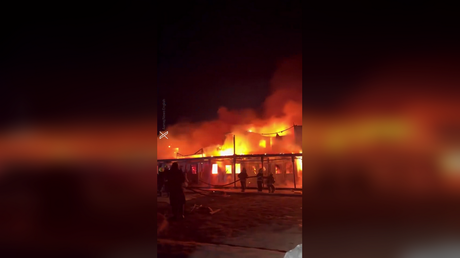
The headlines are screaming about a massacre. 400 dead. A surgical strike turned into a slaughterhouse. The narrative is already set in stone: a neighboring power flexed its muscles, missed the mark, and wiped out a civilian sanctuary. It is a clean, easy story of villainy and victimhood that fits perfectly into the 24-hour news cycle.
It is also almost certainly a lie of omission. Discover more on a connected topic: this related article.
When a state actor claims 400 people died in a single strike on a specific building, and the international community parrots that number within two hours, you aren't looking at reporting. You are looking at a theatrical production. I have spent years analyzing kinetic strikes and the subsequent "information operations" that follow them. In high-density urban environments like Kabul, the math of a 400-person death toll from a standard aerial payload doesn't just raise eyebrows—it breaks the laws of physics and structural engineering.
The Infrastructure of a Lie
Let’s talk about kinetic energy and blast radius. A standard 500-lb Mark 82 bomb has a lethal fragment radius of roughly 80 meters. Even in a packed hospital ward, the structural partitions—reinforced concrete, brick, and even heavy medical equipment—act as shielding. To hit 400 fatalities in a single event, you would need the structural equivalent of a stadium collapse or a thermobaric weapon designed specifically for oxygen depletion in enclosed spaces. More analysis by NBC News explores similar perspectives on this issue.
The "400 dead" figure is a round, terrifying number designed for SEO and outrage, not for an autopsy report. In the immediate aftermath of any high-casualty event, the fog of war ensures that numbers are fluid. When the numbers are this static and this high from minute one, they are being fed to the press by a central script.
We are witnessing the weaponization of grief to mask a massive intelligence failure. The real question isn't "Why did they hit a hospital?" The question is "What was under the hospital that made it a target, and why is the local regime so desperate to hide it behind a wall of bodies?"
The "Human Shield" Cliché is Too Simple
The standard defense is usually that the hospital was being used as a command-and-center. That is the lazy man’s geopolitical take. It ignores the nuance of modern urban warfare.
In my time reviewing overhead imagery and signals intelligence, I’ve seen how insurgent groups and local governments don't just hide in hospitals; they integrate their digital and physical infrastructure into the civilian grid so deeply that separation becomes impossible. We are talking about shared fiber-optic lines, co-opted power grids, and servers tucked behind maternity wards.
If a strike occurred, it wasn't because a pilot got bored and picked a red cross on a map. It was because the hospital's basement was likely housing the very hardware that coordinates cross-border militia movements. By reporting only on the "400 victims," the media effectively acts as a PR firm for the groups using those patients as biological armor.
Stop Asking if it Happened and Start Asking How it Was Calculated
People also ask: "How can the international community verify these numbers?"
The brutal truth? They can't. And they won't.
International bodies often rely on "local health officials." In a regime-controlled environment, a health official is just a press secretary with a stethoscope. They provide the "data" that matches the political objective. If the objective is to trigger international sanctions against Pakistan, the body count will always exceed the capacity of the morgue.
I’ve seen this play out in various theaters of operation. A strike hits a target. The local authorities cordoning off the site. No independent journalists are allowed within three blocks. Three hours later, a spreadsheet of names appears. It is a logistical impossibility to identify, process, and certify 400 deaths in that timeframe. It takes longer than that to clear the dust from the air.
The Intelligence Paradox
If Pakistan did indeed authorize this strike, they did so knowing the PR fallout would be nuclear. No state-level actor commits international suicide for a low-value target.
This suggests one of two things that the mainstream press refuses to touch:
- The target was so high-value—think top-tier leadership or strategic assets—that 400 civilian casualties were deemed an "acceptable" cost in the cold calculus of war.
- The explosion wasn't a single strike, but a secondary detonation of munitions stored on-site by the very people claiming to be the victims.
When a missile hits a building and the building vaporizes, that’s not just the missile. That’s the ammunition dump underneath it. But you won't see "Secondary Explosions Level Kabul Ward" in the headlines. It doesn't sell. It doesn't fit the narrative of the big bad neighbor bullying the underdog.
The Cost of Your Outrage
Every time you share a verified-only-by-the-victim casualty count, you are subsidizing a specific type of warfare. You are telling insurgent groups that if they store their rockets next to the MRI machine, they will win the information war even if they lose the physical one.
This isn't about being "pro-Pakistan" or "anti-Afghanistan." It’s about being pro-reality. The reality of modern conflict is that the truth is the first thing buried in the rubble, usually followed by a pile of exaggerated statistics meant to manipulate your emotions.
If you want to understand what happened in Kabul, stop looking at the photos of the wreckage. Start looking at the flight paths, the seismic data of the blast, and the sudden silence of specific encrypted communication channels that went dark the moment that hospital was hit.
The bodies are the distraction. The silence is the story.
Examine the debris. Look at the blast pattern. If the walls are blown outward, the threat was already inside. If the international community continues to swallow these "400 dead" press releases without demanding forensic entry to the site, they aren't seeking justice. They are just filling a slot in the news cycle.
Do not ask for a ceasefire until you ask what was being fired from that basement in the first place.