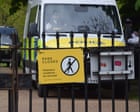
Kensington Gardens is back in business. After a morning of yellow tape and police cordons, the gates swung open because the Metropolitan Police confirmed those "suspicious items" weren't actually dangerous. It's a scene we see played out in London more often than most care to admit. Someone spots a bag left by a bench or a strangely wrapped package near a royal residence, and the machine kicks into gear. While it’s a massive headache for your morning jog or your tourist itinerary, the speed of these reopenings tells a story about how modern security actually functions in a high-profile city.
Panic is a choice. The Met Police don't make it. When they get a call about an unidentified object in a Royal Park, they aren't guessing. They’ve got a protocol that balances public safety with the need to keep one of the world's busiest cities moving. You might think a suspicious item means the whole day is ruined, but once the specialist officers—often the Explosive Ordnance Disposal (EOD) teams—give the thumbs up, the transition from "active scene" to "public park" happens in minutes.
The Reality of Public Safety in Royal Spaces
Kensington Gardens isn't just another patch of grass. It’s a high-value target environment. You’ve got Kensington Palace right there. You’ve got diplomats, high-net-worth individuals, and thousands of tourists in a concentrated area. This means the baseline for what triggers a police response is much lower than it would be in a suburban cul-de-sac.
If you leave a backpack on a bus in Zone 4, it might sit there for an hour. If you leave it near the entrance to a Royal Park, expect sirens within five minutes. The Met Police treat these incidents with a "rapid clear" mentality. They arrive, secure the perimeter, and bring in the tech. This usually involves mobile X-ray units or sometimes just a highly trained officer with a very specific set of eyes.
The goal is always the same. Determine the threat level. If the item is "non-hazardous"—which is police-speak for "someone forgot their gym bag" or "it's literally just trash"—they don't hang around. They pack up, lift the tape, and let the cyclists back in. They know that keeping a major artery of London closed for longer than necessary creates its own kind of chaos.
Why We See So Many Suspicious Item Reports
Most people aren't trying to cause a scare. We live in a world where "See It. Say It. Sorted" is blasted over every PA system in the country. People are hyper-aware. They see something that looks out of place and they call it in because they've been told it's the responsible thing to do.
The items found in Kensington Gardens this time were deemed non-hazardous fairly quickly. That suggests they lacked the "components" of a real threat—no wires, no power sources, no organic matter that shouldn't be there. Once the experts look at an object and see it's just an abandoned household item or lost property, the incident is essentially over.
Critics sometimes argue that these closures are an overreaction. I disagree. In a city like London, an overreaction is just a successful drill. The fact that the park reopened so quickly proves the system works. It shows the police can scale their response up and down without getting bogged down in bureaucracy. They find the item, check the item, and clear the area. Simple.
Navigating London During a Security Cordon
If you’re caught in one of these situations, don't argue with the guys in the high-vis vests. They don't know if the item is a bomb or a burrito until the EOD team says so.
Usually, these cordons are small. They'll shut down a specific gate or a 100-meter radius around the object. In the Kensington Gardens case, the disruption was significant enough to notice but handled efficiently. If you find yourself staring at police tape where your path used to be, here’s how to handle it.
- Check the Met Police Twitter (X) feed immediately. They are usually faster than news outlets at confirming when a scene is cleared.
- Don't stand around and film. If it is something dangerous, you're in the blast radius.
- Find the nearest exit that isn't blocked. Most Royal Parks have multiple points of entry; use them.
The Logistics of Clearing a Park
Reopening a space as large as Kensington Gardens isn't just about rolling up the tape. Security teams have to do a "sweep" to ensure that the initial report wasn't a distraction for something else. It’s a standard tactic in security circles. You create a small incident over here to draw eyes away from a bigger move over there.
The police officers on the ground at Kensington would have been looking for secondary items. Once they were satisfied that the "suspicious items" were isolated and harmless, they gave the all-clear to the park rangers.
It's also worth noting the role of technology. We aren't just sending a guy in a heavy suit to poke things with a stick anymore. Remote-controlled robots and advanced scanners allow the Met to "see" inside bags without opening them. This is why a park can go from a crime scene to a picnic spot in under two hours. The tech gives them the certainty they need to sign off on the reopening.
What Happens to the Items
You might wonder what happens to the stuff that caused the mess in the first place. If it’s truly just lost property, it usually ends up in a police warehouse or the park’s lost and found. If it was left there maliciously to cause a hoax, that’s a different story.
Hoaxers face serious charges under the Criminal Law Act 1967. It’s not a "prank" when you're wasting the time of specialist units and shutting down public landmarks. The police take forensic samples even from non-hazardous items if they suspect the intent was to cause public alarm.
For the average Londoner, today was just another Tuesday with a slightly different commute. For the security teams, it was a successful execution of a well-practiced plan. The gardens are open, the sun is (hopefully) out, and the city carries on.
If you're planning to visit the park today, expect things to be totally back to normal. There’s no residual risk. Just maybe don't leave your own bag unattended while you go grab a coffee. You've seen what happens when you do. Keep your gear with you and enjoy the walk. If you see something genuinely weird, tell a ranger or a cop, but let them do the heavy lifting. They’ve clearly got the process down to a science.
Check the official Royal Parks website for any lingering gate-specific closures, though everything should be flowing fine by now. Stay alert, but don't let the headlines ruin your afternoon. London is built to handle this stuff.