The conventional wisdom regarding Kharg Island is as bloated as a state-run oil tanker. Analysts love to point at that tiny speck in the Persian Gulf and whisper about "global energy strangulation" or "the jugular of the world economy." They treat it like a structural god-node that, if flicked, would send the price of Brent crude to $300 and collapse Western civilization by Tuesday.
It is a tired, decades-old narrative. It ignores the reality of modern logistics, the desperation of the Iranian regime, and the sheer resilience of a global supply chain that has spent forty years learning how to route around ghosts. Kharg Island isn't the world's pressure point. It is a legacy asset operating on borrowed time and duct tape.
The Myth of the Irreplaceable Hub
The standard argument goes like this: Kharg Island handles over 90% of Iran’s crude exports. Therefore, Kharg is indispensable.
This is a fundamental misunderstanding of how risk is priced. For the market, Kharg’s dominance is a vulnerability for Iran, not the world. We have been told for years that a strike on Kharg—or a blockade—would create a "supply shock" the world cannot recover from.
Wrong.
The world is currently drowning in spare capacity. Between the Permian Basin’s relentless efficiency and the tactical reserves held by the IEA, a Kharg-sized hole in the market is a weekend's worth of volatility, not a decade of darkness. When you hear "90% of Iran's exports," you should hear "100% of Iran's risk." If Kharg goes dark, the global market shrugs; the Iranian economy, however, evaporates. The leverage is entirely inverted.
The "Dark Fleet" and the Erosion of Importance
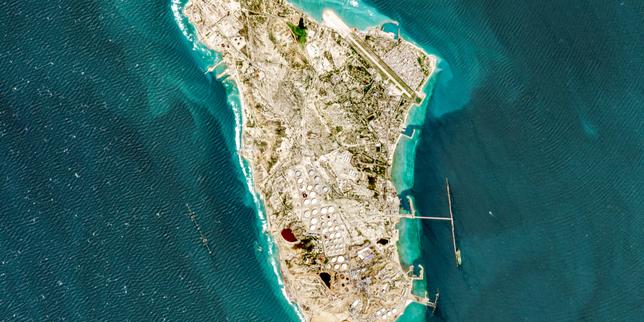
Geopolitics junkies love to look at satellite imagery of Kharg's T-jetty and Sea Island terminal. They see infrastructure. I see a museum.
The real action has moved offshore. The "Dark Fleet"—that shadowy armada of aging tankers with flickered-off transponders—has decentralized the export process. Ship-to-ship (STS) transfers in the middle of the Gulf or the Indian Ocean have turned the very concept of a "central hub" into a 20th-century relic.
Iran has spent years mastering the art of the ghost export. They have learned that fixed infrastructure is a target, while a wandering VLCC (Very Large Crude Carrier) is a ghost. By the time an analyst finishes writing a report on Kharg’s loading capacity, three million barrels have already changed hands in international waters via a rusted Panamanian-flagged vessel that technically doesn't exist.
The physical docks at Kharg are increasingly just the starting line for a shell game. If you destroy the docks, the shell game just finds a different beach.
The Jask Fallacy
In a desperate bid to prove they aren't trapped by Kharg’s geography, Tehran has been touting the Goreh-Jask pipeline. The idea is to bypass the Strait of Hormuz entirely, moving oil to the Gulf of Oman.
The "experts" call this a strategic masterpiece. I call it an expensive admission of defeat.
Building a terminal at Jask is a loud, billion-dollar shout that Kharg is a liability. But here is the nuance the "industry insiders" miss: Jask doesn't have the storage. It doesn't have the deep-water berths. Most importantly, it doesn't have the trust of the Chinese independent refineries—the "teapots"—who are the only ones still buying this stuff.
Moving your exit point a few hundred miles east doesn't change the fact that your product is radioactive to the global banking system. Kharg is a terminal for a country that is commercially quarantined. You can’t fix a lack of customers with a new pier.
Why the "Strait of Hormuz" Threat is a Bluff
We cannot talk about Kharg without the inevitable threat to close the Strait of Hormuz. It’s the ultimate geopolitical boogeyman.
"If Kharg is attacked, we close the Strait."
It’s a suicide pact, not a strategy. Closing the Strait of Hormuz is the equivalent of a man threatening to blow up the only bridge out of town while he’s still standing in the middle of it. Iran needs the Strait more than the world does. The world has the East-West Pipeline in Saudi Arabia and the Abu Dhabi Crude Oil Pipeline. Iran has... nothing.
Every time a politician or a "security consultant" mentions the Strait in relation to Kharg, they are selling you fear-porn. Iran’s primary goal is survival. You don't survive by cutting off your own air supply.
The Maintenance Debt No One Talks About
Let’s look at the actual hardware. Kharg Island’s facilities are old. I’ve seen what happens when state-owned monopolies under heavy sanctions try to maintain high-pressure fluid systems. They don't. They patch.
The T-jetty and the Sea Island terminal are held together by sheer willpower and black-market spare parts. The efficiency of these terminals is a fraction of what a modern facility like South Korea’s Ulsan or even Saudi’s Ras Tanura can achieve.
The "point névralgique" (nervous center) described by the competition is actually a sclerotic, aging heart. A significant percentage of the "export capacity" cited in official documents is theoretical. In reality, the loading arms are prone to failure, the dredging is insufficient, and the storage tanks are often utilized as makeshift separators because the upstream processing is failing.
Kharg isn't a powerhouse. It’s a bottleneck.
The Chinese Factor: The Only Opinion That Matters
If you want to understand the value of Kharg, stop looking at Washington and start looking at Beijing. China is the primary reason Kharg remains relevant, but even that relationship is parasitic.
China buys Iranian crude at a massive discount—sometimes $10 to $15 below Brent—to compensate for the risk of secondary sanctions. They aren't buying it because Kharg is a "global hub." They are buying it because it's cheap, off-market energy that helps them maintain a strategic reserve on the house.
If Kharg were to vanish tomorrow, China would simply pivot to more Russian ESPO or increased Saudi allocations. They have the infrastructure and the leverage to switch. Iran has no other buyers. This isn't a "global energy market" dynamic; it's a fire sale at a single, isolated warehouse.
The Thought Experiment: The Day Kharg Dies
Imagine a scenario where a "kinetic event" takes Kharg Island offline for six months.
The headlines would scream. The algorithms would spike the price of crude. And then, within 72 hours, the market would realize that the 1.5 million barrels per day (bpd) missing from the global tally is roughly equivalent to the production growth expected from non-OPEC+ sources over the next year.
The US would release 20 million barrels from the SPR. Saudi Arabia would turn a couple of valves to "stabilize the market" (and steal Iran's market share). Within a month, the price of oil would be lower than it was before the event because the "Iran Risk Premium" would finally be priced out of the market.
The ultimate irony of Kharg Island is that its perceived importance is the only thing keeping it safe. The moment it actually fails, the world will realize it didn't need it in the first place.
Stop Asking if Kharg is Safe
The question isn't whether Kharg Island is a strategic masterpiece or a global "point névralgique." It is neither.
The real question is why we continue to give so much oxygen to a 1960s-era loading dock in a world that has moved on to fracking, renewables, and decentralized maritime smuggling.
Kharg is a ghost of the 1970s energy crisis, haunting a modern market that has already developed immunity to its drama. It is a single point of failure for a single, isolated regime. To the rest of us, it’s just a rock in the water.
Stop treating every ripple in the Persian Gulf like a tsunami. The "oil weapon" is a relic, and Kharg Island is its rusting holster. If you want to find the future of energy, stop looking at the docks and start looking at the data. The market isn't afraid of Kharg. It’s just waiting for it to become irrelevant enough to stop talking about.
Export your fear. It’s the only Iranian commodity that’s currently overpriced.