The destruction of a specialized medical facility in a conflict zone is rarely a singular tactical event; it represents the intersection of intelligence failure, collateral degradation, and the collapse of urban non-combatant protections. On February 22, 2026, the bombardment of a major drug rehabilitation center in Kabul serves as a case study in the high-stakes friction between counter-insurgency objectives and the maintenance of essential social services. To understand the implications of this event, one must analyze the facility not as a static building, but as a node within a broader socio-technical system of public health and urban control.
The Triad of Operational Attribution
The strike on the Kabul rehabilitation center can be deconstructed through three primary causal vectors. Each vector highlights a different failure point in modern kinetic engagement within densely populated administrative capitals. Building on this idea, you can find more in: Why the Green Party Victory in Manchester is a Disaster for Keir Starmer.
- Signal Intelligence (SIGINT) Misinterpretation: Modern targeting often relies on "pattern of life" analysis. In a city under transitional governance, the movement of high-value targets (HVTs) frequently overlaps with public utility sites. If an insurgent commander or a sanctioned official enters a medical perimeter to seek treatment or visit a relative, the facility’s electronic signature shifts from "civilian infrastructure" to "active command node" in real-time targeting algorithms.
- The Proximity Bottleneck: In Kabul’s current urban layout, specialized centers are often requisitioned or co-located with security checkpoints. This creates a physical entanglement where the destruction of a legitimate military target—such as an adjacent munitions cache or a communications relay—results in the total structural failure of the non-military annex.
- Kinetic Precision vs. Structural Integrity: Even when "smart" munitions achieve a direct hit on a specific room, the pressure wave and thermal output within a high-density concrete structure often trigger a progressive collapse. The rehabilitation center’s architecture, characterized by open wards and lack of reinforced internal partitioning, made it uniquely vulnerable to secondary blast effects.
The Public Health Cost Function
The removal of a rehabilitation center from the Kabul ecosystem does not merely displace patients; it accelerates the rate of urban decay. Afghanistan’s narcotics crisis is an economic drain that requires constant institutional intervention to prevent total workforce incapacitation.
- Capacity Deficit: The loss of 500+ beds in a single strike creates an immediate "overflow pressure" on the remaining skeletal healthcare network.
- Knowledge Capital Erosion: The staff at these facilities represent the thin layer of specialized medical expertise remaining in the country. A kinetic strike that results in the loss of trained psychiatric and toxicological personnel is a permanent reduction in the nation’s human capital.
- The Relapse Cycle: Forcibly discharging hundreds of patients mid-treatment during a crisis event triggers a 90% relapse rate within 72 hours. This surge in active addiction correlates directly with increased petty crime and the destabilization of local black markets.
Mapping the Logistics of the Strike
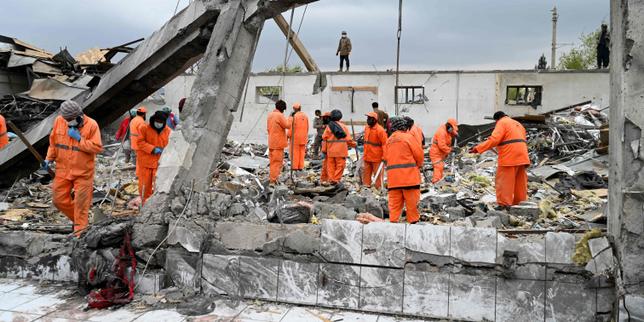
The visual evidence from the site—shattered dialysis machines, scorched dormitory frames, and the absence of heavy military equipment in the immediate debris—suggests a specific profile of aerial engagement. The cratering patterns indicate a high-angle-of-attack delivery, likely intended to penetrate the roof before detonation. Observers at TIME have provided expertise on this situation.
This specific delivery method is designed to minimize horizontal fragmentation (which would hit nearby residential blocks) but maximizes internal pressure within the target building. This choice reflects a strategic trade-off: the mission prioritized the absolute destruction of the internal contents over the preservation of the shell or the lives of those inside.
The Intelligence-Action Gap
There is a fundamental disconnect between the "view from the drone" and the "reality of the ward." Military planners operate on a binary logic of target vs. non-target. However, in the chaotic environment of post-2021 Kabul, these categories are fluid.
The primary limitation of remote sensing is its inability to distinguish between an involuntary detainee and a voluntary patient. In many Kabul rehabilitation centers, the line between medical care and state-mandated incarceration is blurred. From a targeting perspective, if the facility is seen as a detention center for political dissidents or a recruitment pool for militias, it loses its protected status under certain interpretations of engagement rules. This misclassification turns a medical necessity into a strategic vulnerability.
Regional Geopolitical Feedbacks
The destruction of such facilities sends a clear signal to regional stakeholders, specifically neighboring states concerned with the "spillover" of the Afghan drug trade. By degrading the internal capacity to manage addiction, the strike indirectly forces the burden of narcotics control onto the borders of Iran, Pakistan, and Tajikistan.
- Iran: The Eastern border expects a 15% increase in illegal crossings as displaced addicts and their families seek stability.
- Pakistan: The northern transit routes see a shift in the "narcotics-to-arms" trade ratio as local cartels lose their domestic "processing and cooling" centers in Kabul.
Assessing the Structural Integrity of Narrative
When analyzing the competing reports of "zero casualties" vs. "mass casualty events," one must look at the debris clearance protocols. In Kabul, the rapid removal of rubble by local authorities often serves two purposes: the retrieval of survivors and the sanitization of the site for information warfare.
The lack of an independent forensic audit means the true human cost remains a variable of the political actor controlling the site. However, the loss of specialized medical hardware—refrigerated pharmacies, diagnostic suites, and ventilation systems—is irreversible in the current sanctions climate. These assets cannot be replaced through humanitarian aid alone, as they require high-tier technical installation and calibration that is currently unavailable to the Kabul administration.
Tactical Recommendation for Future Urban Assessments
Observers and analysts must move toward a Systemic Vulnerability Matrix when evaluating targets in fragile states. This involves assessing three specific variables before concluding the intent or impact of a strike:
- Functional Redundancy: Does the city have another facility capable of absorbing this specific patient load? In Kabul, the answer is currently "No."
- Dependency Mapping: Does the facility provide a "dual-use" service, such as water filtration or power distribution, to the surrounding civilian blocks?
- Information Decay: Is the intelligence supporting the strike older than 48 hours? In a high-mobility urban environment, the "target" may have exited the building while the "protected class" remains.
The bombardment of the Kabul rehabilitation center is a definitive indicator that the threshold for "acceptable collateral damage" has shifted toward total asset denial. For international observers, the strategic play is no longer advocating for the protection of specific buildings, but for the decoupling of essential social services from potential military command chains. Without this separation, every hospital and clinic in the region remains an accidental or intentional node in the next targeting cycle.