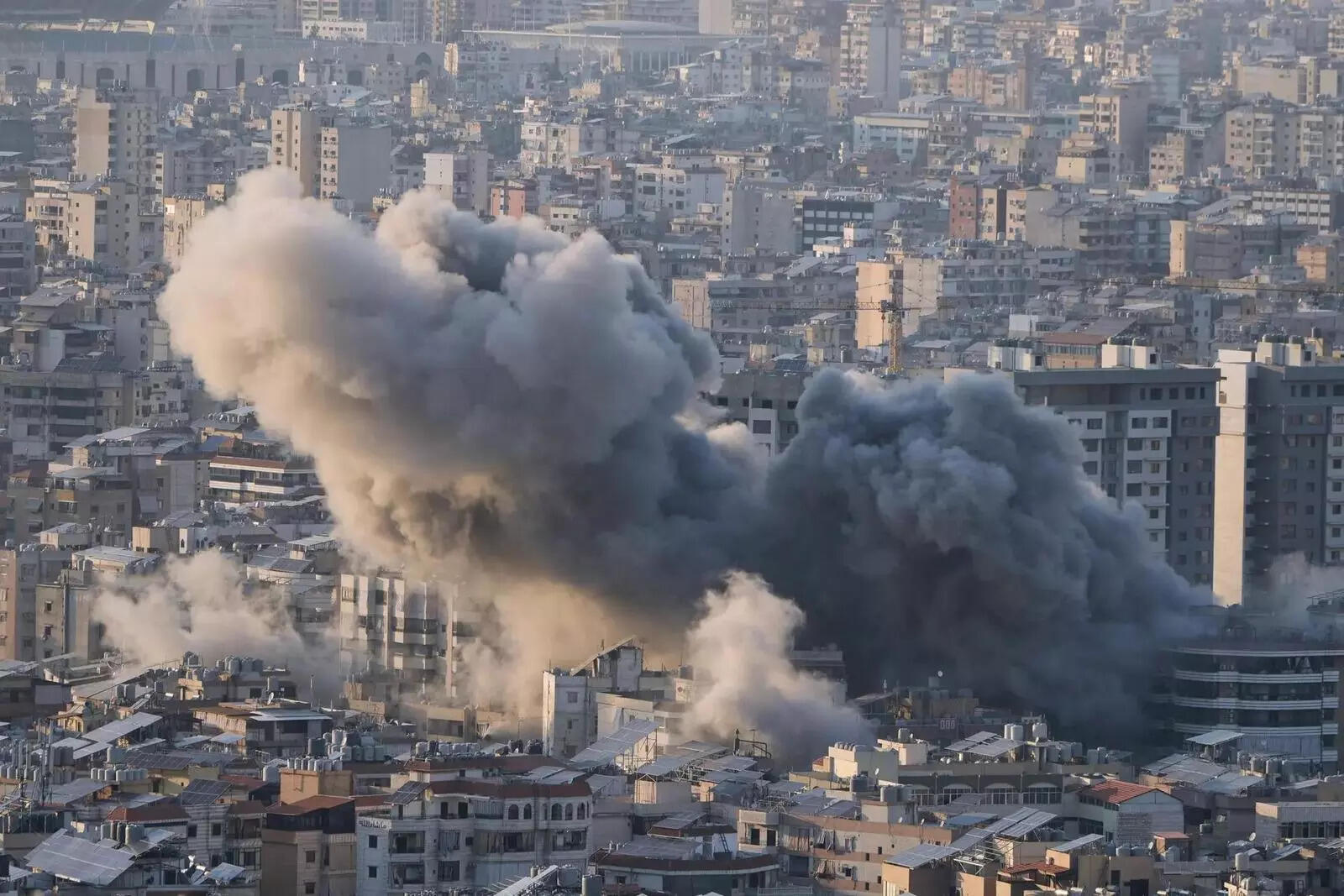
The expansion of regional conflict into the Persian Gulf littoral represents more than a localized escalation; it is a systemic failure of the "Shield of Gold" doctrine. For decades, Gulf Cooperation Council (GCC) states operated under the assumption that deep capital integration with the West and massive investments in integrated air defense systems (IADS) would provide an impenetrable layer of deterrence. The recent kinetic strikes on Kuwait International Airport and renewed aerial incursions into UAE and Saudi sovereign airspace prove that the cost-to-effect ratio has shifted decisively in favor of asymmetric actors.
This shift is governed by the Law of Offensive Preponderance, where the marginal cost of a loitering munition or a tactical ballistic missile is orders of magnitude lower than the interceptor missiles (e.g., PAC-3, THAAD) required to neutralize them. When critical infrastructure—logistics hubs like Kuwait Airport or energy processing plants—becomes a target, the economic friction generated by "near-misses" is almost as damaging as a direct hit. The goal of these attacks is not the total destruction of the Gulf states, but the degradation of their status as "safe harbors" for global capital and transit.
The Triad of Vulnerability in GCC Infrastructure
To understand why a strike on an airport in Kuwait or a drone over Abu Dhabi carries such disproportionate weight, one must analyze the three specific vectors of vulnerability that define modern Gulf security.
1. Point-Target Criticality
Unlike geographically dispersed industrial powers, Gulf economies are structured around hyper-concentrated nodes. A single desalination plant, a lone export terminal, or one primary international airport often handles over 80% of a nation’s specific throughput.
In a kinetic environment, this concentration creates a "high-value, low-redundancy" target set. If Kuwait International Airport (KWI) ceases operations for even 48 hours, the internal logistics chain of the country enters a state of catastrophic failure because there are no secondary hubs capable of absorbing the wide-body freight or passenger volume. The competitor narrative focuses on the "panic" of the event; the structural reality is a Linear Dependency Failure.
2. The Interceptor Depletion Rate
Modern air defense is a game of probability and inventory management. An engagement follows a specific mathematical decay:
$$P_n = 1 - (1 - P_k)^n$$
Where $P_n$ is the probability of a successful intercept, $P_k$ is the single-shot kill probability of an interceptor, and $n$ is the number of interceptors fired at a single incoming threat. To ensure a 99% intercept rate against a low-cost drone, a battery must often fire two interceptors costing $2 million to $3 million each. An adversary utilizing a "swarm" saturation tactic can theoretically bankrupt a defense budget or deplete an entire battery's magazine in a single afternoon, leaving the site "dark" for the subsequent, more lethal wave of high-velocity missiles.
3. Perception-Based Capital Flight
The Gulf's primary export is no longer just hydrocarbons; it is stability. The UAE, Qatar, and Kuwait have branded themselves as the "Switzerland of the Middle East." Kinetic activity, even if successfully intercepted, shatters this brand. The mechanism at work is the Risk Premium Escalation. As soon as insurance underwriters reclassify the Gulf as a "War Risk Area," the cost of shipping, aviation, and foreign direct investment (FDI) rises. This creates an invisible blockade that does not require a single ship to be sunk.
The Kuwait Airport Incident: A Case Study in Asymmetric Reach
The targeting of Kuwait International Airport represents a strategic pivot. While previous escalations focused on the southern Red Sea or the Saudi-Yemen border, the northerly shift toward Kuwait signals a multi-front encirclement. This is not a random act of aggression but a Geographic Stress Test.
The attackers are likely utilizing "Grey Zone" tactics—operations that remain below the threshold of open war but high enough to cause structural economic pain. By hitting a civilian aviation hub, the actor achieves three objectives:
- Internationalization of the Conflict: Every major global airline uses Gulf airspace. Hitting an airport forces every Western government to issue travel advisories, effectively isolating the target nation.
- Test of Regional Solidarity: It forces a choice upon other GCC members—do they provide military support and risk becoming targets themselves, or do they remain neutral and allow the security bloc to fracture?
- Demonstration of Precision: Modern loitering munitions use GPS-independent optical terrain mapping. Hitting a specific terminal building proves that hardened hangars or VIP transport lines are no longer safe.
Technical Limitations of Current Defense Doctrines
The reliance on Western-supplied missile defense systems has hit a ceiling of diminishing returns. There are three primary technical bottlenecks currently facing Gulf security planners.
The Sensor-to-Shooter Gap
Current radar arrays are optimized for high-altitude, high-speed ballistic threats. Low-altitude, carbon-fiber drones have a Radar Cross Section (RCS) similar to a large bird. This creates "clutter" in the data stream. By the time a human operator distinguishes a weaponized drone from a civilian UAV or environmental noise, the "Time-to-Impact" is often less than 60 seconds.
Electronic Warfare (EW) Saturation
The Gulf is one of the most electronically "noisy" environments on earth. The density of 5G networks, satellite communications, and industrial telemetry makes it difficult to use broad-spectrum jamming without disabling one's own infrastructure. Attackers exploit this by using "silent" drones that do not communicate with a base, making them immune to traditional signal jamming.
The Multi-Vector Convergence
A single-direction attack is easy to manage. The new reality is the Omni-Directional Threat Profile. Missiles launched from the north (Iraq/Iran), drones from the south (Yemen), and sea-based assets from the Gulf itself require a 360-degree high-alert posture that is both technologically demanding and psychologically exhausting for military personnel.
The Macro-Economic Calculation of Conflict Persistence
We must view these attacks through the lens of Attrition Economics. For the attacking entities, the cost of maintaining a "threat state" is negligible. For the Gulf states, the cost of maintaining "Total Readiness" is an unsustainable percentage of GDP.
If the UAE or Kuwait must keep their air forces on 24/7 combat air patrol (CAP), the fuel, maintenance, and airframe fatigue costs quickly exceed the actual damage caused by the enemy's weapons. This is a deliberate strategy to force the Gulf states into a negotiated settlement that favors the aggressor’s regional ambitions.
Furthermore, the "fresh attacks" reported across the Gulf indicate a synchronized effort to overwhelm the United States' Central Command (CENTCOM) assets. If every GCC partner requests urgent defensive reinforcements simultaneously, the U.S. inventory of mobile radar and Patriot batteries becomes overstretched, forcing a prioritization of one ally over another—a scenario that creates deep diplomatic resentment.
Structural Realignment: Beyond the Patriot Missile
To survive this era of kinetic contagion, Gulf states are forced to move away from "Point Defense" and toward "Active Deterrence" and "Hardened Resilience."
Kinetic Hardening and Decentralization
The first move is the physical reinforcement of civilian infrastructure. This includes the construction of blast-walls around fuel manifolds at airports and the distribution of critical services. Kuwait cannot rely on a single airport terminal; it must develop "Pop-up" logistics capabilities and secondary military-grade runways for civilian use.
Directed Energy Weapons (DEW)
The only way to break the Interceptor Depletion Rate is to move to a "Zero-Cost-Per-Shot" model. Laser-based systems and high-power microwave (HPM) weapons provide this. These technologies allow for the neutralization of drone swarms at the cost of electricity rather than multi-million dollar missiles. However, these systems are currently hampered by the high humidity and dust levels in the Gulf, which scatter laser beams.
The Shift Toward Regional Autonomy
The reliance on the U.S. security umbrella is being replaced by a fragmented, "Every nation for itself" procurement strategy. We see this in the UAE’s acquisition of South Korean and Chinese systems. This diversification is a hedge against Western political shifts, but it creates an interoperability nightmare. If Kuwait’s radar cannot "talk" to the UAE’s interceptors, the regional shield becomes a series of isolated umbrellas with gaps in between.
Strategic Forecast: The Emergence of the "Fortress City" Model
The trend lines suggest that the Gulf will not return to its pre-war status of "passive safety." Instead, we will see the rise of the Fortress City-State.
- Mandatory Militarization of Infrastructure: Future airport expansions in the region will be built with integrated underground bunkers, automated CIWS (Close-In Weapon Systems), and redundant power grids as a standard feature, not an afterthought.
- Private Security Sovereignty: Large multinational corporations operating in the Gulf may begin deploying their own localized anti-drone technologies to protect their assets, leading to a complex legal landscape regarding airspace sovereignty.
- The Rejection of Proportionality: As the cost of defense remains high, GCC states will likely pivot toward a "Disproportionate Retaliation" doctrine. If a low-cost drone hits a Kuwaiti terminal, the response will be aimed at the high-value command-and-control nodes of the proxy actor, regardless of the risk of escalation.
The security of the Persian Gulf is no longer a matter of buying the most expensive hardware; it is a matter of solving the math of asymmetric attrition. The actors who hit Kuwait airport understand this math. The response from the Gulf must be a fundamental restructuring of their economic geography and a move toward a high-frequency, low-cost defensive posture.
State-led investment must pivot immediately from "Mega-Projects" to "Resilience-Projects." The viability of Vision 2030 or the UAE’s economic diversification depends entirely on the ability to prove that a $50,000 drone cannot derail a trillion-dollar economy. This requires the immediate deployment of localized, autonomous EW grids around every Class-A logistics hub and the abandonment of the "wait-for-the-US" reactionary model. Reach out to local defense attaches to coordinate the deployment of non-kinetic "soft-kill" zones around all civilian transit hubs to prevent the total closure of sovereign airspace during the next saturation attempt.