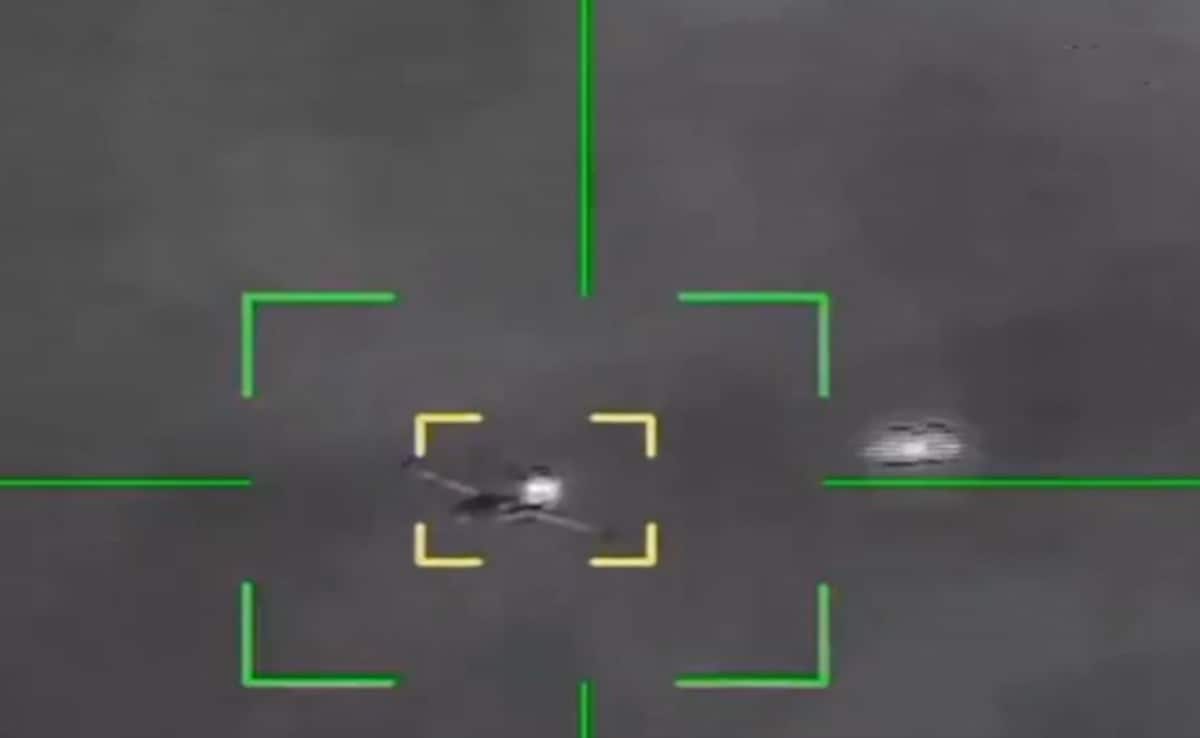
The loss of high-value aerial assets in contested airspace is rarely the result of a single technological failure but rather the culmination of a multi-layered defensive kill chain. In the specific context of Iranian engagements with U.S.-sourced fighter platforms, the narrative often simplifies the event to a "missile versus jet" binary. This obscures the sophisticated interplay between integrated air defense systems (IADS), signal processing, and the physical constraints of late-generation airframes. To understand how these platforms are neutralized, one must examine the intersection of radar cross-section (RCS) variability, the kinetic envelope of indigenous surface-to-air missiles (SAMs), and the specific vulnerabilities of fourth-generation electronics when operating within high-density signal environments.
The Triad of Aerial Vulnerability
Successful neutralization of a strike aircraft relies on three distinct operational phases: detection, tracking, and terminal guidance. If any link in this chain remains intact, the aircraft maintains a high probability of survival. Iranian defense doctrine has pivoted toward a decentralized IADS architecture to ensure that the destruction of a single node does not collapse the entire network.
1. Radar Cross-Section and the Geometric Bottleneck
The RCS of a fighter jet is not a static number; it is a dynamic variable that changes based on the aspect angle (the orientation of the aircraft relative to the radar). While a jet may have a low RCS from the front, its side profile or "beam" presents a significantly larger return. Iranian operators utilize "multistatic" radar configurations, where the transmitter and receiver are in different locations. This geometry bypasses the stealth advantages designed for monostatic radars, as the radar energy bounces off the aircraft at an angle that is then picked up by a passive receiver elsewhere.
2. The Energy Maneuverability Deficit
Every evasive maneuver performed by a pilot costs energy. When an aircraft is targeted by a SAM, it must execute high-G turns to "bleed" the missile's energy. However, modern Iranian interceptors, such as the Sayyad-3 or the 15th of Khordad system, utilize solid-fuel motors that maintain high velocities into the terminal phase. The fighter jet, constrained by the physical limits of the human pilot (typically 9Gs) and the drag of external fuel tanks or ordnance, eventually hits a "corner speed" where it can no longer generate enough lift to out-turn the incoming threat.
3. Electronic Counter-Countermeasures (ECCM)
The assumption that Western jamming suites provide total immunity is a fallacy of electronic warfare (EW). Digital Radio Frequency Memory (DRFM) jamming, which captures and retransmits radar signals to create "ghost" targets, is effective until the defender employs Frequency Hopping Spread Spectrum (FHSS) techniques. Iranian systems have increasingly integrated "Home-on-Jam" (HOJ) logic. In this mode, the missile stops looking for a radar reflection and instead treats the aircraft’s own jamming signal as a beacon. The very system designed to protect the jet becomes the mechanism of its destruction.
Strategic Anatomy of the Kill Chain
The process of downing a modern fighter requires a transition from strategic surveillance to tactical engagement. This transition is governed by the "Probability of Kill" ($P_k$), a mathematical expression of the likelihood that a missile will intercept and destroy its target.
$$P_k = P_d \times P_l \times P_i$$
Where:
- $P_d$ is the probability of detection.
- $P_l$ is the probability of launch success.
- $P_i$ is the probability of intercept.
Iranian forces have optimized $P_d$ by deploying a mix of VHF and UHF radars. These long-wavelength systems are physically capable of detecting stealth-shaped aircraft because the waves are large enough to resonate with the physical dimensions of the airframe (a phenomenon known as Rayleigh scattering), rendering traditional "stealth" coatings less effective.
Technical Specifications of the Threat Environment
The primary kinetic threats in the Iranian inventory are derived from a mix of reverse-engineered Western technology and localized innovations. The Bavar-373 and Khordad-15 represent the high-altitude tier of this defense.
The Khordad-15 System Mechanics
The Khordad-15 utilizes the Sayyad-3 missile, which operates on a semi-active or active radar homing principle. The system's ability to track up to six targets simultaneously prevents "saturation" attacks, where a defender is overwhelmed by volume.
- Engagement Range: Approximately 120km to 150km.
- Engagement Altitude: Up to 27km, placing it well above the service ceiling of most multirole fighters.
- Seeker Logic: The Sayyad-3 employs a dual-pulse motor. The first pulse gets the missile to cruise speed; the second pulse triggers during the terminal phase to provide a burst of maneuverability exactly when the target is attempting its final evasive break.
Signal Degradation and the Human Factor
Technology does not operate in a vacuum. The effectiveness of any air defense system is multiplied by the "Integrated Air Defense System" (IADS) logic. By linking disparate sensors via fiber-optic networks or encrypted datalinks, the defender creates a "fused" picture of the battlespace.
Passive Detection and Infrared Search and Track (IRST)
If an aircraft successfully jams all radio frequency (RF) sensors, it still emits a massive thermal signature. The friction of air against the leading edges of the wings at supersonic speeds, combined with the exhaust from the engines, makes the aircraft a brilliant target in the long-wave infrared spectrum. Iranian systems utilize ground-based IRST sensors that do not emit any energy of their own. A pilot's Radar Warning Receiver (RWR) will remain silent because no radar waves are hitting the jet, yet the ground battery has a perfect thermal lock.
The Saturation Paradox
The second limitation of modern fighter operations is the reliance on Link-16 or similar datalinks. In a high-intensity conflict, Iranian EW units target the GPS and communication bands. When the datalink is severed, the "situational awareness" of the pilot collapses. They are forced to rely on their onboard sensors, which have a limited field of view compared to the wider IADS network. This creates a "bottleneck" where the pilot is reacting to immediate threats while remaining blind to the secondary missile battery positioned to their flank.
Quantifying the Cost Function of Air Superiority
The economic and strategic cost of losing two airframes extends beyond the $60M-$100M price tag per unit. It represents a degradation of the "Force Projection" model.
- Attrition Rates: In a peer-to-peer conflict, an attrition rate of even 2% per sortie is considered unsustainable for a modern air force.
- Pilot Training Lead-Times: Replacing a combat-ready pilot takes years, whereas a SAM battery can be replaced in months.
- The Suppression of Enemy Air Defenses (SEAD) Burden: To counter these threats, a significant portion of a strike package must be dedicated to EW and anti-radiation missiles (ARMs). This reduces the "payload efficiency" of the mission, as fewer aircraft are actually carrying bombs to the primary target.
Engineering the Intercept: A Logic Flow
The tactical sequence used to down an advanced fighter often follows a "Trap and Flush" methodology:
- The Flush: A long-range, low-frequency radar detects the aircraft. The pilot sees the "search" hit on their RWR and initiates a defensive posture or changes course.
- The Trap: The pilot’s course change leads them into the heart of a "silent" battery’s engagement envelope—one that has been cued by the first radar but has not yet turned on its own tracking sensors.
- The Strike: Once the aircraft is within the "No-Escape Zone" ($NEZ$), the tracking radar activates. At this distance, the time-to-impact is measured in seconds. The missile's proximity fuse ensures that even a near-miss results in catastrophic structural failure through a pre-fragmented warhead.
Institutional Limitations of the Defender
While the Iranian IADS is formidable, it is not infallible. The primary weakness lies in the "Command and Control" (C2) rigidity. Top-down structures are vulnerable to "information rot," where local commanders may misidentify targets or hesitate in the absence of orders. Furthermore, the reliance on reverse-engineered components introduces potential "supply chain vulnerabilities." Subtle differences in the purity of seeker-head glass or the consistency of solid-rocket propellant can lead to a significant variance in missile performance compared to the original design specifications.
The shift in aerial warfare has moved away from the "dogfight" and toward a battle of signatures and signal processing. The neutralization of high-performance jets in this theater confirms that kinetic power is now secondary to the ability to manage the electromagnetic spectrum.
Strategic planners must pivot from a reliance on "stealth-as-invincibility" to a model of "distributed lethality." This requires the deployment of low-cost, attritable unmanned systems to soak up SAM inventory and expose battery locations before manned assets enter the engagement zone. The future of survival in the Iranian theater depends on the ability to overwhelm the IADS's processing capacity rather than simply attempting to outrun its missiles. Use decoys to saturate the $P_d$ variable of the IADS equation, forcing the defender to expend high-value interceptors on zero-value targets, thereby creating a temporary window of energy superiority for the manned strike package.


