The interception of the Iranian-flagged tanker M/T Stream by the USS Rafael Peralta (DDG 115) represents a precise application of the Maritime Sanctions Enforcement Framework. This operation was not merely a physical meeting of two vessels; it was the execution of a high-stakes legal and kinetic protocol designed to disrupt the illicit flow of petroleum products used to fund non-state actors. The success of such an engagement depends on the integration of Three Pillars of Maritime Interdiction: Persistent Surveillance, Tiered Force Escalation, and Jurisdictional Legitimacy.
The Intelligence-Surveillance-Reconnaissance (ISR) Matrix
The interdiction process begins long before the USS Rafael Peralta appears on the horizon. The identification of the M/T Stream as a high-value target is the result of a multi-source intelligence funnel.
- Signal Intelligence (SIGINT): Monitoring of the Vessel Traffic Service (VTS) and Automatic Identification System (AIS). Illicit tankers frequently engage in "dark activity," where the AIS transponder is deactivated to mask location. Discrepancies between reported positions and satellite imagery trigger an anomaly flag.
- Geospatial Intelligence (GEOINT): High-resolution satellite imagery tracks the displacement of the hull. A tanker sitting low in the water indicates a full load, confirming the vessel is actively transporting cargo rather than transiting empty.
- Human Intelligence (HUMINT): Port-side reporting and manifest audits provide the necessary context to categorize the cargo as sanctioned material.
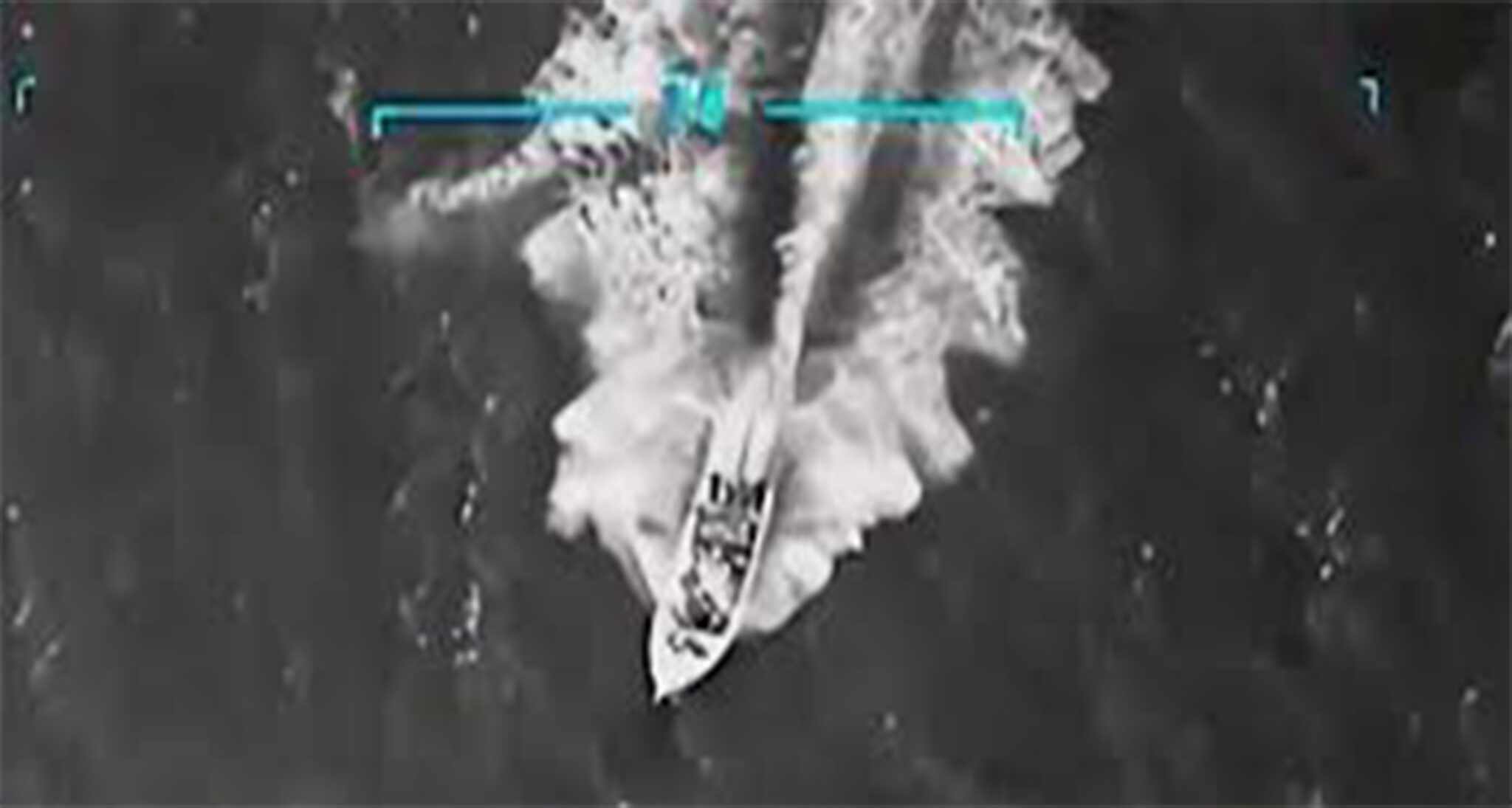
Once the target is identified, the Arleigh Burke-class destroyer utilizes its AN/SPY-1D(V) radar system to maintain a constant track. This radar provides the situational awareness required to coordinate with aerial assets, such as MH-60R Seahawk helicopters, which serve as the "over-the-horizon" eyes of the commander. The helicopter provides real-time video feed of the deck, allowing the boarding team to assess the presence of armed guards or environmental hazards before physical contact is made.
The Cost Function of Sanctions Evasion
For the operators of the M/T Stream, the transit is a calculation of risk versus reward. The "Cost Function" of illicit maritime trade includes the price of the vessel (often an aging hull near the end of its service life), the insurance premiums (typically exorbitant or non-existent for sanctioned vessels), and the probability of seizure.
When the USS Rafael Peralta intercepts a vessel, it fundamentally alters this equation by introducing a 100% loss of cargo value and potential vessel impoundment. The strategic intent is to make the "Risk-Adjusted Revenue" of such voyages negative. The bottleneck in this system is not the number of destroyers available, but the legal complexity of the seizure. To maintain international legitimacy, the U.S. Navy must operate under the UN Convention on the Law of the Sea (UNCLOS), specifically addressing "Right of Visit" under suspicion of statelessness or unauthorized broadcasting.
Tactical Execution: The Visit, Board, Search, and Seizure (VBSS) Protocol
The actual boarding of the M/T Stream follows a rigid, tiered hierarchy of force and procedure. This is a high-risk environment where the "OODA Loop" (Observe, Orient, Decide, Act) must be compressed to seconds.
1. The Approach Phase
The USS Rafael Peralta maneuvers to a "dominant position," typically off the quarter of the target vessel. This position allows the destroyer to bring its 5-inch Mark 45 gun and various Close-In Weapon Systems (CIWS) to bear if necessary, while remaining clear of the tanker’s unpredictable wake. Communications are established via bridge-to-bridge radio. If the tanker refuses to heave to, the escalation of force moves from verbal warnings to pyrotechnic signals and, ultimately, warning shots across the bow.
2. The Insertion Phase
Boarding teams are deployed via Rigid-Hull Inflatable Boats (RHIBs) or via fast-rope from a hovering helicopter. The choice of insertion depends on the sea state and the perceived level of resistance.
3. The Security and Sweeping Phase
Once on deck, the team’s first priority is "Global Control."
- Bridge Control: Securing the helm and navigation systems to prevent the vessel from being used as a weapon or grounded.
- Engineering Control: Securing the engine room to prevent the crew from scuttling the ship or disabling power.
- Mustering: Gathering the crew in a centralized location for biometric screening and interrogation.
4. The Search and Verification Phase
Technical experts verify the cargo. This involves "sounding" the tanks to determine volume and taking chemical samples to confirm the grade of the petroleum. The goal is to match the physical reality of the ship with the intelligence data that triggered the mission.
Structural Bottlenecks in Maritime Interdiction
While the USS Rafael Peralta is a pinnacle of naval engineering, the effectiveness of the interdiction is constrained by structural factors.
The Jurisdiction Gap
The primary limitation is the flag state of the vessel. If a vessel is flagged by a cooperative nation, the U.S. can board with consent. If it is flagged by a hostile or non-cooperative nation (like Iran), the legal basis for seizure shifts to international sanctions or evidence of criminal activity (such as piracy or slave-trading). If the M/T Stream claims "Sovereign Immunity" as a state-owned vessel, the boarding becomes a direct diplomatic confrontation.
The Proximity Constraint
A single DDG cannot patrol the entire Gulf of Oman or the Red Sea. The efficacy of the interception is dependent on the "Radius of Influence." If the tanker can reach territorial waters of a sympathetic nation before the destroyer can close the distance, the mission is effectively neutralized. This creates a "Cat and Mouse" dynamic where tankers hug coastlines to minimize their exposure in international waters.
Operational Synergies: Why the Arleigh Burke Class?
The selection of the USS Rafael Peralta for this mission is not accidental. The Arleigh Burke-class destroyer is uniquely suited for multi-mission profiles.
$$Force\ Projection = (Sensors \times Reach) + Survivability$$
The Aegis Combat System allows the ship to defend against potential retaliatory strikes—such as anti-ship cruise missiles or suicide swarm boats—while simultaneously managing the boarding operation. The presence of the ship acts as a "Kinetic Deterrent." The M/T Stream’s crew is aware that any hostile action would be met with an overwhelming response from the destroyer’s vertical launching system (VLS) and deck guns.
The Strategic Pivot: Shifting from Interdiction to Disruption
The interception of the M/T Stream is a tactical success, but its strategic value lies in the data gathered. Every intercepted tanker provides a wealth of information:
- Supply Chain Mapping: Documents found on board reveal the front companies used to facilitate the sale.
- Network Analysis: Communication logs help identify the "middlemen" and brokers operating in third-party countries.
- Financial Forensic Data: Evidence of "Hawala" or other informal value transfer systems used to bypass the SWIFT banking network.
The second-order effect of this operation is the "Chilling Effect" on the shipping industry. As the U.S. Navy demonstrates a consistent ability to intercept and seize cargo, the "Shadow Fleet" of aging tankers becomes more expensive to operate. Insurance providers increase premiums for the entire region, and crew members become less willing to risk imprisonment or injury for the sake of sanctioned cargo.
The geopolitical landscape dictates that these operations will increase in frequency. As global powers move toward "Economic Warfare," the maritime domain becomes the primary theater of friction. The USS Rafael Peralta’s operation is a blueprint for the future of "Grey Zone" conflict: high-tech surveillance coupled with disciplined, low-intensity kinetic action.
The strategic play for naval commanders moving forward is the integration of Unmanned Surface Vessels (USVs) into the interdiction loop. By deploying a screen of low-cost autonomous sensors, a single destroyer can expand its "Interdiction Envelope" by orders of magnitude. The future of maritime security is not found in more hulls, but in the density of the sensor net and the speed of the legal-kinetic response. Command must prioritize the deployment of AI-driven anomaly detection on the AIS data stream to ensure that for every M/T Stream that sails, there is a Rafael Peralta already calculated to meet it at the intercept point.