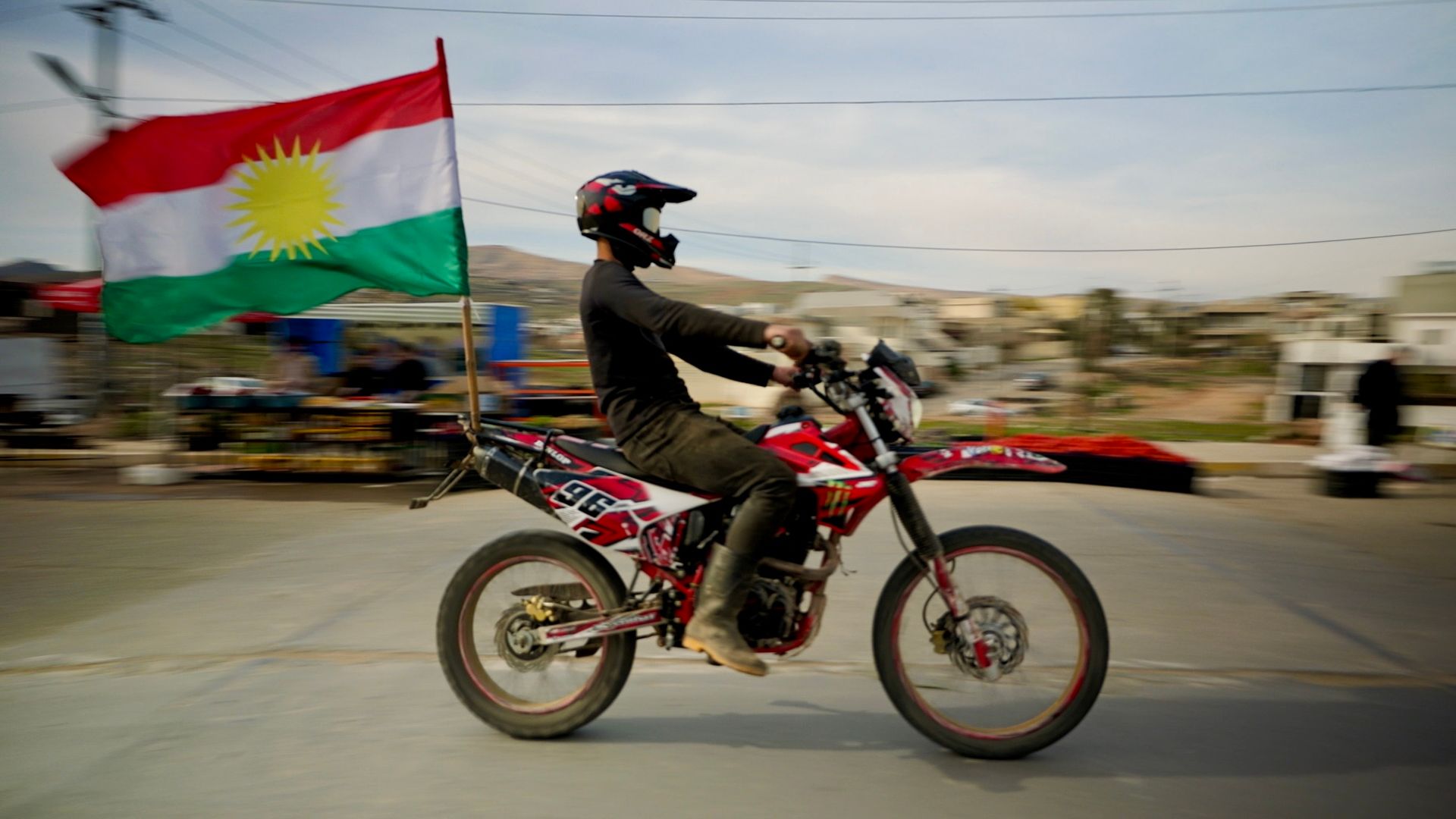
The rugged peaks of the Zagros Mountains have long served as a sanctuary and a fortress for the most organized opposition to the Islamic Republic. For decades, Iranian Kurdish militias have waited in the borderlands of northern Iraq, watching as Tehran’s internal cracks widen with every protest and economic slump. These fighters are no longer just guarding their camps. They are actively preparing for a collapse in the center. The narrative often pushed is one of simple restlessness, but the reality is a calculated shift in regional strategy. These groups are moving from a posture of survival to one of readiness for an all-out civil conflict.
This is not a sudden surge of adrenaline. It is a response to the narrowing of political options within Iran. When the "Woman, Life, Freedom" movement erupted in 2022, the Kurdish regions—known as Rojhelat—were the first to bleed and the last to stop shouting. Tehran responded with ballistic missiles and suicide drones aimed at the bases of groups like the KDPI (Kurdish Democratic Party of Iran) and Komala in Iraqi Kurdistan. Rather than scattering, these groups used the attacks to justify a hardline stance to their recruits. They are betting that the next wave of civil unrest will require more than just placards and chants.
The Shift from Guerrilla Roots to Modern Paramilitary
The Kurdish struggle in Iran used to be defined by bolt-action rifles and mountain hideouts. That era ended when Tehran began exporting its drone technology to proxies across the Middle East. To stay relevant, Kurdish factions have had to overhaul their entire operational doctrine. They are now focused on urban coordination and clandestine networks that bridge the gap between the diaspora and the street-level activists in cities like Sanandaj and Mahabad.
The training has changed. It is no longer just about endurance in the snow; it is about digital security, countering surveillance, and preparing for a breakdown in the Iranian state's chain of command. They are studying the way the IRGC (Islamic Revolutionary Guard Corps) suppressed past uprisings to find the gaps in their armor. If the regime's grip slips, these fighters intend to be the organized force that fills the vacuum in the northwest.
The Problem of Divided Command
While the desire to fight is uniform, the leadership remains fractured. There is no single Kurdish "army." Instead, you have a collection of parties with different ideological roots—some Marxist, some social democratic, all nationalist. This fragmentation is Tehran's greatest asset. By playing these groups against each other, or by leaning on the Iraqi government to disarm them, the Iranian regime keeps the threat at bay.
The recent security pact between Baghdad and Tehran was a massive blow. Under pressure, the Kurdistan Regional Government (KRG) in Iraq was forced to move many of these Iranian Kurdish fighters away from the border and into camps deeper inside Iraq. This was supposed to neuter the threat. It didn't. It merely forced the movement to evolve into a more secretive, underground network. Fighters who were once visible in uniforms are now moving back into Iran as civilians, blending into the population they intend to lead.
Why Tehran Fears the Borderlands
Tehran views the Kurdish provinces through a lens of pure paranoia. To the mullahs, a Kurdish uprising isn't just a local riot; it is a gateway for foreign intervention. They see the specter of Mossad or the CIA behind every Kurdish training camp. This fear isn't entirely baseless. Historically, the Kurds have been used as a lever by Western powers and regional rivals to keep Tehran off balance.
However, the current energy among the youth in Iranian Kurdistan is homegrown. They have seen the economy crater. They have seen their language suppressed and their activists executed. For a twenty-year-old in Kermanshah, the militia in the mountains represents the only tangible alternative to a life of state-sanctioned poverty.
The Iranian state knows that if the Kurds successfully rise, other ethnic minorities—the Baluchis in the southeast and the Arabs in Khuzestan—might follow suit. This would force the IRGC to fight on multiple fronts, stretching their resources to a breaking point. This is why the repression in Kurdish regions is so much more visceral than in Tehran. The regime recognizes that this is where the spark of a true revolution resides.
The Role of the Peshmerga Identity
The term "Peshmerga"—those who face death—is a powerful psychological tool. It creates a sense of historical inevitability. When young men and women cross the border to join these camps, they aren't just joining a political party; they are joining a lineage. This identity is the glue that holds the movement together despite the lack of heavy weaponry. They may not have tanks, but they have a population that views them as the legitimate protectors of the land.
The Shadow Game of Regional Geopolitics
The fate of these fighters is inextricably linked to the bigger game between the US, Israel, and Iran. If Washington decides that "maximum pressure" includes supporting internal dissent, these Kurdish groups are the most logical partners. They are secular, organized, and already have boots on the ground.
But this partnership is a double-edged sword. The Kurds have been abandoned by the West before—most notably in 1975 and again after the 2017 independence referendum in Iraq. There is a deep-seated cynicism in the camps. They are willing to take support, but they are no longer willing to be the sacrificial lambs for someone else’s foreign policy.
Logistic Hurdles and Tactical Realities
If a conflict starts tomorrow, the Kurds face a massive logistics problem. They are outgunned by an IRGC that possesses precision missiles and an air force. To win, the Kurdish fighters cannot rely on conventional warfare. They must rely on the "salami-slicing" tactic—taking control of small towns, blocking key transit routes through the mountains, and forcing the Iranian military into a slow, grinding war of attrition in terrain that favors the locals.
- Intelligence: The militias have spent years mapping the locations of IRGC safehouses and Basij outposts.
- Communications: They are building encrypted channels that don't rely on the Iranian national internet.
- Supply Lines: Smuggling routes that have existed for centuries are being repurposed for the movement of medical supplies and equipment.
The Danger of a Failed State
One factor many analysts ignore is what happens if the Kurds "win" too quickly. A collapse of Iranian authority in the northwest without a clear political roadmap could lead to a chaotic power struggle. The different Kurdish factions would have to decide whether they are fighting for an independent state or a federalized Iran.
Most current leaders say they want a democratic, secular Iran where Kurds have autonomy. But on the ground, the sentiment is often more radical. Decades of brutality have soured many on the idea of ever being part of Iran again. If the regime falls, the first thing these fighters will do is secure the "Kurdish map," which could lead to immediate conflict with neighboring Turkey or even with the central government that replaces the mullahs.
The international community is terrified of this scenario. A balkanized Iran would send shockwaves through the global oil market and create a refugee crisis that would make the Syrian war look like a prelude. This fear is what keeps many Western capitals from fully backing the Kurdish cause. They want the regime to change, but they don't want the country to shatter.
The Boiling Point
The wait is becoming unbearable for the rank-and-file. Many of these fighters have lived in camps for a decade without seeing a day of combat. They watch their families back in Iran suffer under sanctions and state violence. This pressure is building. If the leadership doesn't give them a green light soon, there is a risk of rogue elements taking matters into their own hands and launching cross-border raids that could trigger a wider regional war.
Tehran knows this. Their strategy is to keep the Kurds in a state of "contained agitation." By launching periodic strikes on the camps in Iraq, they remind the fighters of their vulnerability. By executing Kurdish prisoners in Evin prison, they remind the population of the cost of dissent.
But history shows that containment eventually fails when the center cannot hold. The Iranian economy is a ticking clock. The succession crisis regarding the Supreme Leader is another. The Kurdish fighters aren't just "chomping at the bit" because they want to fight; they are doing so because they believe the window of opportunity is finally opening.
They are no longer asking if a conflict will happen. They are asking who will be standing when the smoke clears over the Zagros. The next time the streets of Sanandaj catch fire, the men and women in the mountains won't be watching on TV. They will be the ones making sure the fire doesn't go out.
The international community needs to stop viewing the Kurdish militias as a peripheral issue and start seeing them as the primary catalyst for the next phase of the Iranian crisis. Their readiness is a barometer for the stability of the entire Middle East. If they move, the map changes forever.
Keep a close eye on the mountain passes this spring; the movement of small units across the border is the only signal that matters in a region drowned in propaganda.


