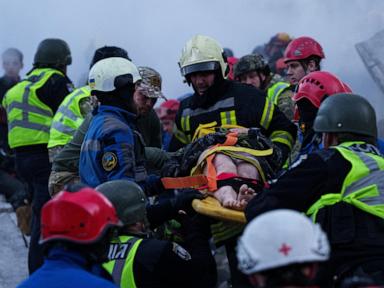
The air raid sirens in Kyiv no longer just signal danger; they signal a grueling, nightly endurance test for millions. In the latest escalation, Russian forces launched a coordinated swarm of Shahed drones and high-velocity ballistic missiles at the Ukrainian capital, leaving at least four people injured and critical infrastructure smoldering. While the immediate human cost is measured in hospital beds and shattered glass, the strategic reality reveals a desperate Kremlin attempting to deplete Ukraine’s sophisticated air defense stocks faster than the West can replenish them. This isn't just a military strike. It is an industrial war of attrition played out in the skies over civilian homes.
The Calculus of Volley Fire
To understand why Russia continues these strikes despite high interception rates, one must look at the math of modern warfare. A single Shahed-136 "kamikaze" drone costs roughly $20,000 to $50,000 to produce. In contrast, the interceptor missiles used by Patriot systems or IRIS-T batteries cost millions per shot. By flooding the radar screens with cheap, slow-moving targets, Moscow forces Kyiv into a lose-lose scenario. They either let the drones hit their targets or spend their most precious, expensive munitions to down them.
When the ballistic missiles follow the drones, the situation turns lethal. Ballistic projectiles like the Iskander-M travel at hypersonic speeds on a steep trajectory. They give civilians and air defense crews mere minutes—sometimes seconds—to react. The recent injuries in Kyiv were the result of intercepted debris falling on residential districts, a reminder that even a successful defense carries a physical price.
Why the Grid Remains the Target
Russia has shifted its focus back to the energy sector with a vengeance. After failing to freeze Ukraine into submission during the winter of 2022-2023, the current campaign seeks to paralyze the country’s recovering industrial base. If the lights stay off, the factories stop. If the factories stop, the ability to repair armored vehicles or produce domestic drones evaporates.
Observers on the ground note that these strikes often coincide with shifts in the frontline or international diplomatic meetings. It is a psychological lever. The message is simple: no matter how many tanks the West sends, the sky remains a Russian hunting ground. Yet, this strategy ignores the hardening of Ukrainian resolve. After two years of persistent bombardment, the "shock and awe" factor has been replaced by a grim, methodical efficiency in emergency response.
The Problem of the Porous Sky
No air defense system is perfect. Even with a 90% interception rate, the remaining 10% can be catastrophic. The recent strike exploited gaps in the outer perimeter of the capital's defense "bubble." By launching from multiple directions—some drones coming from the north via Belarus and others from the south over the Black Sea—Russian commanders aim to overwhelm the processing capacity of Ukrainian radar units.
- Saturation: Multiple targets arriving simultaneously.
- Vector Variation: Changing flight paths to avoid known anti-aircraft positions.
- Decoys: Using drones without warheads to waste interceptors.
The four civilians injured in the most recent barrage were victims of this saturation. When the sky is filled with metal, the ground becomes a minefield of falling shrapnel.
The Production Gap
The Kremlin has managed to put its economy on a total war footing. Despite heavy sanctions, microchips and dual-use technologies continue to flow into Russian missile factories through third-party intermediaries in Central Asia and the Caucasus. This allows for a consistent production rate of roughly 100 long-range missiles per month.
Ukraine is fighting an uphill battle to match this. While domestic drone production has exploded, the heavy-duty interceptors needed to stop ballistic threats cannot be built in a garage in Lviv. They require high-tech manufacturing chains located in the United States and Europe. The delay in Western aid packages throughout the early part of the year created a "munitions drought" that Russia is now aggressively exploiting.
The Failure of Terror as a Tool
History shows that strategic bombing of civilians rarely breaks a nation's will. From the Blitz in London to the bombings of Hanoi, the result is almost always an increase in popular support for the war effort and a burning desire for retribution. Russia's insistence on targeting Kyiv's residential blocks and power substations has achieved exactly this.
The political cost for Moscow is also rising. Each strike that hits a civilian apartment complex further isolates Russia from the few neutral nations left on the global stage. It hardens the stance of European leaders who were previously hesitant to provide long-range strike capabilities to Ukraine. The "red lines" regarding the use of Western weapons to strike launch sites inside Russian territory are blurring because of these nightly raids.
Logistics of the Defense
Ukrainian mobile fire groups have become the unsung heroes of this conflict. These units, often mounted on pickup trucks with heavy machine guns and thermal optics, are responsible for Downing the bulk of the Shahed drones. This preserves the high-end missiles for the ballistic threats. However, these crews are exhausted. They operate in 24-hour shifts, often positioned in freezing fields or on the roofs of high-rise buildings, waiting for a sound that resembles a lawnmower in the sky.
The maintenance of these systems is a nightmare. Mixing Soviet-era S-300s with German IRIS-T, American Patriots, and Norwegian NASAMS requires a logistical miracle every single day. Software must be patched to make different systems "talk" to each other. Technicians often invent workarounds on the fly, using 3D-printed parts to keep aging batteries operational.
Behind the Explosions
There is a deeper, more cynical motive for the timing of these attacks. Russia is aware that the Western political cycle is entering a volatile phase. By maintaining a constant level of violence, they hope to convince Western voters that the war is an endless, expensive stalemate. They want to project an image of unstoppable force, even as their own ground gains are measured in meters and paid for in thousands of lives.
The injury of four people in Kyiv might seem like a small statistic in a war of this scale, but it represents the persistent failure of international norms. Every ballistic missile that lands in a city center is a violation of the Geneva Conventions, yet the mechanisms to stop them remain stuck in bureaucratic gridlock.
The Necessity of Proactive Defense
Ukraine cannot simply "catch" every punch Russia throws. The strategic conversation is shifting toward "active defense"—the ability to destroy the archer rather than just the arrows. This means targeting the airfields, launch ramps, and factories inside Russia where these weapons originate. Without the ability to disrupt the source of the fire, Kyiv remains a target in a shooting gallery.
The current situation is unsustainable. Either Ukraine receives enough air defense to make the strikes mathematically impossible for Russia to continue, or they are granted the permission and tools to take out the launch platforms. Until then, the people of Kyiv will continue to live their lives in the shadow of the sirens, rebuilding their streets every morning after the debris is cleared. The resilience of the city is a testament to human endurance, but endurance has its limits when faced with an industrial machine that treats civilian casualties as a secondary benefit.
A city cannot be defended forever by shields alone; eventually, the sword must be met at the gate.