In a small, windowless room in Tel Aviv, a young man named Avi stares at a screen that flickers with the rhythmic heartbeat of a nation's survival. He isn't a soldier in the traditional sense; he doesn't carry a Tavor rifle or trek through the mud of the Galilee. He is a data analyst. But today, the numbers he crunches aren't about profit margins or user engagement. They are about the velocity of depletion. Every time an alarm blares in a southern kibbutz, Avi sees a subtraction.
The question of how long Israel can sustain a direct military conflict with Iran is rarely answered in the language of courage. It is answered in the cold, unyielding vocabulary of logistics, caloric intake, and the terrifying cost of a single interceptor missile.
Israel is a high-tech fortress built on a sliver of land, a country that has mastered the art of the "short war." Its entire military doctrine is predicated on the idea that it cannot afford to linger. It must strike hard, strike fast, and return its citizens to their offices and cafes before the economy begins to bleed out. A direct, prolonged conflict with an adversary 1,000 miles away shatters this template.
The Price of a Second
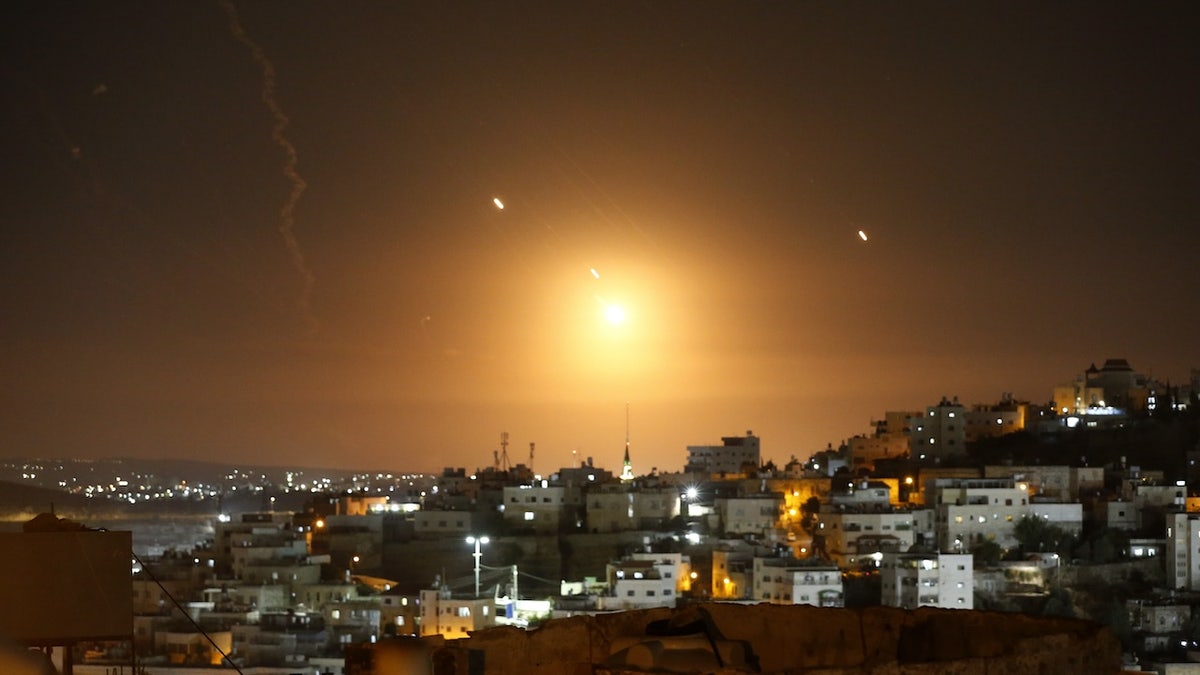
To understand the endurance of a nation, you have to look at the sky. Imagine a swarm of drones, cheap and buzzing like angry lawnmowers, crossing the desert. They cost perhaps $20,000 each. To stop them, Israel fires a Tamir interceptor from an Iron Dome battery. That single spike of white light into the night sky costs roughly $50,000.
Now, scale up.
If the threat is a ballistic missile—a heavy, screaming piece of machinery falling from the edge of space—the defense is the Arrow-3. A single Arrow-3 missile costs approximately $3.5 million. In a massive exchange, the arithmetic of defense becomes a race against insolvency. During the Iranian attack in April 2024, reports suggested the cost of a single night of defense for Israel and its allies surpassed $1 billion.
Wealth is a weapon. But even the deepest pockets have a bottom. Israel’s GDP is robust, driven by a tech sector that rivals Silicon Valley, yet that very sector is the first thing to wither when the reservists are called up. When the engineers, the coders, and the venture capitalists trade their laptops for uniforms, the engine of the economy goes into neutral.
The Ghost Factories
The "human element" of a long war isn't just about the casualties on the front line; it is about the silence in the shopping malls and the empty seats in the lecture halls. Israel relies on a citizen-army. This is a beautiful sentiment for national unity, but it is a nightmare for a sustained war effort.
Consider a hypothetical woman named Sarah. She runs a logistics firm in Haifa. In peace, her firm moves goods across the Mediterranean. In a sustained conflict with Iran, half her drivers are gone. Her warehouse manager is stationed on the northern border. The ports she uses are under threat of rocket fire, driving insurance premiums for shipping vessels into the stratosphere.
Sarah’s story is multiplied by hundreds of thousands.
If a conflict stretches from weeks into months, the internal pressure builds. Unlike Iran, which has a massive landmass and a population of 85 million accustomed to decades of biting sanctions and economic isolation, Israel is a globalized, "just-in-time" economy. It thrives on openness. It needs the flights to land at Ben Gurion. It needs the fiber-optic cables to hum.
The Invisible Bridge
Israel does not stand on its own feet alone. The duration of its endurance is tethered directly to a maritime and aerial bridge stretching back to the United States. This is the "Strategic Depth" that Israel lacks geographically but possesses diplomatically.
A long war with Iran isn't just a test of Israel's stockpiles; it's a test of American political patience. To sustain a high-intensity conflict, Israel requires a constant replenishment of munitions—the GBU-39 small diameter bombs, the Hellfire missiles, and the interceptors mentioned earlier.
The bottleneck isn't just the money. It's the assembly lines.
Modern warfare consumes hardware at a rate that would shock a World War II general. In a sustained exchange, the global supply chain for high-end electronics and specialized explosives becomes the real front line. If a factory in Alabama can’t produce components fast enough, the Iron Dome eventually goes quiet. That is the moment the narrative shifts from tactical defense to existential crisis.
The Psychological Clock
There is another ledger, one kept in the hearts of the people.
Israelis are resilient. They have lived under the shadow of conflict for seventy years. But there is a specific type of exhaustion that comes with a "forever war" against a distant enemy. When the enemy is on your border, the threat is visceral and immediate. When the enemy is a thousand miles away, the conflict becomes a grueling, abstract drain on the psyche.
The sirens become the soundtrack of life. The schools move to Zoom. The basements become bedrooms.
How long can a parent watch their child sleep in a bomb shelter before the idea of a life elsewhere—in Lisbon, New York, or Berlin—starts to look less like a betrayal and more like a necessity? Brain drain is the silent killer of nations. If the high-tech elite begins to drift away because the "sustainability" of the conflict has stripped the joy from their lives, the war is lost even if no territory is ever ceded.
The Iranian Variable
On the other side of the ledger, Tehran plays a different game. Their endurance is measured in the survival of the regime, not the prosperity of the people. The Iranian leadership has shown a terrifying capacity to absorb economic pain and domestic unrest while continuing to fund its "Ring of Fire"—the proxies in Lebanon, Yemen, and Iraq that act as its forward guard.
For Iran, time is a tool. They don't need to "win" in a traditional sense. They only need to ensure that Israel cannot return to normalcy. By forcing Israel to stay in a state of high alert, they bleed the Israeli treasury and fray the Israeli social fabric. It is a war of attrition where the "attrition" isn't just soldiers, but the very essence of a modern, functioning state.
The Breaking Point
We often speak of "red lines" as if they are physical markers on a map. They aren't. They are psychological and economic thresholds.
Israel’s breaking point isn't a lack of bravery. It isn't even a lack of bullets. It is the moment the cost of the war exceeds the value of the peace it is trying to protect.
If the conflict with Iran forces Israel to become a permanently mobilized, impoverished garrison state, the Iran of the Ayatollahs has achieved its goal without ever landing a boot on Israeli soil.
Back in that windowless room, Avi refreshes his dashboard. He sees the fuel reserves dipping. He sees the shipping delays. He sees the "unemployment" numbers climbing as small businesses fail because their owners are in a trench in the north.
The endurance of Israel isn't a fixed number of days. It is a fluctuating variable, a dance between military genius and economic reality. The missiles can fly as long as the money flows, and the money flows as long as the world believes Israel is a safe place to invest.
Once that belief cracks, the clock starts ticking very loudly.
A nation's survival is ultimately a story told in the quiet moments between the sirens—the sound of a shopkeeper rolling up his shutters, a student opening a book, or a programmer writing a line of code. When those sounds are replaced permanently by the roar of the jet engine and the thud of the interceptor, the ledger begins to tilt toward the dust.
Every interceptor launched is a school not built; every day of mobilization is a year of progress delayed. The tragedy of the long war is that the winner is often just the one who loses the most slowly.
As the sun sets over the Mediterranean, casting long, golden shadows over the Bauhaus balconies of Tel Aviv, the city feels invincible. But the ledger is always there, hidden in the shadows, counting the cost of the next hour of peace.
Would you like me to analyze the specific economic triggers that could shorten this timeline even further?