The envelope arrived on a Tuesday, slipping through the brass mail slot with a soft, final thud. It was thick, heavy with the specific, bureaucratic weight of the Student Finance Office. For seventy-two-year-old Mr. Leung, it wasn't just paper. It was a mirror.
He sat at his small folding table in his flat in Sham Shui Po, the air thick with the scent of jasmine tea and the distant, rhythmic hum of the MTR rattling underground. He didn't need to open the envelope to know what it said. He knew the numbers by heart. The interest, the accrued late fees, the principal that seemed to have a life of its own, growing in the dark while he slept.
He stared at the envelope for a long time. The neon sign from the noodle shop downstairs flickered, casting rhythmic blue light across his knuckles—knuckles that were swollen and stiff from years of manual labor. He had spent his life building this city, stone by stone, shift by shift. And yet, at an age when he should be watching the sunset, he was still negotiating with the sunrise, wondering how to pay back a debt that felt like a phantom limb.
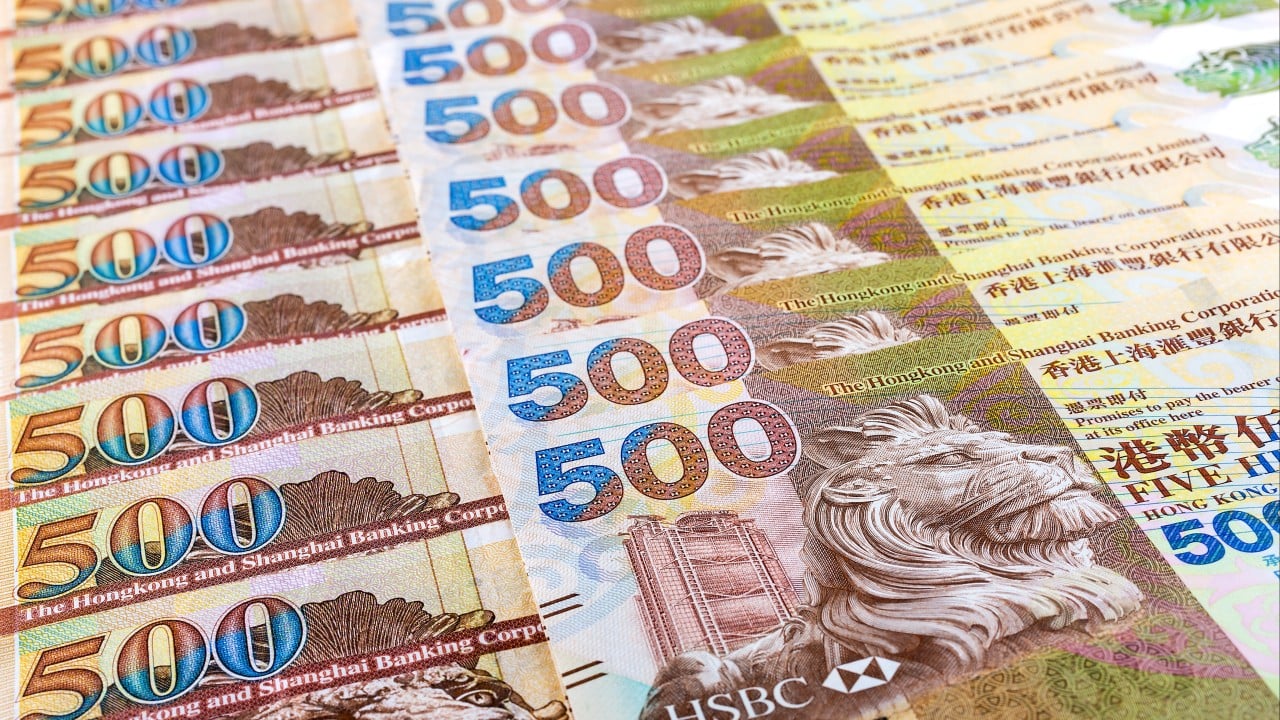
Mr. Leung is one of the 611 elderly Hongkongers currently defaulting on their student loans. The average debt sits at HK$17,400. To a bank or a corporate giant, that is a rounding error. To a retiree living on a meager pension and the scraps of a part-time security job, it is a mountain. It is the difference between a hot meal and a cold one. It is the difference between medicine and suffering.
But to look only at the number is to miss the story entirely.
Consider how we got here. Years ago, the government preached the gospel of lifelong learning. The message was clear and seductive: the world is changing, and you must change with it. If you are not productive, you are obsolete. So, people like Mr. Leung, fearing the creeping irrelevance that stalks the aging, signed up for courses. They took classes in digital literacy, in accounting, in basic computer skills—tools intended to help them keep their footing on a treadmill that was accelerating beyond their control.
They took loans because the government encouraged it. They took loans because they believed the lie that education is the ultimate insurance policy. They didn't see the fine print of a system that treats a septuagenarian with the same cold, algorithmic rigor as a fresh-faced university graduate entering the workforce. There is no nuance in the software that generates these demand letters. There is no field for "life lived" or "dignity earned." There is only the debt.
There is a profound, aching irony in a society that prides itself on filial piety and the veneration of elders, yet maintains a financial apparatus that effectively penalizes those who refuse to stop trying to contribute. We tell our seniors to remain active, to stay sharp, to engage with the modern world. Then, when they reach for the ladder we built for them, we charge them a toll they cannot afford to pay.
Think about what that HK$17,400 represents. It is not just money. It is the cost of a dignity that has been slowly eroded. It is the psychological strain of keeping a secret—the shame of admitting to one’s children, "I still owe money for school." In a culture where saving face is as essential as breathing, this debt becomes a ghost that haunts the dinner table. Every time the phone rings, there is a spike of adrenaline. Every time a letter arrives, there is the fear that the past has finally caught up to claim the present.
The average debt is low enough that it feels manageable from a distance, but that is the cruelty of it. It is large enough to crush, yet small enough to be dismissed as a personal failure. We hear the numbers and we think, "Why didn't they pay it off sooner?" But we do not ask, "Why did we think it was okay to let them reach this point?"
The mechanics of this debt cycle are remarkably simple and entirely unforgiving. When you are eighty, your earning potential is not merely capped; it is effectively non-existent. The jobs available to the elderly—cleaning, security, light logistics—are precarious. They rely on health, and health is the one asset that inevitably depreciates. When an illness strikes, or when the energy simply runs out, the income vanishes. The debt, however, remains. It is a persistent, hungry thing. It does not sleep. It does not get tired. It does not care that you are eighty-two years old and your knees ache when it rains.
There is a specific kind of violence in the silence of these statistics. We talk about the "silver tsunami"—the aging population as a burden on the healthcare system, as a drain on resources. We write articles about the cost of pensions and the strain on public housing. But we rarely talk about the emotional cost of the ledger. We rarely talk about what it feels like to be an elderly person in Hong Kong, clutching a notice of default, feeling like a failure in a city that demands constant, relentless success.
Maybe the issue isn't the 611 people who defaulted. Maybe the issue is a society that has lost the ability to value anything that cannot be measured in a spreadsheet.
Think of a hypothetical woman, Mrs. Chan. She is seventy-five. She lives in a subdivided flat that is barely big enough to turn around in. She took a course in geriatric care years ago, hoping she could earn a little extra money looking after others her own age. She didn't finish the course because her own health declined, and then the money stopped coming in. The debt from that course followed her into the small, cramped room she calls home. Every month, she sets aside a small portion of her government subsidy, an amount that would make a salary-earner laugh, just to pay the interest. She is not paying off the principal. She is paying for the privilege of not being harassed.
She is living in a state of suspended animation. She cannot move forward, and she cannot go back. She is trapped in the amber of a financial obligation that no longer serves any purpose. The institution that issued the loan is not made poorer by writing it off. The stability of the city does not rest on the shoulders of Mrs. Chan or Mr. Leung. Yet, the pressure remains, applied with the steady, unblinking focus of an automated system that doesn't know how to look away.
We often speak of the "invisible" people in our city—the cleaners, the security guards, the people who keep the lights on while we sleep. But there is another kind of invisibility: the invisibility of the elderly debtor. They are hidden in plain sight, living in our apartments, walking our streets, sitting in our parks. They are part of the fabric of this city, woven into the very structure of our daily lives, yet they are ignored because their story does not fit the narrative of progress.
If we want to claim we are a civilized society, we have to reckon with the moral weight of these debts. Is it right to hold the elderly to the same standard as a twenty-year-old with a career ahead of them? Is it right to treat the end of a life as a ledger that must be balanced at all costs?
The answer feels obvious when you look at it in the cold light of day. But then, the system is designed to keep us from looking. It is designed to keep us focused on the "how" rather than the "why." How do we collect? How do we minimize loss? How do we ensure the rules are followed? It is an accountant’s perspective on a human problem.
The tragedy of the 611 is not the money. The tragedy is that we have made it acceptable for them to feel the way they do. We have allowed the pursuit of learning to become a source of shame. We have taken the ambition of the elderly—the desire to remain connected, to remain useful, to remain alive in the eyes of their peers—and we have turned it against them.
There is a moment, just before dawn, when the city is quietest. The traffic has not yet surged, the construction noise has not begun. In those moments, in the small, dim flats of places like Sham Shui Po, there is a collective, unspoken weight. It is the weight of sixty-one-year-old dreams and eighty-year-old bodies. It is the weight of a ledger that never stops adding up.
Mr. Leung puts the letter back into the envelope. He doesn't throw it away. He doesn't burn it. He places it in the top drawer of his bedside table, under a stack of old photos—black and white pictures of a younger version of himself, smiling in front of a landmark that has likely been torn down and replaced by a glass-and-steel skyscraper.
He turns off the light. He lies down, his body sinking into the mattress, his breath slowing. Outside, the city begins to wake up. It will start its engine, it will begin its grind, and it will demand the same things it always demands: productivity, efficiency, and payment.
In the dark, he isn't a statistic. He isn't a defaulter. He is just a man, waiting for the day to begin, hoping that maybe, just maybe, the next letter that arrives will be the one that finally says it is all right. That the debt is gone. That he is free.
But for now, the ledger remains open. The numbers remain on the page. And the silence, thick and heavy as the humidity of a Hong Kong summer, remains the only answer to the question of what we owe those who have already given us so much.