The air in the Situation Room is famously stale. It is a place where the weight of history usually feels shared, a heavy blanket woven from the threads of a dozen different flags. But lately, that fabric has been fraying at the edges. When the phone lines to Brussels and Paris and Berlin go quiet, the silence isn’t just peaceful. It is deafening.
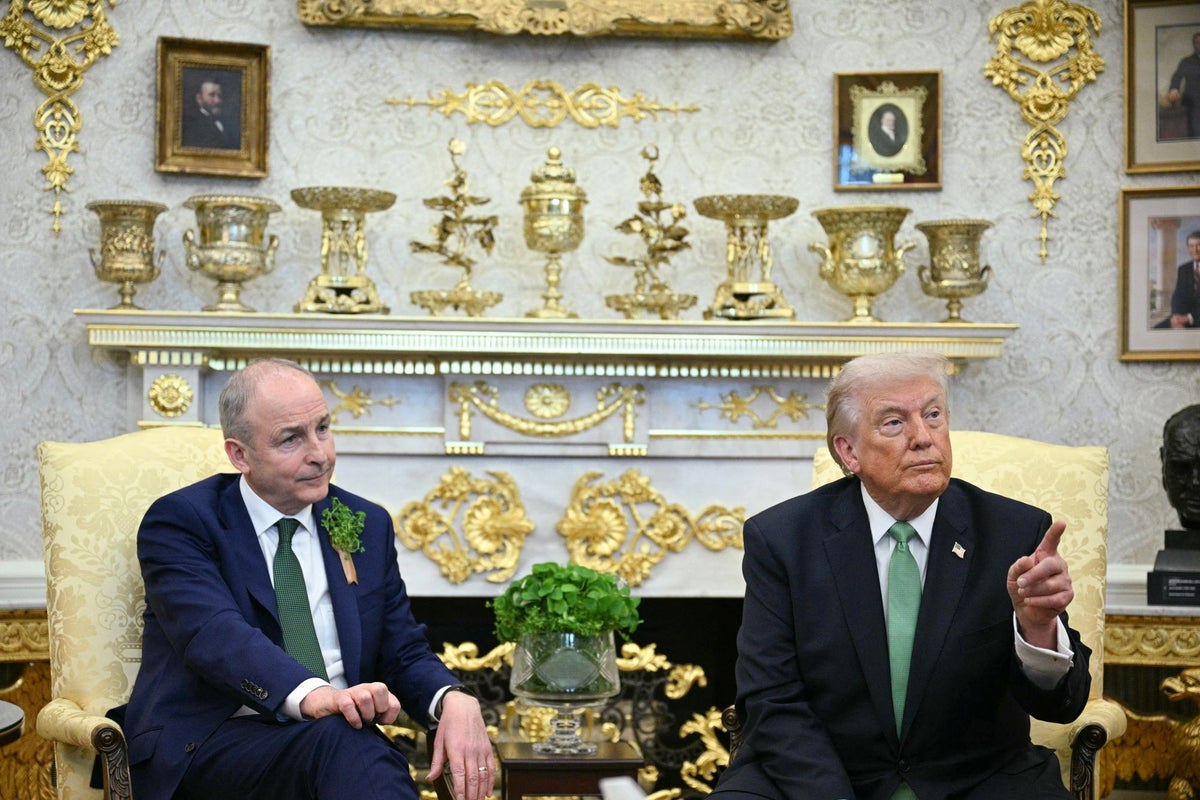
Donald Trump stood at a podium and told the world that he didn't need them. He looked at the map of the Middle East, specifically the jagged, volatile borders of Iran, and decided that the United States would walk that high wire without a safety net. After NATO allies—the very nations that have stood shoulder-to-shoulder with American GIs since the rubble of 1945—declined to jump into a new escalation, the President didn't pivot. He doubled down on the isolation.
"We don't need help," he said.
It was a statement of bravado that ignored a fundamental truth of human nature: nobody is truly strong enough to be alone forever.
The Ghost at the Table
Imagine a young lieutenant from a small town in Ohio. Let’s call him Elias. Elias doesn't care about the geopolitical posturing in the Rose Garden. He cares about the "intel" he receives before his convoy moves through a dusty corridor where the shadows seem to move. In years past, that intel might have come from a German surveillance unit or a French special forces team operating nearby.
The NATO alliance was never just a collection of signatures on a dusty parchment. It was a nervous system. When one limb felt the heat, the brain knew to pull back. By telling these nations that their assistance is surplus to requirements, we aren't just losing soldiers; we are losing eyes.
The refusal from European leaders to back the latest play against Tehran wasn't a sudden act of betrayal. It was a slow-motion car crash that had been happening for years. They looked at the collapsing nuclear deal, the escalating rhetoric, and the sudden, sharp strikes, and they saw a path they didn't recognize. When they said "no," they weren't saying they loved the Iranian regime. They were saying they no longer trusted the person leading the charge.
The Math of Solitude
Logistics is a cold, hard master. When a President says we don't need help, he is dismissing the reality of how global power actually functions.
Consider the "basing" reality. To project power into the Persian Gulf, the United States relies on a chain of lily pads. Some are in the Middle East, but the logistical backbone runs through Europe. Ramstein Air Base in Germany isn't just a patch of tarmac; it’s a vital organ. When diplomatic relations sour to the point where "we don't need you" becomes the official mantra, those lily pads start to feel very small and very far apart.
Money is the other silent character in this drama. The United States spends more on its military than the next several nations combined, but that spending is predicated on a world that wants American leadership. If the U.S. decides to act as a lone wolf, the cost of every operation, every patrol, and every diplomatic maneuver triples. We aren't just paying in dollars. We are paying in the exhaustion of a force that has been at war for twenty years without a break.
The Broken Mirror
There is a specific kind of grief that comes when you realize your oldest friend doesn't want to talk to you anymore. For decades, the Atlantic alliance was the bedrock of the "West." It was a shared identity.
When the NATO leaders turned down the request to join the fray in Iran, it was a mirror held up to the American administration. The reflection was uncomfortable. It showed a nation that had become unpredictable. To our allies, the "America First" doctrine feels like "America Only."
One can argue—and many do—that these nations have been "free-riders," leaning on American tax dollars while they fund their own social safety nets. There is a grain of truth there. A gritty, uncomfortable grain. But you don't fix a leaky roof by burning the house down. You don't encourage your partners to contribute more by telling them they are useless the moment they disagree with a specific tactical choice.
The Weight of the "No"
The "no" from Europe wasn't a whisper; it was a shout.
It was the sound of Emmanuel Macron trying to carve out a "strategic autonomy" for Europe. It was the sound of a post-Merkel Germany wondering if the American nuclear umbrella was actually made of paper. When Trump dismissed their absence as a non-issue, he was attempting to project strength. But true strength is the ability to lead a crowd, not the ability to stand in an empty room and claim you meant to be alone.
Think back to Elias, our hypothetical lieutenant. If the tension with Iran snaps into a full-blown conflict, he is the one who feels the absence of the British drone or the Italian medic. Diplomacy feels like an abstract game played by men in suits until it becomes a concrete reality for a kid in a flak jacket.
The stakes are invisible until they are agonizingly real.
We are currently watching the dismantling of an architecture that took seventy years to build. It was an architecture designed to ensure that no single nation had to carry the world's burdens until their back broke. By rejecting the help we were refused, we aren't proving our independence. We are simply narrowing our options.
The world is getting smaller, faster, and more volatile. In that environment, the most dangerous thing you can be is "self-sufficient" to the point of extinction. The ego is a poor substitute for an ally.
The sun sets over the Potomac, casting long, thin shadows across the monuments of men who understood that greatness was always a collective effort. Now, the lights stay on late in the State Department, where officials try to figure out how to bridge a gap that is widening by the hour. They know what the history books say about empires that decided they didn't need anyone else.
The ink is already drying on a new, much lonelier chapter.
A lone bugle player practices in the distance, the notes clear and sharp, cutting through the humid evening air. The song is familiar, but when there is no one left to answer the call, the melody feels unfinished. It hangs there, suspended in the dark, waiting for a harmony that may never come back.