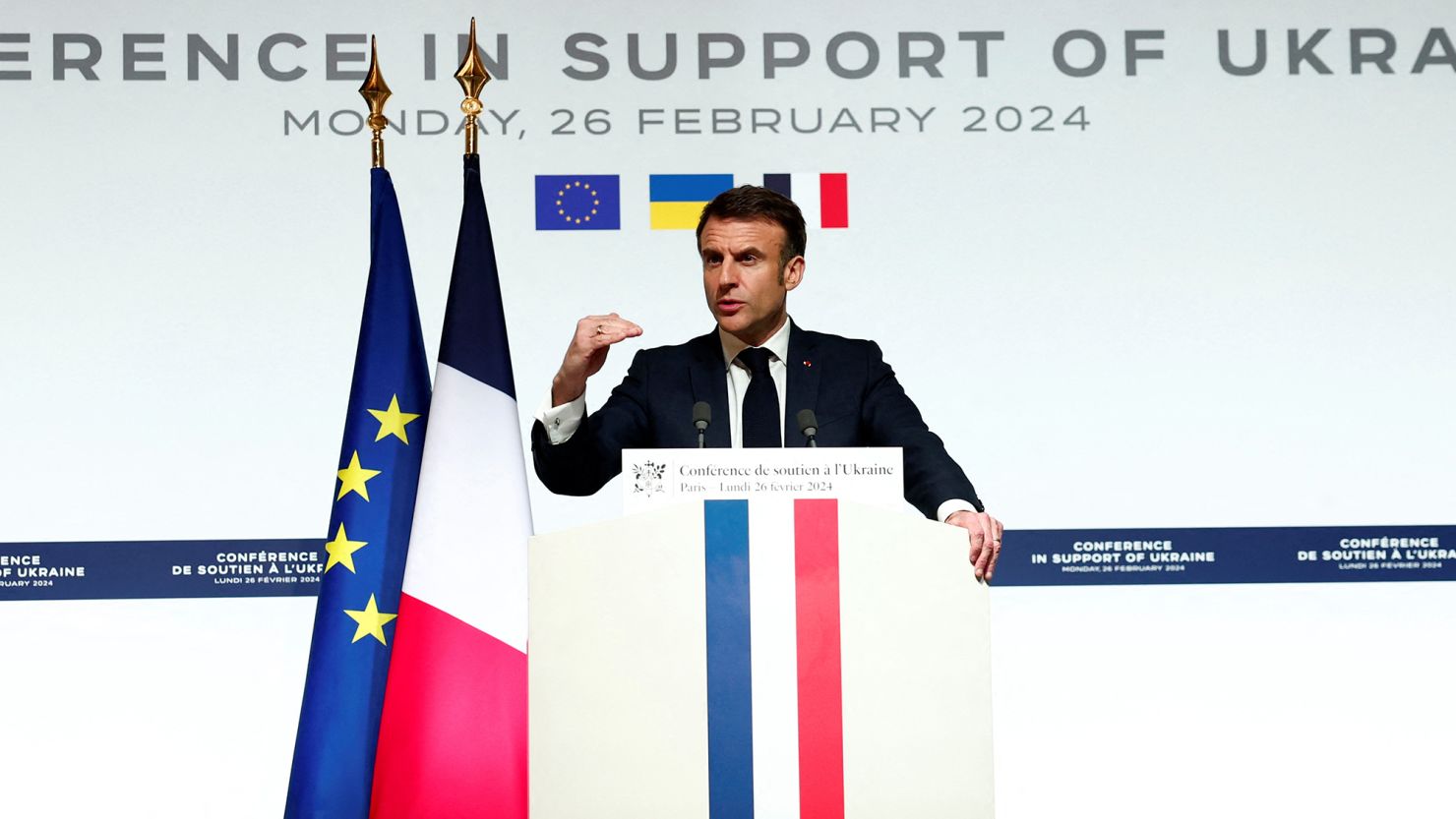
French President Emmanuel Macron has demanded an immediate cessation of Iranian-backed military operations across the Middle East, signaling a sharp departure from Europe’s previous posture of cautious optimism. In a high-stakes telephone conversation with Iranian President Masoud Pezeshkian, Macron characterized the ongoing cycle of retaliatory strikes and proxy maneuvers as "unacceptable," directly challenging Tehran’s narrative of "defensive" regional engagement. This is not merely a diplomatic scolding. It is a calculated admission that the West’s attempt to court an Iranian "moderate" has hit a wall of hardline reality.
While the competitor press focuses on the superficial "urgency" of the call, the deeper story lies in the collapse of the French strategy to bridge the gap between Tehran and the international community. Macron had hoped Pezeshkian’s election might offer a release valve for escalating tensions. Instead, he found a leader who, despite a milder tone, remains tethered to the Islamic Revolutionary Guard Corps (IRGC) and a foreign policy defined by destabilization.
The Illusion of the Iranian Moderate
Western diplomats often fall into the trap of believing that a change in the Iranian presidency equals a change in Iranian power. It does not. Masoud Pezeshkian inherited a bankrupt economy and a restless populace, but he did not inherit the keys to the military or the nuclear program. Those remain firmly in the grip of Supreme Leader Ali Khamenei.
Macron’s demand for a "halt to strikes" ignores the structural reality of the Iranian state. The President of Iran does not order Hezbollah to fire rockets, nor does he dictate the flight paths of Houthi drones in the Red Sea. By placing the burden of regional stability on Pezeshkian’s shoulders, Macron is publicly testing whether the new administration has any actual leverage over the IRGC. If Pezeshkian cannot or will not act, the French "Third Way" of diplomacy—positioning Paris as the mediator between Washington and Tehran—is effectively dead.
The "why" behind this sudden French aggression is simple: Paris is losing its grip on Mediterranean security. French commercial interests and regional influence are directly threatened by the instability in Lebanon and the maritime chaos caused by Iranian proxies. Macron isn't just worried about a wider war; he is worried about a world where France’s diplomatic currency is worthless.
The Proxy Trap and the Mediterranean Stakes
For decades, Iran has perfected the art of "plausible deniability." By utilizing a network of militias—the so-called Axis of Resistance—Tehran can strike at its enemies without inviting a direct attack on its own soil. This strategy has reached its logical, and dangerous, conclusion.
France has a historical and emotional connection to Lebanon. As Hezbollah continues its exchange of fire with Israel across the Blue Line, the Lebanese state sits on the verge of a total collapse that would trigger a migration crisis and a security vacuum. Macron’s call to Pezeshkian was a desperate attempt to protect the "Paris of the Middle East" from being dragged into a conflict it cannot survive.
- Hezbollah: The most powerful non-state actor in the world, serving as Iran's primary deterrent against Israel.
- The Houthis: Disrupting global trade in a way that hurts European ports more than American ones.
- Iraqi Militias: Targeted pressure points against Western military presence.
The "how" of this situation is equally complex. Iran uses these groups not just as weapons, but as bargaining chips. Tehran’s message to Macron is clear: If you want the strikes to stop, you must provide economic relief and security guarantees that the United States refuses to offer. It is a classic protection racket played on a geopolitical scale.
The Nuclear Shadow Over the Phone Call
Every conversation between a Western leader and an Iranian president is haunted by the Joint Comprehensive Plan of Action (JCPOA). Or, more accurately, its corpse. Macron’s demand to stop the strikes is intrinsically linked to Iran’s accelerating nuclear enrichment.
Tehran knows that the threat of regional war is its best defense against a strike on its nuclear facilities. By keeping the Middle East in a state of constant, low-level combustion, Iran ensures that the international community is too busy putting out fires to focus on the centrifuge halls at Natanz and Fordow. Macron’s insistence on a "halt to strikes" is an attempt to decouple these two issues. He wants to lower the regional temperature so that serious nuclear negotiations can resume without the backdrop of falling missiles.
However, this ignores the Iranian perspective. From Tehran’s view, the regional strikes are the only thing bringing the West to the table. Without the ability to cause chaos, Iran loses its seat at the high-stakes game. Pezeshkian, despite his "moderate" label, cannot abandon the only leverage his country has left while the economy is suffocated by sanctions.
The Failure of European Strategic Autonomy
Macron has long championed "Strategic Autonomy"—the idea that Europe should act as an independent power center, not just an appendage of U.S. foreign policy. His outreach to Pezeshkian was supposed to be a masterclass in this philosophy.
It has failed because it lacks teeth. France can offer diplomatic recognition and small-scale trade, but it cannot offer what Iran truly wants: an end to the U.S. banking blockade. When Macron tells Pezeshkian the strikes are "unacceptable," the Iranian response, though polite, is essentially: And what are you going to do about it?
France lacks the military footprint to deter Iran and the economic weight to bribe them. This leaves Macron with nothing but rhetoric. The "hard-hitting" nature of the call reflects a frustration with this impotence. It is the sound of a leader realizing that his influence is waning in a region that only respects hard power.
Why This Matters to the Global Economy
The instability Macron is trying to curb has a direct line to your wallet. The Red Sea is a vital artery for European trade. Every Houthi drone flight increases insurance premiums for shipping, which translates to higher prices for electronics, cars, and energy in Paris, Berlin, and London.
If Macron’s "firmness" does not result in a tangible reduction in proxy activity, we are looking at a permanent shift in global trade routes. Ships will continue to avoid the Suez Canal, opting for the longer, more expensive route around the Cape of Good Hope. This is not a temporary glitch; it is a fundamental restructuring of global logistics driven by Iranian foreign policy.
Furthermore, the threat of a full-scale war between Israel and Hezbollah would send oil prices into a tailspin. France, which is already struggling with internal economic pressures and a precarious political landscape, cannot afford another energy shock. Macron’s phone call was a domestic economic necessity disguised as international statesmanship.
The Hardline Response
Within hours of the call, the internal Iranian press—controlled by the hardliners—began spinning the narrative. They didn't see a "firm" Macron; they saw a desperate one. To the IRGC, Macron’s call is proof that their strategy is working. If the West is complaining, it means the pressure is being felt.
This creates a dangerous feedback loop.
- Iran increases proxy pressure.
- Western leaders call to beg for restraint.
- Iran perceives the call as a sign of weakness and increases pressure further.
Pezeshkian is caught in the middle. He may genuinely want to stabilize the region to attract foreign investment, but he is operating within a system that views stability as a surrender. Macron’s mistake is treating the Iranian presidency as a traditional executive office rather than a PR wing of a revolutionary theocracy.
The Looming Lebanese Collapse
Lebanon is the most immediate casualty of this diplomatic failure. For years, France has tried to broker a political solution in Beirut, only to be stymied by Hezbollah’s veto power. Macron’s demand that Iran "halt the strikes" is specifically aimed at preventing the total destruction of Lebanese infrastructure.
If Israel decides that the only way to stop the rocket fire is a ground invasion of Southern Lebanon, the resulting chaos will be catastrophic. Millions of refugees would likely head toward Europe, a prospect that keeps European interior ministers awake at night. Macron is trying to build a dam against a flood that has already started to crest.
The reality is that Iran sees Lebanon as a forward operating base. They will not sacrifice that strategic depth just because a French president finds their behavior "unacceptable." Unless Macron can offer a credible alternative to the IRGC’s influence, his words will continue to fall on deaf ears.
A Diplomatic Dead End
The call between Macron and Pezeshkian will be remembered as the moment the "moderate" experiment began to sour. There is no evidence that Iran is willing to de-escalate without massive concessions that the West is currently unwilling to grant.
Macron’s rhetoric is getting sharper because his options are getting narrower. He is shouting into a void, hoping that the sheer volume of his "unacceptable" will force a change in a regime that has spent forty years ignoring international norms. The cycle of strikes will continue because, for Tehran, the cost of aggression is still lower than the cost of peace.
The world is watching to see if France will move beyond words. Will Paris push for more aggressive EU sanctions? Will they increase military support for regional partners? Or will this remain a series of "firm" phone calls that provide excellent headlines but zero results?
The time for diplomatic pleasantries has passed. Iran has made its move, and Macron’s response suggests he is finally realizing that the game is rigged. The "unacceptable" has become the status quo, and until the West changes the cost-benefit analysis for Tehran, the Middle East will remain a tinderbox.
Watch the Mediterranean. If the French naval presence increases or if Paris begins to pull its remaining diplomatic staff from the region, you will know that Macron has given up on the phone calls and is preparing for the fallout of a diplomatic failure that he could see coming but could not stop.
Audit your own expectations of Middle Eastern diplomacy. If you are waiting for a "breakthrough" based on a phone call, you are misreading the room. The real story isn't the conversation; it's the silence that follows when the drones launch anyway.