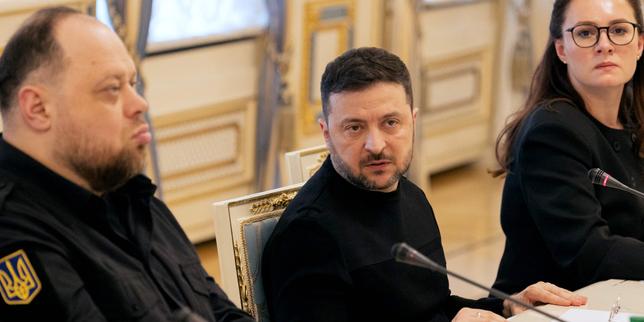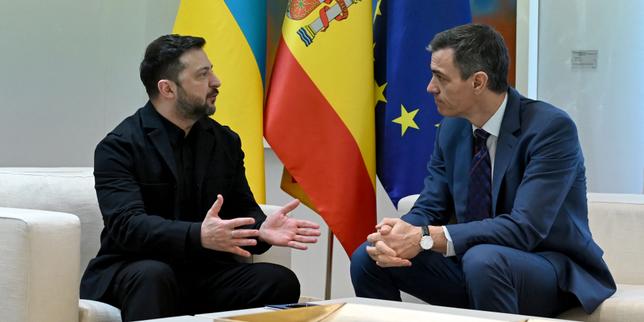
Volodymyr Zelensky is in Madrid today to collect another signature on another piece of paper. The mainstream press will frame this as a "historic security agreement" or a "reinforcement of European solidarity." They are wrong. This isn't a strategic masterclass; it is a high-stakes diplomatic bake sale.
Western media outlets love the visual of a handshake in a palace. It feels like progress. It looks like momentum. But if you peel back the velvet curtain of Pedro Sanchez’s welcome, you find a recurring structural failure in how the West manages this conflict. We are substituting bilateral theater for industrial-scale military reality.
The Paper Tiger of Bilateral Pacts
The agreement being signed in Madrid is the latest in a series of security deals Ukraine has chased with G7 and EU partners. Don't be fooled by the legalistic branding. These aren't mutual defense treaties. They aren't Article 5. They are "intentions."
Spain is pledging roughly 1.1 billion Euros in military aid. In the context of a modern high-intensity war, that is a rounding error. To put it in perspective, Russia’s 2024 defense budget is estimated to be over $115 billion. While the press swoons over a billion-dollar headline, the math at the front remains merciless.
I have watched bureaucrats in Brussels and DC pat themselves on the back for "allocating" funds that take eighteen months to turn into a physical shell on a pallet. Spain, specifically, has a history of promising Leopard tanks that turn out to be in "deplorable condition" once the mechanics actually open the hatches. A signature in Madrid doesn't fix a rusted engine block in a warehouse in Zaragoza.
The Patriot Missiles That Aren't Coming
The core of Zelensky’s visit is a plea for air defense. Ukraine needs at least seven more Patriot batteries to prevent its energy grid from being systematically dismantled. Spain has one. And they aren't giving it up.
Instead, Madrid is offering "missiles" for the systems Ukraine already has. This is the classic "razor and blade" problem. Giving Ukraine more interceptors for a shrinking number of launchers is a tactical band-aid on a sucking chest wound. The "lazy consensus" says that every bit helps. The brutal reality is that "every bit" often just prolongs the inevitable attrition of Ukrainian infrastructure because the West refuses to deplete its own domestic stockpiles to a degree that actually changes the math.
If Sanchez were serious about "security," he would be announcing a joint production line for 155mm artillery shells on Spanish soil that operates 24/7. Instead, we get a press conference.
Why the "People Also Ask" Queries are Wrong
If you search for why this meeting matters, you’ll see questions like "How will Spain's support change the war?" or "Is Ukraine winning the diplomatic battle?"
These questions assume that diplomacy is the primary theater of operations. It isn't. You can win 100% of the diplomatic battles and still lose the war if your adversary produces four times as many drones as you do. The "diplomatic battle" is a distraction for Western voters to feel like their tax dollars are buying a victory that isn't showing up on the map.
We need to stop asking "Who is visiting whom?" and start asking "What is the daily tonnage of steel being delivered to the Donbas?"
The False Narrative of European Unity
The Madrid visit is being used to paper over the deepening cracks in the European Union's approach. While Spain plays the gracious host, Hungary continues to throttle the actual flow of EU-wide funding.
By pivoting to these bilateral (one-on-one) deals, Zelensky is effectively admitting that the collective European institutions are failing him. He is forced to go door-to-door like a vacuum cleaner salesman because the "unified" European front is a bureaucratic quagmire.
- The Myth: Europe is a monolithic block of support.
- The Reality: It is a collection of nervous states hedging their bets.
Spain’s sudden generosity is as much about internal politics—Sanchez proving his internationalist credentials to a fractured domestic coalition—as it is about Ukrainian sovereignty.
The Logistics of a Losing Strategy
Logistics is the science of reality. The Spanish military aid package reportedly includes more Leopard 2A4s. These are older models. They require specific parts, specific training, and a specific supply chain.
When you receive ten tanks from one country, twenty from another, and thirty from a third, you aren't building an army. You are building a museum of logistical nightmares. Every different variant requires its own specialized mechanic and its own unique set of tools.
I’ve seen how this plays out in corporate mergers where "synergy" is promised but incompatible software systems lead to total collapse. In war, that collapse happens in a trench under fire. By providing a "potluck" of military hardware, the West is forcing Ukraine to manage the most complex logistical puzzle in the history of mechanized warfare. Madrid isn't simplifying the problem; it’s adding another piece to the mess.
Stop Celebrating the Process
The media's obsession with the "process" of support—the meetings, the summits, the signed memos—is a coping mechanism. It allows us to ignore the fact that the Russian defense industry has shifted to a total war footing while Europe is still debating whether it can afford to increase its defense spending to 2% of GDP.
Russia is producing more artillery shells than the entire NATO alliance combined. That is the only statistic that matters.
Zelensky is in Madrid because he has no choice. He has to play the part of the grateful recipient of mediocre aid because the alternative is nothing. But we don't have to play along. We don't have to pretend that 1.1 billion Euros and a few refurbished tanks from the 1980s are a "game-changing" development.
The Cost of Professional Optimism
There is a danger in the "hope" manufactured by these state visits. It creates a false sense of security for the Western public. It suggests that the situation is "under control" because the leaders are meeting.
The situation is not under control.
Ukraine is being out-produced, out-manned, and out-gunned. A security pact that doesn't include a massive, immediate surge in heavy industrial manufacturing is just a polite way of managed decline. If Spain wanted to help Ukraine win, they wouldn't invite Zelensky to Madrid; they would send the trains full of shells and stay home to build more.
Instead of asking how many leaders Zelensky will meet this month, ask why the Kh-101 cruise missiles are still hitting Kyiv's power plants despite two years of "unwavering support."
The answer isn't in a palace in Madrid. It’s in the factories that don't exist and the political will that has already peaked.
Don't clap for the handshake. Look at the empty pallets behind the stage.