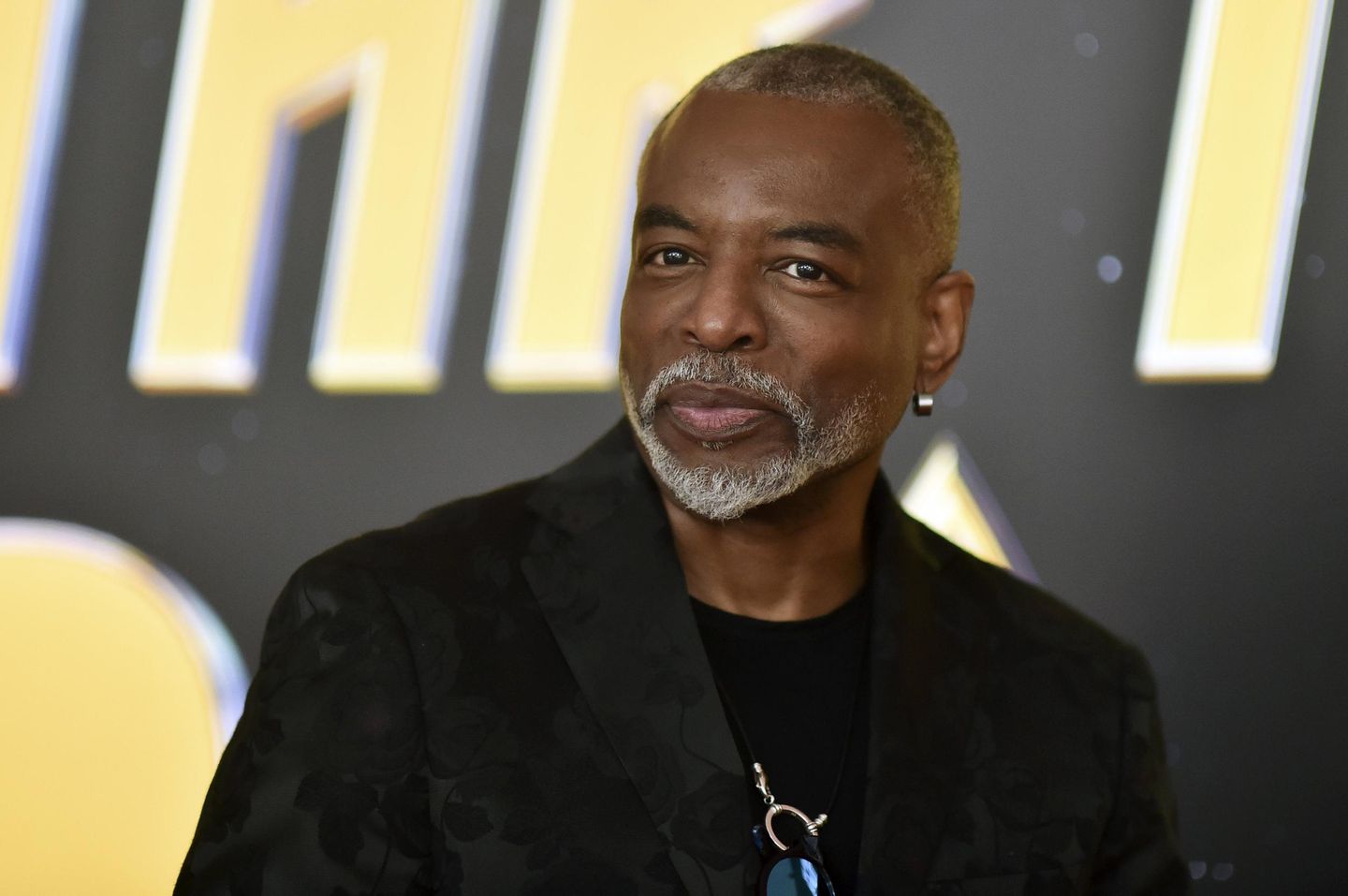
The lights in the room didn't flicker, but for a moment, the air felt thinner. LeVar Burton stood at the podium, not as a character from a starship or a host on a primary-colored set, but as a man watching a library door swing shut. He wasn't just talking about money. He was talking about the scaffolding of the American imagination.
When the government moves to slash funding for public broadcasting, they call it a line-item veto. They call it fiscal responsibility. They use words that sound like dry leaves skittering across a sidewalk. But Burton sees it differently. To him, those cuts are a form of architectural sabotage. If you remove the foundation of a building, the roof doesn't fall immediately. First, the windows crack. Then the doors stick. Eventually, the people inside forget what it was like to look out at the horizon. Also making news recently: The FCC Licensing Myth and Why Jimmy Kimmel Is Not ABCs Real Problem.
Public funding for PBS is the difference between a child seeing the world through a keyhole or through a wide-open window. It is the only place where the quality of a child's education isn't tied to the zip code on their parent’s mail. When that disappears, we aren't just losing "content." We are losing the shared soil where empathy grows.
The Geography of a Closed Book
Imagine a girl named Maya. She lives in a town where the local library has started pulling titles off the shelves because a small, loud group of people decided those stories were "dangerous." Maya doesn't know about the politics. She just knows that the book she wanted to read—the one about a family that looks like hers—is gone. Additional insights regarding the matter are covered by E! News.
This isn't a hypothetical ghost story. It is the current reality in school districts across the country. Book bans are rising at a rate that suggests we have become afraid of our own reflections. Burton’s voice, usually a warm baritone that feels like a steady hand on a shoulder, sharpened when he spoke about this. He called it what it is: an assault on the freedom to think.
When we ban a book, we aren't protecting children. We are shrinking their world. We are telling them that there are parts of the human experience that are off-limits, shameful, or nonexistent. We are building walls out of paper and ink.
The irony is thick. We live in an age of infinite information, yet we are systematically narrowing the channels through which our children can access it. If a child cannot see themselves in a story, they begin to believe they don't belong in the narrative of their own country. If they cannot see "the other" in a story, they learn to fear them in the street.
The Cost of a Free Education
PBS costs the average American about $1.50 per year. That is less than a cheap cup of coffee. For that price, every household in the country gets access to high-quality, research-driven educational programming. No commercials. No agendas. Just the simple, radical idea that everyone deserves to learn.
The push to defund this system assumes that the private market will fill the gap. It won't. The private market follows the money. It follows clicks. It follows the dopamine hit of a "like" button. The private market has no incentive to teach a three-year-old in rural Appalachia how to phonetically decode a word if there is no profit margin in it.
Public media is the only entity that treats the viewer as a citizen rather than a consumer. When you cut that funding, you are essentially saying that the intellectual development of the next generation is a luxury we can no longer afford. Burton argues that it is actually the one thing we cannot afford to lose.
The Silence of the Shelves
The censorship movement often hides behind the veil of "parental rights." It sounds reasonable on the surface. Who wouldn't want a say in what their child learns? But the reality is far more cynical. These bans aren't about one parent deciding what their child reads; they are about one parent deciding what everyone’s child reads.
It is a power move. It is an attempt to curate a version of history that is scrubbed clean of struggle, nuance, and growth. It ignores the fact that the most important lessons often come from the books that make us uncomfortable. Those are the books that force us to grow.
Think back to the first time a story truly moved you. It probably wasn't a story that told you everything was perfect. It was likely a story that acknowledged the world is complicated, sometimes unfair, but always worth navigating. By removing those stories, we are sending children into the world without a map. We are giving them a compass that only points toward things they already know.
The Long Shadow of the Butterfly
For decades, Burton invited us to "take a look, it’s in a book." He wasn't just a guy on TV; he was a bridge. He connected the quiet solitude of reading with the vast, loud reality of the world. He showed us that literacy is a superpower.
The current climate seeks to dismantle that bridge. Between the financial strangulation of public media and the literal removal of books from shelves, we are witnessing a quiet de-platforming of the American mind. It is a slow-motion tragedy that doesn't make the front page every day because it doesn't bleed. It just withers.
Burton isn't just fighting for his legacy. He is fighting for the Mayas of the world. He is fighting for the kid who feels invisible and the kid who is being taught to hate what they don't understand.
The stakes aren't just about pixels on a screen or paper in a binding. The stakes are the quality of our collective soul. If we stop valuing the stories of others, we eventually lose the ability to tell our own.
A library with empty shelves isn't just a room; it’s a tomb for the ideas we were too afraid to face. The man who spent his life opening books is now trying to keep the doors from being locked from the outside. He is standing in the gap, reminding us that once you lose the habit of wonder, it is incredibly hard to find it again.
The light is still on in the library, but the shadow at the door is growing long.