The Weight of Vertical Miles
Every child looks at the stars and dreams of leaving. Few consider the silence of the return.
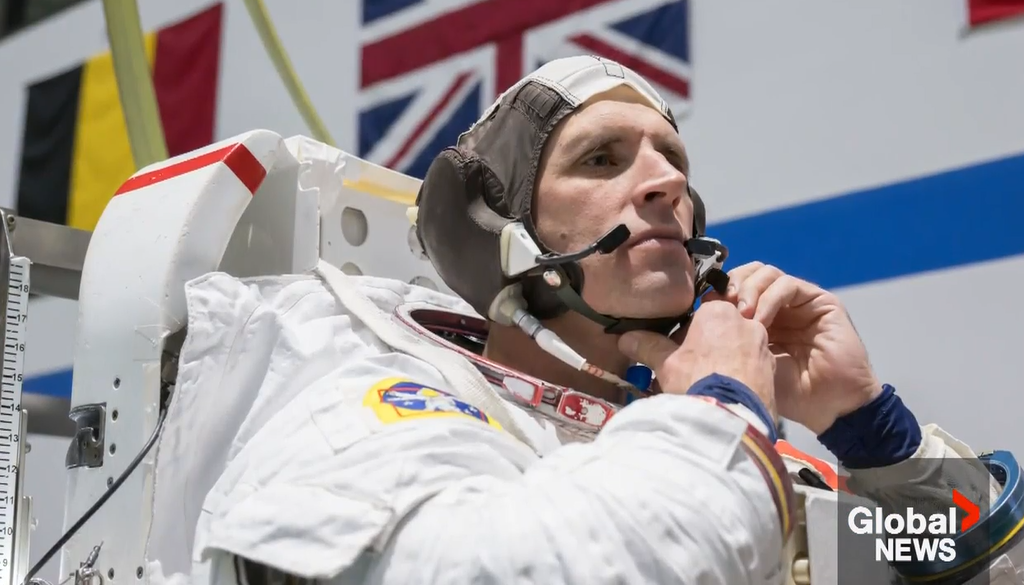
Joshua Kutryk is currently a man between two worlds. On one side, there is the familiar soil of Fort Vermilion, Alberta—the smell of dry grass, the biting cold of a Canadian winter, and the visceral, heavy pull of gravity that anchors a human life to its history. On the other side is a tin can orbiting 400 kilometers above our heads, moving at 28,000 kilometers per hour.
This isn't just a news cycle about a scheduled launch. It is a story about the peculiar, lonely bravery of a man agreeing to become a ghost for six months.
When Kutryk climbs into the Starliner spacecraft for his mission to the International Space Station (ISS), he won't just be representing the Canadian Space Agency. He will be entering a state of existence that defies human evolution. For half a year, his heartbeat will be a data point for scientists in Houston and Saint-Hubert. His meals will come from pouches. His sweat will be recycled into his drinking water.
But the physical toll is the easy part to document. We can measure bone density loss. We can track the way fluids shift to the head in microgravity, puffing the face and dulling the sense of taste. What is harder to measure is the psychological cost of the transition from "active participant in humanity" to "celestial observer."
The Long Road to the Gantry
Spaceflight is often framed as a sudden, explosive event. We focus on the countdown, the roar of the engines, and the cinematic ascent through the atmosphere. In reality, for a test pilot and engineer like Kutryk, the mission is the end of a marathon of patience.
Kutryk joined the Canadian space program in 2017. Since then, his life has been a series of simulations. He has spent thousands of hours in rooms that look like spacecraft but never move. He has studied checklists until the sequences of valves and switches are tattooed on his subconscious.
Consider the hypothetical life of an astronaut in training. You wake up in a city that isn't your hometown. You spend your day rehearsing for a crisis that will likely never happen—an ammonia leak, a fire in the oxygen generator, a depressurization event. You learn to fix things with bulky gloves that turn your hands into clumsy paws. You do all of this for years, knowing that a single technical glitch or a shift in political funding could mean you never actually leave the ground.
When the announcement finally came that Kutryk would be the next Canadian to live on the ISS, it wasn't just a career milestone. It was a release of nearly a decade of tension. He is the first Canadian to fly under NASA’s Commercial Crew Program, a shift in how we reach the stars. We are no longer solely reliant on government-built behemoths; we are hitching rides on private innovation.
Living in the Invisible Laboratory
Once the hatch opens and Kutryk floats into the station, the wonder of the "Overview Effect"—that life-changing shift in perspective upon seeing the Earth from above—will have to compete with a grueling work schedule.
The ISS is a house that is constantly trying to break. It is a masterpiece of engineering, but it is also an aging one. Kutryk’s six-month stay is designated as a long-duration mission because the science requires time. He isn't there to sightsee; he is there to be a lab technician in a place where fire burns in spheres and plants don't know which way is up.
One of the primary focuses of this mission involves the Starliner itself. As a test pilot, Kutryk’s expertise is vital. He isn't just a passenger; he is an evaluator. He will be looking at how the craft performs, how it integrates with the station, and how it can be refined for the generations of explorers who will follow him.
But imagine the sensory deprivation of that environment.
On Earth, we are surrounded by a constant symphony of noise—the hum of traffic, the rustle of leaves, the distant bark of a dog. On the ISS, the sound is a mechanical, unrelenting drone. It is the sound of fans. Fans are the only thing keeping the air moving; without them, the carbon dioxide you exhale would form a bubble around your head and suffocate you. You live inside a machine. You breathe the machine.
The Canadian Connection
Canada has always punched above its weight in the orbital arena. We are the country of the Canadarm, the sophisticated robotic limbs that built the station and continue to catch supply ships like a high-stakes game of center-field catch.
Kutryk’s presence on the station reinforces a quiet, steady truth: Canada is essential to the future of deep space exploration. This mission is a stepping stone toward the Lunar Gateway—a planned small space station that will orbit the Moon. By sending Kutryk now, Canada is ensuring its pilots and scientists have the "flight hours" necessary to be part of the crew that eventually returns to the lunar surface.
But there is a specific kind of pride in seeing the maple leaf on a flight suit. For a kid in a rural prairie town, Kutryk represents the ultimate escape velocity. He proves that you can start in a place where the horizon is flat and ended up in a place where the horizon is a curve of neon blue.
The Ghost at the Table
There is a specific moment that every long-term astronaut describes. It usually happens around month three.
You are floating in the galley, eating a rehydrated beef stew, and you look at the screen where you can see a video feed of your family. They are having dinner. They are talking about their day. Someone spills a glass of water, and they laugh as they reach for a paper towel.
In that moment, the 400 kilometers between you and them feels like four million.
You are watching your life happen without you. You see your children grow an inch taller through a grainy pixelated lens. You see the seasons change on the planet below—the greens of summer fading into the oranges of autumn—while you remain in a climate-controlled, fluorescent-lit corridor.
This is the invisible stake of the mission. We talk about the risk of rocket explosions, but we rarely talk about the risk of the "long goodbye." To be an astronaut is to volunteer for a specific kind of exile. You are a pioneer, yes, but you are also a person who has chosen to be absent.
The Return to Gravity
When Joshua Kutryk eventually returns, tumbling through the atmosphere in a charred capsule, the transition will be violent.
Gravity will feel like a physical assault. His inner ear will be confused. His muscles, despite hours of daily exercise on the station’s specialized treadmill, will feel like lead. He will have to learn how to walk again, how to balance, how to exist in a world where things stay where you put them instead of drifting away.
But more than that, he will have to reconcile the two versions of himself. He will be the man who saw the sun rise sixteen times a day. He will be the man who watched the lightning storms over the Pacific and the aurora borealis dancing over the poles from a vantage point only a few hundred humans have ever known.
We often ask what we get out of space exploration. We look for ROI, for technological spin-offs, for new materials. But the real value lies in the human capacity to endure the distance.
Joshua Kutryk is going up there to do the work. He will turn the wrenches, run the experiments, and test the systems that will eventually take us to Mars. But in the quiet moments, when the rest of the crew is asleep and the station is silent save for the whir of the fans, he will look out the window at the glowing marble below.
He will see every person he has ever loved, every place he has ever been, and every dream he has ever had, all contained within a single, fragile circle. And he will realize that while he is up there to explore the void, the most important thing about space is how it makes us feel about home.
The countdown isn't just about a rocket. It is about the human spirit’s refusal to stay grounded, and the incredible, heavy price we are willing to pay for a better view of the truth.