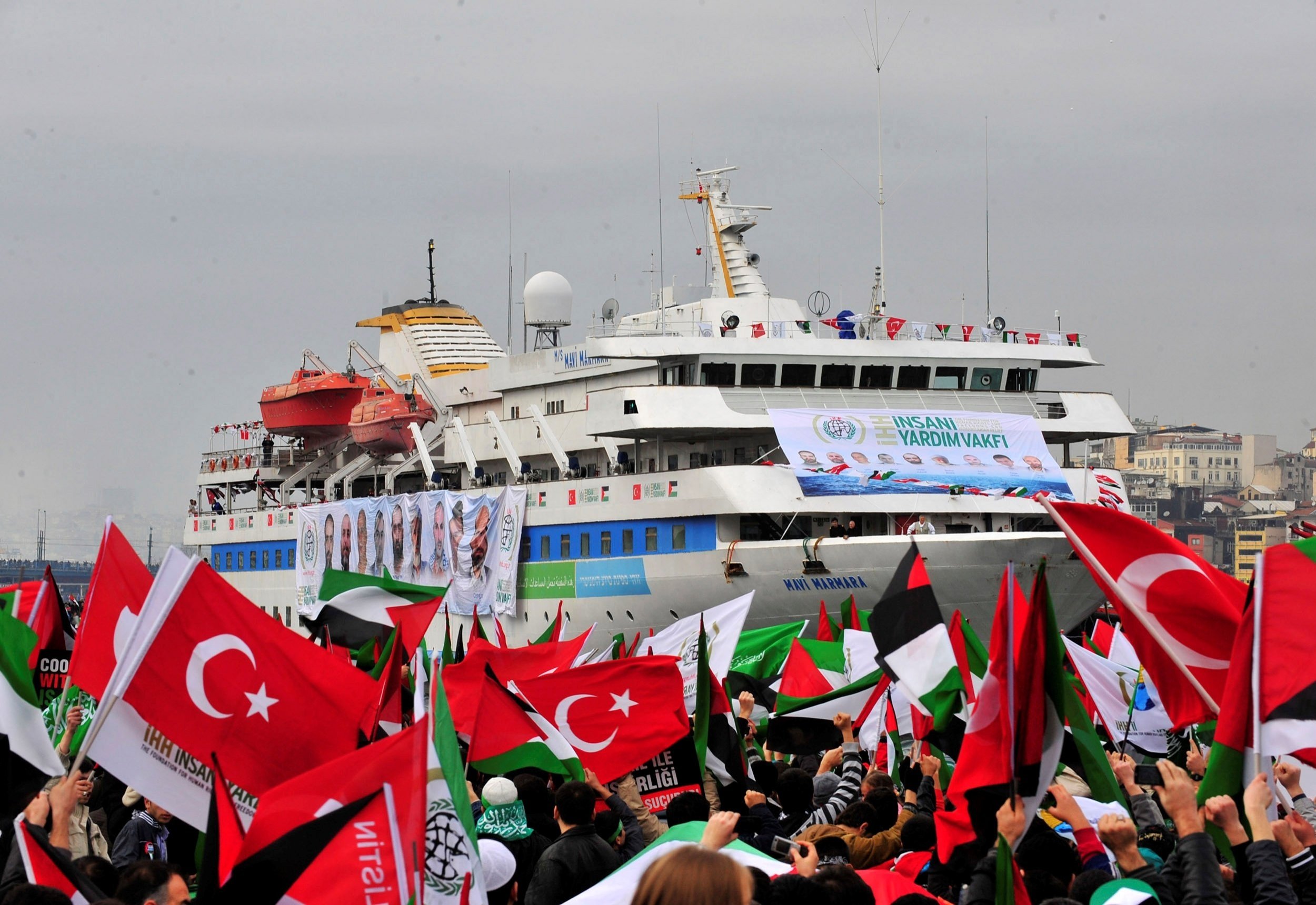
In the early hours of May 31, 2010, the Mediterranean became a theater of chaos that would rewrite Middle Eastern diplomacy for a decade. Most people remember the headlines—Israeli commandos sliding down ropes into a hornets' nest on a Turkish ship. But the fallout wasn't just about a botched military operation. It was a collision of two irreconcilable worldviews: a sovereign state’s right to enforce a blockade versus a global movement's right to deliver aid.
The "Gaza Freedom Flotilla" wasn't some ragtag group of sailors. It was a fleet of six vessels carrying 10,000 tons of humanitarian supplies and 700 activists from over 30 countries. The flagship, the Mavi Marmara, became the flashpoint. By the time the sun rose, nine activists were dead, dozens were wounded, and the relationship between Israel and Turkey—once strategic allies—was in tatters.
The Night Everything Went Sideways
When you look at the tactical reports, the raid happened roughly 72 nautical miles from land. That's deep in international waters. The Israeli Defense Forces (IDF) intended to intercept the ships and redirect them to the port of Ashdod, citing the naval blockade of Gaza as legal grounds. They didn't expect the level of resistance waiting for them on the deck of the Mavi Marmara.
While the other five ships in the flotilla were taken over with relatively little incident, the Mavi Marmara turned into a brawl. Commandos descending from helicopters were met with iron bars, knives, and stun grenades. The Palmer Report, commissioned by the UN, later noted that the soldiers faced "significant, organized and violent resistance." But it also slammed the IDF for using "excessive and unreasonable" force.
Honestly, the numbers tell the grimmest story. Nine people died that night. Forensic evidence showed that most were shot multiple times, some at close range and some in the back. A tenth passenger died years later after being in a coma. For the activists, it was a massacre of peaceful volunteers. For the Israeli government, it was a necessary act of self-defense against a "lynch" mob.
A Global Wave of Outrage
The reaction wasn't just loud; it was immediate and nearly universal. You don't often see the UN Security Council move that fast, but they issued a statement condemning the acts that led to the deaths and calling for an impartial investigation within days.
In Turkey, the mood was electric. Thousands of people flooded the streets of Istanbul and Ankara. The Turkish government didn't just protest; they recalled their ambassador and described the raid as an "attack on Turkey." It’s hard to overstate how much this shifted the regional balance. Suddenly, Turkey wasn't a mediator anymore; it was a primary party to the conflict.
Protests and Diplomatic Casualties
- Istanbul: Protesters tried to storm the Israeli consulate, shouting for the blockade to be lifted.
- London and Paris: Massive marches drew thousands, demanding an end to the siege of Gaza.
- Washington: The Obama administration found itself in a vice. They had to balance their "unshakeable bond" with Israel against the fury of a NATO ally, Turkey.
The diplomatic fallout was a slow-motion car crash. It took six years and a $20 million compensation fund for Israel and Turkey to even start acting like friends again. Even then, the trust was gone.
The Legality Debate No One Can Agree On
Is a blockade in international waters legal? If you ask a room of ten international law experts, you'll get twelve different answers.
Israel points to the San Remo Manual, which suggests that a blockade can be enforced on the high seas if there's a clear intent to breach it. They argued that because Gaza was a "hostile territory" controlled by Hamas, the blockade was a vital security measure to stop weapons smuggling.
On the other side, human rights groups like Amnesty International argue the blockade itself is a form of "collective punishment," which is a flat-out violation of the Fourth Geneva Convention. They argue that you can't use a blockade to starve a civilian population of necessities, regardless of the security situation.
The 2011 Palmer Report tried to split the difference. It called the blockade "legal and appropriate" for security, but called the raid's execution "unacceptable." Unsurprisingly, neither side was happy with that middle-ground take. Turkey rejected the legality of the blockade, while Israel defended the necessity of the force used.
Why This Still Matters
You might think a 2010 event is ancient history, but it’s the blueprint for every aid attempt that has followed. It changed how NGOs operate. They realized that "bearing witness" could come with a lethal price tag. It also forced Israel to slightly ease the blockade, allowing more consumer goods into Gaza, though the core restrictions remained.
The Mavi Marmara wasn't just a ship; it was a symbol of the breakdown in international norms. It showed that "international waters" don't provide a shield when two sides are determined to make a point.
What to Watch Now
- New Flotillas: Activists still try to organize these missions. If you're following the news in 2026, you'll see groups like the Freedom Flotilla Coalition still planning sea voyages to challenge maritime restrictions.
- Legal Precedents: Cases are still being fought in various courts under the principle of "universal jurisdiction," where activists try to hold military leaders accountable in third-party countries.
- Regional Shifts: Watch the Turkey-Israel-Greece triangle. The maritime boundaries in the Mediterranean are more contested than ever, and the ghosts of 2010 still haunt every naval exercise in these waters.
The lesson here is simple: when humanitarian aid meets a military blockade, the results are rarely "humanitarian" for anyone involved. Don't expect the debate over the legality of the Gaza blockade to end anytime soon—it’s baked into the very fabric of the conflict.