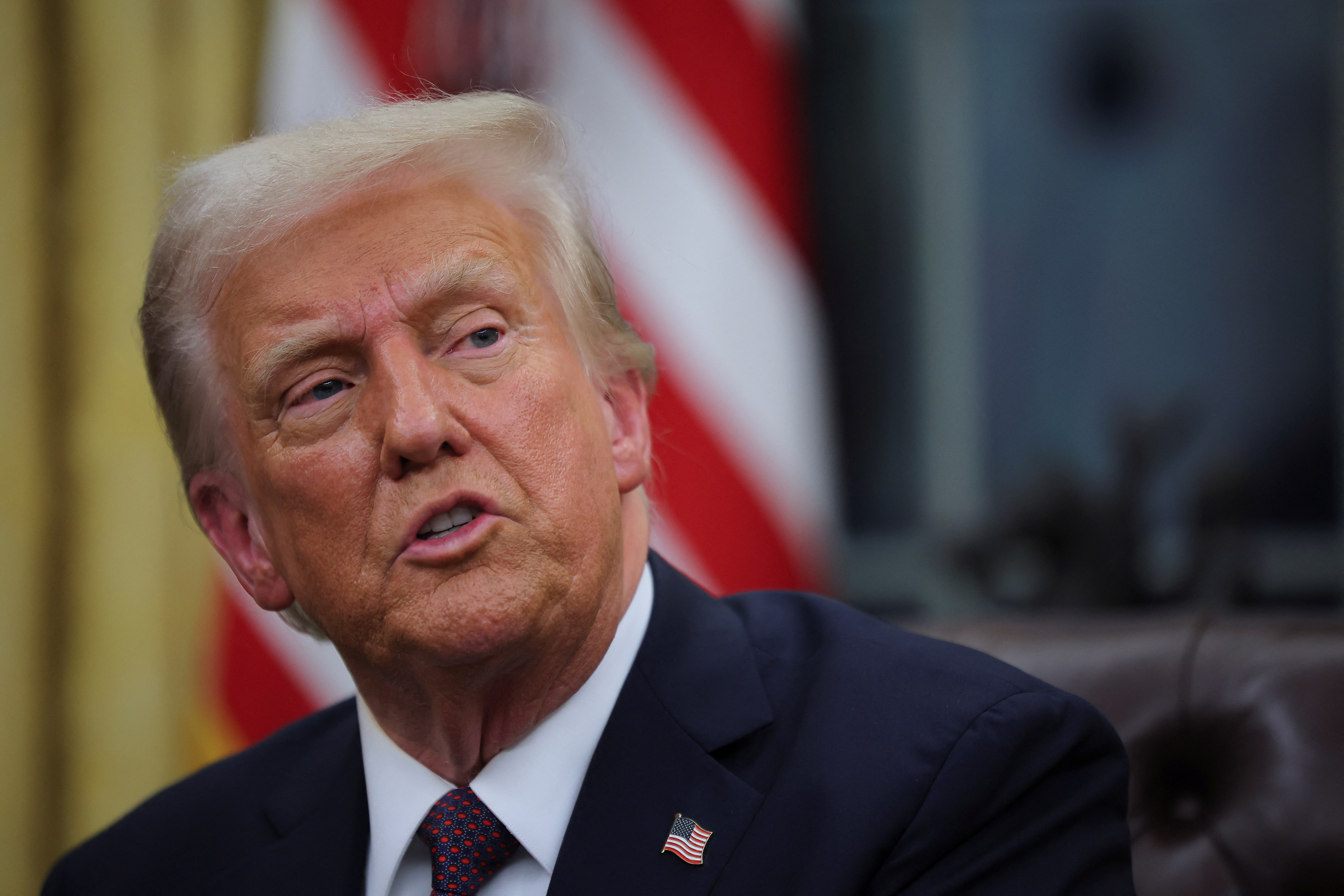
The utilization of paradoxical temporal phrasing in political communication serves a specific function: the retroactive stabilization of a chaotic event to align with a pre-existing ideological framework. When Donald Trump characterized the assassination attempt against him using the phrase "won't have happened," he wasn't engaging in a grammatical error, but rather a sophisticated linguistic maneuver designed to collapse the distance between a traumatic reality and a curated political identity. This strategy, termed "narrative reconstruction," aims to bypass the immediate psychological shock of a crisis and replace it with a controlled, heroic archetype that serves the broader "Ballroom" agenda—a vision of stylized, high-stakes American revivalism.
The Architecture of Temporal Reframing
Political figures often struggle with the "Lag Factor," the period between a crisis occurring and the consolidation of a dominant interpretation. Traditional crisis management focuses on damage control or empathy. The strategy observed here, however, utilizes Cognitive Closure Mechanics. By speaking of a past event in a future-perfect tense (or a functional variant thereof), the speaker asserts a level of mastery over time itself. This signals to the base that the event did not merely "happen" to the candidate, but was a variable that has already been integrated into a victory condition.
The "Ballroom" agenda functions as the aesthetic and structural container for this rhetoric. It is defined by three primary drivers:
- The Formalization of Conflict: Transforming raw political struggle into a choreographed performance of strength.
- The Erasure of Victimhood: Refusing the standard linguistic markers of "survivor" in favor of "conqueror."
- Temporal Sovereignty: The claim that the leader’s trajectory is so inevitable that even a kinetic threat to life is already "undone" by the momentum of the movement.
The Cognitive Load of Contradictory Statements
Standard political analysis often dismisses non-linear phrasing as a lack of discipline. This is a failure to understand Information Density Modulation. When a statement contains a logical knot—such as "won't have happened"—it forces the listener's brain to work harder to resolve the meaning. This increased cognitive load makes the listener more susceptible to the underlying emotional payload: the idea that the leader is untouchable.
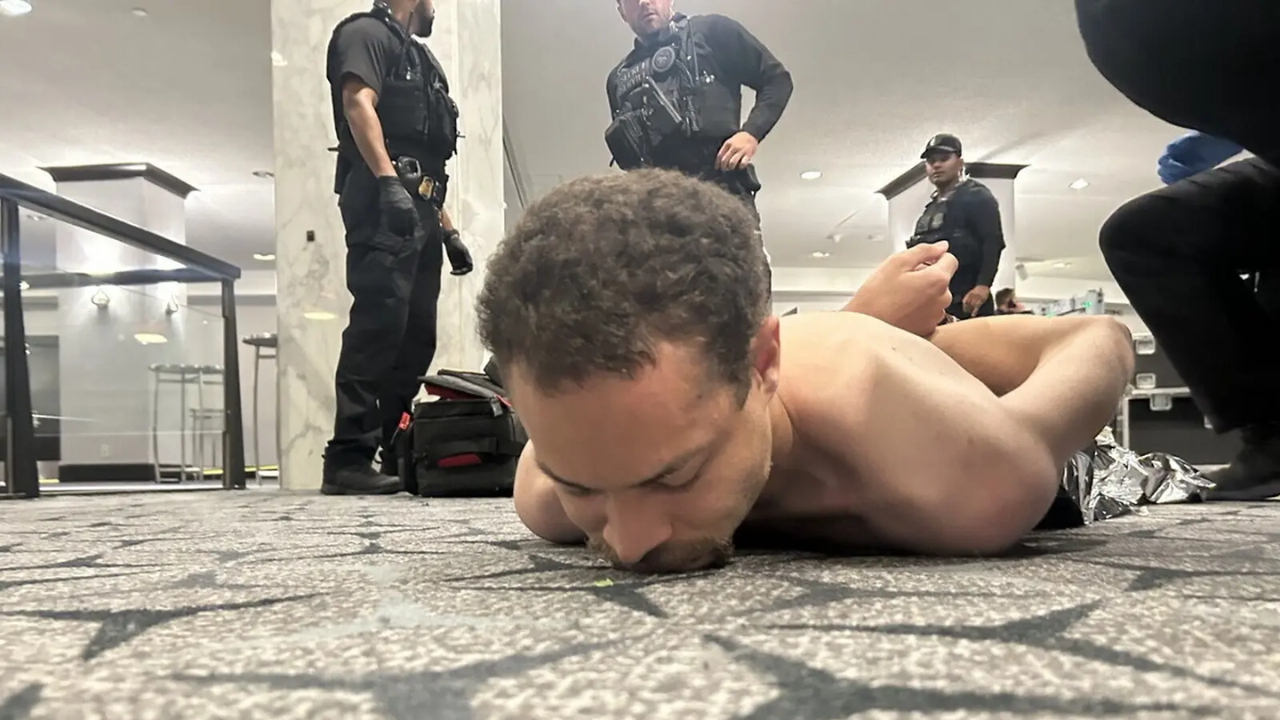
In the context of the shooting in Butler, Pennsylvania, the raw data consists of ballistic reports, security failures, and physical injury. These are objective realities. However, the political utility of these facts is limited unless they are converted into a narrative asset. The "Ballroom" framework converts a chaotic field of fire into a stage. The mechanism of this conversion follows a predictable sequence:
The Desensitization Cycle
Initial reports provide visceral details. The second phase involves the introduction of a "transcendent" explanation. By the third phase, the physical reality of the event is subsumed by the symbolic interpretation. The phrase "won't have happened" accelerates this cycle by suggesting that the outcome was never in doubt, thereby stripping the event of its power to cause fear.
Assessing the Structural Vulnerabilities of Narrative Reconstruction
While effective for base mobilization, this linguistic strategy creates a Logic Bottleneck. If an event "won't have happened" or is treated as a stylized performance, the operational failures that allowed the event to occur (e.g., Secret Service lapses) are often de-prioritized in the public discourse. This creates a disconnect between the political narrative and the institutional reforms required to prevent a recurrence.
The risk function of this approach is two-fold:
- The Credibility Gap: Independent or unaligned voters may view the dismissal of physical reality as a detachment from objective truth, leading to a loss of trust in the candidate’s situational awareness.
- The Feedback Loop: If the leader views himself as narratively invincible, the incentive for rigorous physical security and strategic caution decreases, increasing the actual probability of a secondary kinetic event.
The Economic and Social Capital of the Ballroom Agenda
The "Ballroom" agenda is not merely a metaphor; it is an attempt to re-establish a specific type of American social hierarchy based on visibility and performance. In this model, political power is treated as a form of Aesthetic Capital. The shooting is integrated into this capital as a "trial by fire" that validates the candidate’s worthiness to occupy the center of the ballroom.
The economic implications of this shift are significant. Movements built on narrative invincibility tend to centralize around a single point of failure. This creates a high-volatility environment for donors and party infrastructure. Unlike a policy-driven platform, which distributes risk across multiple legislative goals, a persona-driven "Ballroom" agenda places the entire value of the organization on the physical and symbolic survival of the lead actor.
Tactical Response and Counter-Narrative Mechanics
Opposing political entities often fail to counter this strategy because they focus on the literal falsity of the statements. Attacking the grammar or the factual impossibility of an event "not having happened" misses the point. The counter-strategy requires an Interruption of the Aesthetic Flow.
To degrade the power of the "Ballroom" agenda, one must re-introduce the "Gritty Reality" variables:
- Focus on Institutional Breakdown: Shift the conversation from the hero's journey to the failure of the systems involved.
- Highlight the Human Cost: Emphasize the peripheral victims (bystanders, families) whose reality cannot be narratively erased or stylized.
- De-mystification: Use clinical, forensic language to describe the event, stripping it of its mythic qualities.
This forces the "Ballroom" proponent to defend the physical details, which is a low-status activity that breaks the illusion of temporal sovereignty.
Forecasting the Impact on Institutional Stability
The long-term effect of adopting a "won't have happened" posture is the erosion of Shared Empirical Ground. When the leader of a major political movement can retroactively alter the significance of a life-threatening event through linguistic framing, the baseline for national discourse shifts from "What happened?" to "What does the leader say happened?"
This leads to a bifurcation of the electorate's reality. One segment operates in the world of ballistic trajectories and security protocols; the other operates in a world of destiny and narrative inevitability. The friction between these two realities is a primary driver of modern political instability.
The strategy of Donald Trump in this instance is a masterclass in Reflexive Control. By controlling the terms in which the event is discussed—even by those who mock his phrasing—he ensures that the conversation remains centered on his subjective experience and his perceived invincibility. This prevents a critical examination of the broader implications of political violence in the 21st century.
The structural pivot required for the Republican party and its strategic planners involves balancing this high-reward narrative with the high-risk reality of institutional accountability. Without a correction that acknowledges the physical vulnerabilities exposed by the event, the movement risks being blinded by its own stage lights. The "Ballroom" agenda is a powerful tool for winning the room, but it offers no protection against the structural forces outside the walls of the dance.
The strategic imperative is now to transition from narrative reconstruction back to operational reality before the next crisis occurs. Failure to do so creates a permanent state of "Narrative Overhang," where the movement's survival depends entirely on maintaining an increasingly fragile illusion of invincibility.