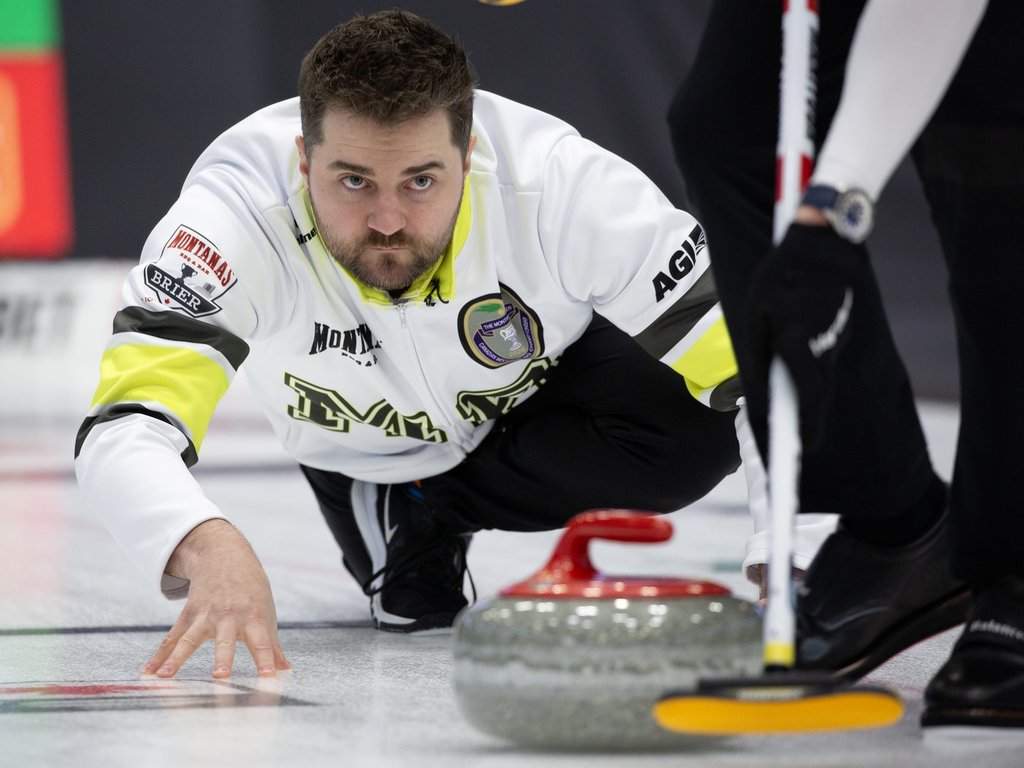
The acquisition of Mark Nichols by Team Matt Dunstone is not a simple roster update; it is a calculated attempt to solve the "Grand Slam Bottleneck" through the systematic reduction of unforced errors and the injection of proven championship-level variance management. In elite curling, the difference between a podium finish and a quarterfinal exit often rests on a 2% margin in shot success rate during the final three ends of play. By integrating Nichols—a multi-time Brier and Olympic champion—into the third position, Team Dunstone is pivoting from a high-velocity, high-risk offensive strategy to a more resilient, defensive-oriented tactical framework designed to survive the attrition of long-form tournaments.
The Three Pillars of Tactical Stability
The Dunstone-Nichols partnership addresses three specific structural deficits that historically plagued the Dunstone rink during high-pressure playoff scenarios.
1. Rotational Experience and High-Stakes Calibration
Experience in curling is often quantified by "games played," but the more relevant metric is "high-pressure decision cycles." Nichols brings over two decades of experience at the absolute ceiling of the sport, specifically operating under the specific pressure of the skip-third dynamic. While Dunstone possesses elite-level shot-making capability, his previous lineups occasionally suffered from a lack of "settling influence" when the ice conditions or the scoreboard shifted unfavorably.
Nichols functions as a human dampener for emotional and tactical volatility. His role involves more than just throwing stones; it requires a constant calibration of the skip’s mental state and the technical assessment of the path. This creates a redundant system of checks and balances that ensures the skip is not making decisions in a vacuum.
2. Shot Tolerance and Weight Control
The third position is the bridge between the set-up stones of the lead and second and the finishing stones of the skip. A failure at the third position forces the skip to play "save" shots rather than "scoring" shots. Nichols’ historical data indicates a high degree of precision in "soft-weight" hits and precise freezes—the types of shots that dictate the geometry of the house.
By improving the efficiency of the third’s stones, Dunstone effectively gains an extra shot per end. This reduces the "Weight Error Function," where a miss by the third forces the skip to overcompensate with higher-velocity shots that carry a lower probability of success.
3. The Communication Loop and Technical Read
Elite curling is a game of information gathering. The ice changes every end, every shot, and even every minute depending on the building’s humidity and temperature. Nichols is widely regarded as one of the best "ice readers" in the world. His ability to relay granular data regarding the "finish" (how much the stone curls at the end of its path) and the "speed" (the friction coefficient of the ice) allows the skip to adjust their line of delivery with higher confidence.
The Competitive Landscape and the Gushue Effect
One cannot analyze this move without acknowledging the displacement of the Gushue-Nichols partnership, which defined the Canadian curling landscape for a generation. The dissolution of that unit released a "super-asset" into the free-agent market. Dunstone’s aggressive move to secure Nichols serves as a defensive maneuver to prevent rival rinks—such as Team Bottcher or Team Koe—from strengthening their own rosters.
The Opportunity Cost of Rebuilding
Every roster change carries an inherent "integration cost." For Team Dunstone, this cost involves:
- Mechanical Synchronization: Aligning the slide and release timing of the new third with the existing sweepers.
- Communication Protocols: Establishing a shorthand for tactical disagreements that does not disrupt the flow of the game.
- Role Displacement: The existing members of the team must adjust their roles to accommodate Nichols’ seniority and specific technical demands.
However, the "Nichols Premium" likely outweighs these costs. Because Nichols is a plug-and-play veteran, the ramp-up time for this team is expected to be significantly shorter than that of a younger, less experienced lineup.
Quantifying the Impact on Win Probability
While curling lacks the robust public analytics of baseball or basketball, we can model the impact of this acquisition through the lens of "Expected Points Per End."
In games against Top-5 world-ranked opponents, Team Dunstone has historically struggled when forced to play from behind. Nichols’ presence provides a "Defensive Floor." His ability to execute "peels" and "double-takeouts" with high consistency prevents opponents from cluttering the house with guards, thereby keeping the game "clean" and allowing Dunstone to utilize his high-end scoring ability in the later ends.
The Risk of Diminishing Returns
There is a potential ceiling to this strategy. If the team relies too heavily on Nichols’ veteran intuition, it may stifle the organic tactical growth of the younger members, including Dunstone himself. Furthermore, the physical demands of a full Grand Slam season can be grueling for veteran players. The team must manage Nichols’ workload to ensure peak performance during the Brier and the World Championships.
Strategic Allocation of Sweeping Power
The addition of Nichols also necessitates a re-evaluation of the team’s sweeping core. Sweeping is no longer just about brute force; it is about "directional carving," where sweepers use friction to influence the stone's lateral movement.
Nichols’ delivery style produces a specific rotation that the sweepers must learn to read. If the lead and second can synchronize their sweeping angles with Nichols’ release, the team will see a marked improvement in "narrow-miss" conversions—turning shots that would have missed by an inch into successful hits or draws.
The Pivot to Technical Dominance
This roster move signals a departure from the "youth and energy" model that defined Dunstone’s early career. It is a transition into the "Technical Dominance" phase. The objective is no longer to out-work the opponent, but to out-think and out-execute them through superior technical consistency and information management.
The primary challenge will be the internal hierarchy. Nichols is used to a specific level of tactical autonomy. Dunstone, as skip, must balance his own vision with the wealth of experience Nichols provides. If they achieve a "Cognitive Lock"—where the two minds function as a single tactical unit—they become the most dangerous rink in the country.
Tactical Execution and the 2026 Olympic Cycle
With the 2026 Winter Olympics on the horizon, this move is timed to allow for two full seasons of synchronization before the Olympic Trials. The Canadian qualification process is notoriously brutal; it is a tournament of nerves more than talent. By securing a player who has already navigated the Olympic cycle multiple times, Dunstone has effectively purchased "institutional memory."
The strategic play here is not to win the next local bonspiel, but to build a team capable of maintaining a 90% plus success rate over a grueling 10-day national championship. Every decision made by the Dunstone rink from this point forward must be viewed through the lens of the Olympic Trials.
The immediate tactical priority for the rink is the establishment of a "Standardized Delivery Profile." Nichols’ release must be mapped against the existing team’s stone speeds to ensure that the skip’s "eye" for the line remains consistent regardless of who is throwing the stone. This requires rigorous data collection during practice sessions, using laser timing gates and high-speed cameras to ensure that the "Release Delta"—the variance in how the stone is let go—is minimized across the entire lineup.
The success of the Dunstone-Nichols era will be measured by their ability to convert "force situations" (where they are forced to take a single point when they have the hammer) into "multiple-point ends." If Nichols can consistently place his second stone in a position that creates a "setup for two," the team's overall scoring efficiency will rise by a projected 15%, which, at the elite level, is the difference between a bronze medal and a gold.
The final strategic move is the optimization of the "Fifth Player" or alternate. With a veteran like Nichols, the team requires a highly specialized alternate who can provide specific technical feedback from the coach’s bench and step in without a drop-off in sweeping power or stone-throwing accuracy. The roster is now a high-performance engine; it requires high-performance maintenance.