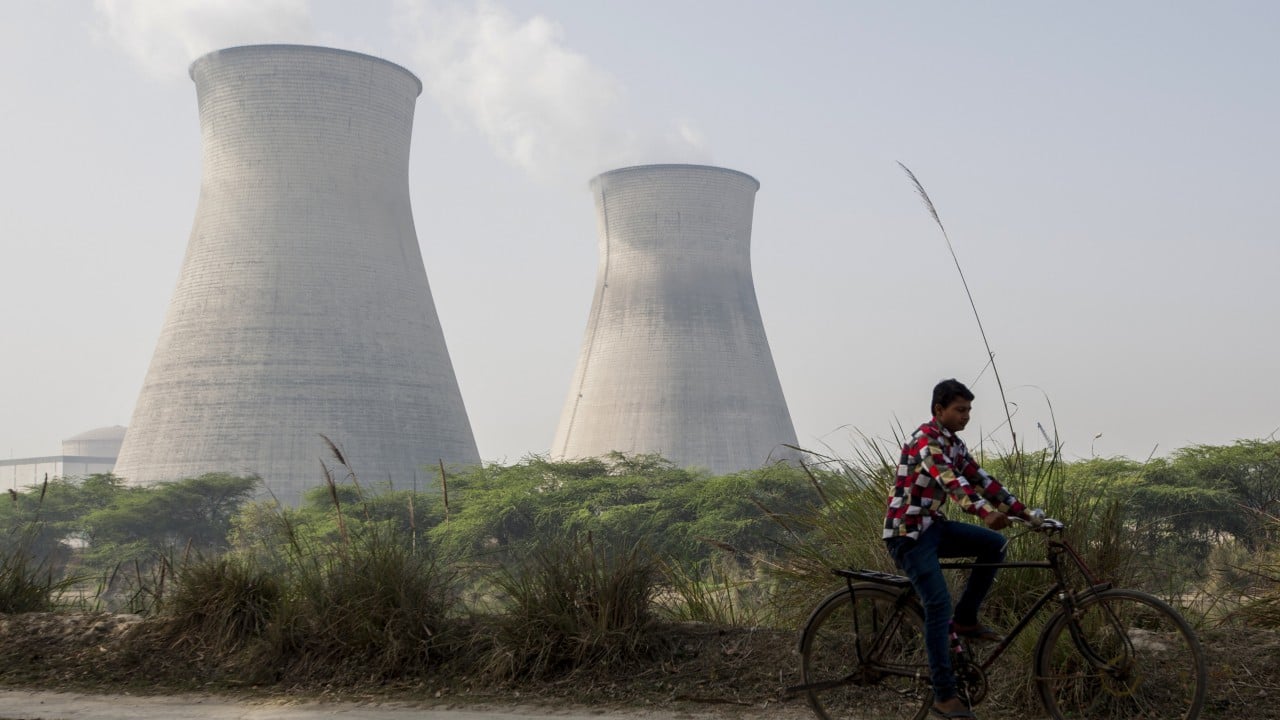
For decades, the Rajasthan Atomic Power Station stood as a monument to a broken marriage. Its dome, rising from the dry earth of northern India, was built on Canadian blueprints but fueled by a growing, bitter resentment. In 1974, when India conducted its first nuclear test, the world—and Canada specifically—slammed the door. They didn’t just stop sending blueprints. They stopped sending the one thing a reactor needs more than steel or concrete.
Uranium.
Without it, a nuclear plant is just an incredibly expensive, very quiet museum. For fifty years, the relationship between the two nations was defined by that silence. India went its own way, developing indigenous technology out of necessity, while Canada became the world’s cautious librarian of nuclear fuel. The two countries shared a technological DNA, yet they wouldn't speak.
Then, the lights started flickering in Chennai and Mumbai.
The Weight of a Billion Switches
Consider a girl named Aditi. She is ten years old, living in a small flat in a suburb of Delhi. Every night, she sits under a single LED bulb to do her homework. To Aditi, the bulb is a given. But to the engineers at the Department of Atomic Energy, that bulb is a terrifying math problem. India is trying to haul 1.4 billion people into a middle-class lifestyle. That requires power on a scale that is almost impossible to visualize.
India has set a target that sounds like science fiction: 100 gigawatts of nuclear capacity by 2047. To put that in perspective, a single gigawatt can power about 750,000 homes. India wants a hundred of them. They are building reactors at a pace the West has forgotten how to manage. But as the concrete was poured and the domes were sealed, the old ghost returned.
You can build the finest stove in the world, but if nobody sells you the wood, you’re still going to be cold.
India has thorium, yes. They have plenty of it. But thorium is a "fertile" material, not a "fissile" one. It’s like having a pile of damp logs; you need a roaring fire of uranium to get the thorium to actually start burning. For years, India’s ambitious 100GW push was a car with a massive engine and a nearly empty fuel tank.
The Saskatchewan Lifeline
Three thousand miles away, in the frozen, flat expanses of Saskatchewan, Canada, the ground holds a different kind of wealth. The McArthur River mine isn't just a hole in the ground; it is the source of the highest-grade uranium on the planet. For years, this ore was shipped to France, to the US, to South Korea. Anywhere but India.
The shift didn't happen because of a sudden burst of sentimentality. It happened because the math of the planet changed. The world realized that you cannot fix the climate while leaving a sixth of humanity in the dark, and India realized it couldn't reach 100GW by acting as a lone wolf.
The recent agreement to resume large-scale uranium shipments from Canada to India is more than a trade deal. It is the closing of a fifty-year circle. Canada’s Cameco Corp, the titan of the industry, is no longer looking at India as a proliferation risk, but as the world’s most important customer.
The Invisible Stakes of the Core
To understand why this matters, you have to look past the spreadsheets and into the reactor core itself. A nuclear reactor is a balance of immense, violent forces held in a delicate, liquid embrace.
Most of India's fleet consists of Pressurized Heavy Water Reactors (PHWRs). These are the direct descendants of the Canadian "CANDU" design. They are unique because they can be refueled while they are still running. It’s like trying to change the spark plugs in a car while you’re doing eighty miles per hour down the highway.
When the uranium supply is inconsistent, the engineers have to "stretch" the fuel. They run the reactors at lower power. They delay maintenance. They hover in a state of constant anxiety. But with a steady, reliable pipeline of Canadian yellowcake—the nickname for processed uranium ore—those reactors can finally breathe. They can run at 90% or 95% capacity.
For Aditi in Delhi, this means the bulb doesn't flicker when the AC units in the neighboring block kick on. For the Indian economy, it means the 100GW dream isn't a political slogan; it’s a physical reality.
A Bridge Built of Heavy Water
The irony is thick enough to choke on. The very technology that caused the rift—the CANDU design—is now the bridge that is mending it. Because India’s nuclear program is built on this specific Canadian architecture, Canada is the only partner that truly understands the "diet" these reactors require.
It is a marriage of convenience that has matured into a necessity. Canada needs a massive, long-term market for its resources as the world pivots away from fossil fuels. India needs a guarantor of energy security that isn't subject to the whims of volatile geopolitical neighbors.
The stakes are invisible because when nuclear power works, nothing happens. No smoke billows. No trains of coal rumble through cities. No noise disrupts the quiet of the Rajasthan desert. It is the most boring, and therefore most successful, form of miracle we have.
But the silence is different now. It isn't the silence of a shuttered plant or a diplomatic freeze. It’s the low, steady hum of a turbine spinning at 3,000 RPM, fed by rocks dug out of the Canadian permafrost, lighting a lamp for a girl three thousand miles away who will never know the name of the company that fueled her education.
The gap in the 100GW plan wasn't a lack of will, or a lack of genius. It was a lack of trust. Now that the fuel is flowing, the only thing left to build is the future.
The dome in Rajasthan is no longer a museum. It is a furnace.
Would you like me to look into the specific logistics of the Cameco-India shipping routes or the technical differences between the original CANDU and India's new 700MW indigenous reactors?