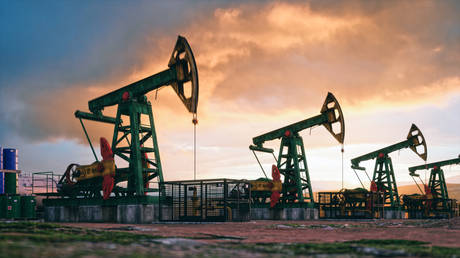
The hand-wringing over the Pentagon opening its gates to oil rigs is predictable, boring, and entirely misses the point.
Most pundits are framed in a stale debate: environmentalists scream about habitat destruction on base, while "drill baby drill" hawks talk about lowering the price at the pump. Both sides are wrong. Drilling under Fort Hood or Nellis won't shave a nickel off your commute. Global oil prices are set by a complex, interconnected market, not by the specific geography of a Texas training range.
The real play here isn't energy independence. It’s operational hardening.
I’ve spent years watching the Department of Defense (DoD) struggle with "tail-to-tooth" ratios—the massive, vulnerable logistical chain required to keep a fighting force moving. If you think this is about filling up civilian SUVs, you’re playing checkers. This is about turning military installations into self-contained power islands that can function when the civilian grid goes dark or the global supply chain snaps.
The Myth of the Strategic Petroleum Reserve
The mainstream media loves to cite the Strategic Petroleum Reserve (SPR) as our safety net. It isn't. The SPR is a blunt instrument designed for macroeconomic stability, not tactical agility.
When a base depends on fuel trucked in from a civilian refinery three states away, that base has a "single point of failure" the size of a highway. By extracting and potentially refining—or at least sequestering—fuel directly on federal land, the military eliminates the middleman.
Critics argue that the DoD should be "leading the way" in renewables. They’re half right. Microgrids and solar arrays are great for keeping the lights on in the barracks. But you cannot move an M1 Abrams tank or a carrier strike group on AA batteries. Not today. Not in 2030. We are decades away from high-density energy storage that rivals hydrocarbons for heavy-lift combat operations.
Ignoring the oil beneath our boots while waiting for a "green" breakthrough that may never scale is a dereliction of duty.
Land Use Is a Red Herring
The "lazy consensus" says that drilling will ruin training grounds. This is a failure of imagination and engineering.
We already have the technology for directional drilling that allows a wellhead to be tucked into a corner of a base while reaching deposits miles away under live-fire ranges. The footprint is negligible. If the military can manage a multi-billion dollar stealth bomber program, it can manage a few dozen well pads without blowing up its own infrastructure.
In fact, the revenue generated from these leases shouldn't disappear into the black hole of the Treasury. It should stay within the DoD to fund the very transition to renewables that the critics claim to want.
- The Math: Use the "dirty" revenue to fund the "clean" R&D.
- The Reality: The civilian sector isn't going to solve long-duration energy storage for the military. The military has to build its own bridge.
People Also Ask: Won't this make bases a bigger target?
This is the most common "intellectual" objection, and it’s nonsense. Military bases are already the primary targets in any peer-level conflict. Adding an oil well doesn't change the targeting priority of a hypersonic missile.
What it does do is increase the "recovery time" after an attack. If a base is cut off from the national pipeline network, its ability to project power drops to zero in days. If it sits on its own supply, it stays in the fight. We aren't building targets; we are building resilience.
The Geopolitical Chess Move
Let’s talk about the "nuance" Bloomberg and others ignored: The Hegemony Tax.
Every barrel of oil the US military extracts from its own soil is a barrel it doesn't have to secure in the Strait of Hormuz. We spend billions of dollars and thousands of lives policing global shipping lanes to ensure the flow of oil—much of it for our own consumption.
Extracting on-base oil is a direct subsidy to the American taxpayer by reducing the "security overhead" of our energy needs.
Why This Is Actually "Green" (The Contradiction)
Environmentalists should actually be cheering for domestic military drilling. Why? Because the US military has the strictest environmental compliance standards on the planet.
If we don't drill on a base in the US, that demand doesn't vanish. It gets shifted to places like the Orinoco Belt or the Siberian tundra, where environmental regulations are a joke and methane leaks are a feature, not a bug.
Drilling on federal land under military supervision ensures:
- Total oversight: No "accidental" spills hidden from the public.
- Methane capture: The DoD doesn't like wasting resources; they will capture the gas.
- Restoration: Base commanders are held to a higher standard of land stewardship than a private rancher in the Permian Basin.
The Hard Truth About "Net Zero" Warfare
There is a growing, dangerous fantasy that we can have a "Net Zero" military. This is a luxury belief held by people who have never had to calculate the energy density required to keep a fighter jet in the air for six hours.
$$Energy\ Density = \frac{Energy}{Volume}$$
Hydrocarbons are the most efficient way to pack a massive amount of power into a small, portable space. Until someone invents a cold fusion reactor the size of a suitcase, the military runs on oil.
Pretending otherwise is a security risk. If we have the resource, and it’s located directly beneath the machines that need it, refusing to use it is not "progressive"—it's masochistic.
The Strategy for Implementation
We need to stop treating military drilling as a political football and start treating it as a logistics upgrade.
- Direct-to-Base Refineries: Small-scale, modular refineries located on-site to turn raw crude into JP-8 and diesel.
- Sovereign Energy Zones: Designate specific areas of bases as energy-production zones where the red tape is slashed in exchange for 100% of the output going to the defense mission.
- The "Bridge" Fund: 50% of all royalties must be legally mandated to fund battery tech and small modular reactors (SMRs).
The status quo is a military that is a hostage to civilian infrastructure. The "progressive" alternative is a military that is toothless.
The only logical path is a military that is energy-autonomous.
Stop looking at the drilling rigs as a sign of the past. Look at them as the foundation of a self-sufficient, un-killable defense posture. If the price of that autonomy is a few wellheads in the Mojave Desert, it’s the cheapest bargain the Pentagon will ever see.
Get the rigs on the range. Secure the fuel. Cut the cord.