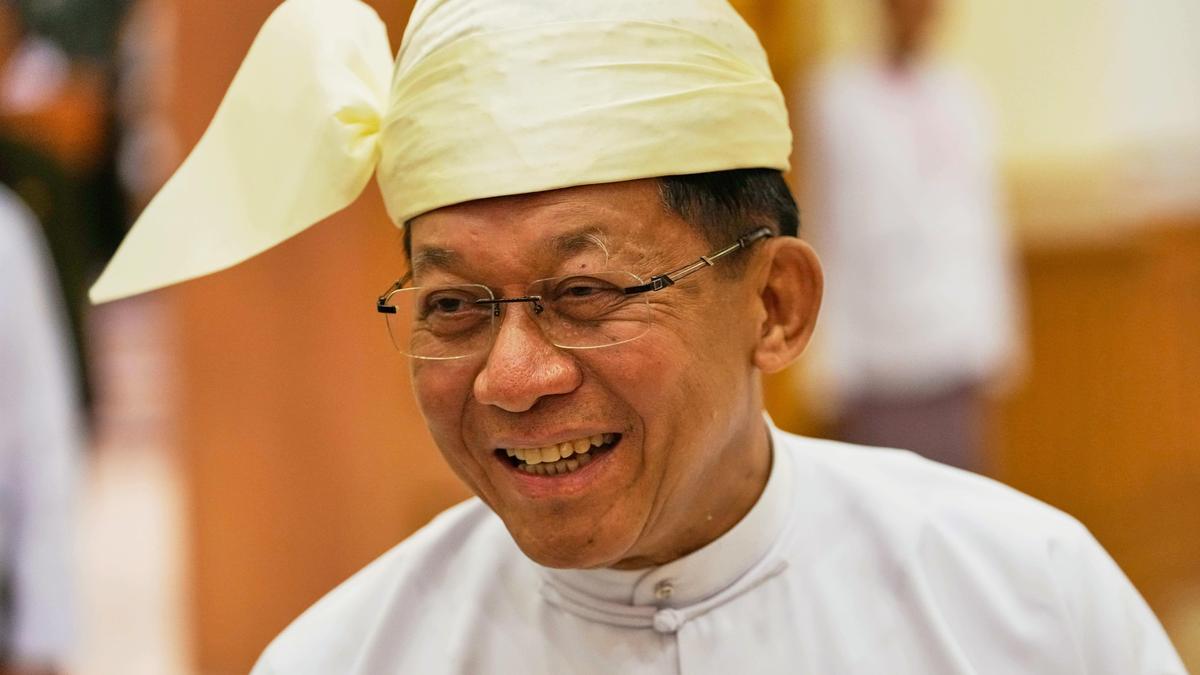
Don't be fooled by the suit and the ceremony. Senior General Min Aung Hlaing just traded his olive-drab fatigues for the formal attire of a civilian president, but the iron fist remains exactly where it's been since 2021. On April 10, 2026, the man who orchestrated the coup that shattered Myanmar’s democratic experiment officially took the oath of office in Naypyitaw. It's a move that feels like a scripted finale to a long, bloody play.
If you're wondering why this matters now, it's because this isn't just a title change. It’s a calculated legal maneuver. For years, the junta chief operated under the awkward "Chairman of the State Administration Council" label. By swearing himself in as President, he’s trying to wash the "coup leader" stain off his resume before the international community. Does it work? Not if you've been paying attention to the civil war still tearing the country apart.
The Strategy Behind the Suit
Min Aung Hlaing didn't just wake up and decide to be President. This has been the plan since the day he detained Aung San Suu Kyi. To understand why he did this, you have to look at the "acting" presidency that preceded it. For a long time, Myint Swe—a military loyalist—served as the acting president. When Myint Swe’s health failed in mid-2024, Min Aung Hlaing stepped into the role on an acting basis.
The 2026 "election" was the final piece of the puzzle. Most independent observers, including groups like the International Crisis Group, called the polls a sham. With the National League for Democracy (NLD) banned and most of the opposition in prison or in the jungle, the military-backed Union Solidarity and Development Party (USDP) basically ran against itself.
By winning this engineered vote, Min Aung Hlaing achieves three things:
- He creates a legal "civilian" facade to entice neighbors like Thailand and China back to the table.
- He bypasses the military’s own retirement age rules by shifting to a political office.
- He attempts to shield himself from International Criminal Court (ICC) scrutiny by claiming sovereign immunity as a "duly elected" head of state.
What's Actually Changed on the Ground
If you're living in Yangon or Mandalay, this announcement doesn't put more food on the table or stop the drone strikes. The economy is a wreck. The kyat is worth a fraction of what it was five years ago. Honestly, the daily reality for most people in Myanmar is a struggle for survival, not a debate over constitutional technicalities.
The civil war hasn't slowed down just because there’s a new president in the palace. Ethnic Armed Organizations (EAOs) and People’s Defence Forces (PDFs) still control massive swaths of the countryside. In fact, the junta has lost more territory in the last two years than at any point since the 1960s.
Min Aung Hlaing's move to the presidency also meant he had to officially "step down" as Commander-in-Chief of the Defence Services. General Ye Win Oo has taken that spot. But don't think for a second that there's a power split. Ye Win Oo is a staunch loyalist. This is a game of musical chairs where every chair belongs to the same house.
A Pariah State With a New Letterhead
The international reaction has been predictably split. While Western nations like the US and UK have already dismissed the 2026 transition as a fraud, others are looking for any excuse to normalize trade.
China and Russia sent representatives to the ceremony. For them, a "President" is easier to deal with than a "Junta Chief." It provides a thin layer of diplomatic cover for infrastructure projects and arms deals. But ASEAN remains deeply divided. The Philippines and Indonesia have stayed firm, insisting that without inclusive dialogue—meaning talking to the people the military is currently bombing—this presidency is hollow.
Why the Resistance Isn't Quitting
The National Unity Government (NUG), which operates in the shadows and in exile, was quick to denounce the swearing-in. To them, Min Aung Hlaing isn't a president; he's a criminal holding a stolen title.
The resistance has seen this move coming since the 2008 Constitution was drafted. That document was always a "discipline-flourishing democracy" trap designed to keep the military in the driver's seat even when they're wearing civilian clothes. The fact that Min Aung Hlaing is now using those very rules to cement his power is the ultimate irony.
The Next Moves for Myanmar
If you want to know what happens next, watch the borders and the banks. The military is desperate for hard currency. They'll likely use this "new" government to push for the lifting of sanctions, claiming they've fulfilled their promise to return to civilian rule.
Keep an eye on these specific developments:
- Conscription Efforts: Even with a "civilian" president, the military is still hunting for bodies to fill its ranks. Expect the 2024 conscription law to be enforced even more aggressively.
- Diplomatic Maneuvering: Watch for the new Vice Presidents, Nyo Saw and Nan Ni Ni Aye, to start making the rounds at regional summits.
- The Resistance Response: Major offensives from the Three Brotherhood Alliance or the KNU usually follow these big political announcements in Naypyitaw.
Don't expect a sudden peace deal. Min Aung Hlaing has tied his survival to the presidency. For the resistance, that makes him a target, not a partner for peace. The title on the door has changed, but the war for Myanmar’s soul is far from over.
If you're following this, stay skeptical of any "normalization" headlines. A general in a suit is still a general. Watch the actions of the NUG and the ethnic armies over the coming months. They're the ones who will ultimately decide if this presidency actually means anything.