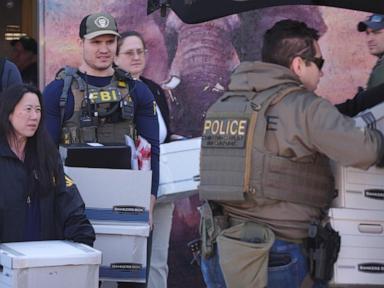
Minnesota is currently the epicenter of a massive federal crackdown on public fund embezzlement that stretches far beyond a single organization or a handful of bad actors. Federal agents armed with search warrants are no longer just looking for missing receipts; they are mapping an entire ecosystem of fraud that has thrived under the nose of state regulators. The core of the issue lies in a systemic breakdown of the "honor system" that governs how billions in tax dollars flow to non-profit entities. While the public focus remains on the immediate raids and the shock of the dollar amounts, the deeper story is about the structural rot in the oversight mechanisms that were supposed to protect these resources.
The scale is staggering. What started as an investigation into pandemic-era food programs has morphed into a sprawling hunt for money laundering, wire fraud, and the exploitation of community trust. The Federal Bureau of Investigation and the Internal Revenue Service are peeling back layers of shell companies and diverted assets that suggest this wasn't just opportunism. It was a blueprint.
The Anatomy of the Minnesota Fraud Engine
Public fraud in the state has evolved into a sophisticated industry. It relies on a simple, devastatingly effective loop. A non-profit applies for a grant, claims to serve a vulnerable population, and then funnels that money through a network of secondary businesses that exist only on paper. These "sub-recipients" are the black holes of the financial world. They provide the invoices and the paper trail necessary to satisfy basic audits while the actual cash is converted into real estate, luxury vehicles, or offshore transfers.
The investigative trail shows that these networks often operate within tight-knit circles, making them difficult for outsiders to penetrate. This isn't just about someone padding their paycheck. This is about organized groups treating state coffers like a private equity fund. When investigators move in with search warrants, they aren't just looking for ledgers. They are looking for the digital breadcrumbs that link these disparate companies back to a central hub.
Why Minnesota Became the Target
It isn't a coincidence that these investigations are concentrated here. Minnesota has long prided itself on its "high-trust" society and its robust network of non-profits. This culture of trust became a vulnerability. State agencies, often understaffed or politically pressured to distribute funds quickly, relied on self-reporting.
In a high-trust environment, a lack of aggressive auditing isn't seen as a flaw; it is seen as efficiency. Fraudsters recognized this. They found that the state was willing to cut the checks but lacked the infrastructure to verify if the "meals served" or "services provided" actually reached the people in need. The "Minnesota Nice" approach to governance met a cold, calculated criminal reality.
The Paper Trail of Ghost Entities
To understand how hundreds of millions can vanish, you have to look at the invoices. In many of the cases currently under federal scrutiny, the documentation provided to the state was laughably thin. We are talking about handwritten lists of names that were clearly pulled from phone books or internet databases. Yet, these documents passed through the hands of state workers and were approved for payment.
The failure of the "gatekeeper" function is the most damning aspect of this probe. Every dollar that went to a fake grocery store or a non-existent youth program was a dollar that had to be signed off by a public official. This raises a localized but critical question. Were these officials incompetent, or were they overwhelmed? The evidence suggests a mix of both, compounded by a lack of modern data-tracking tools that could have flagged these anomalies in real-time.
The Role of Federal Intervention
When the FBI gets involved, it usually means the state's internal systems have completely failed. Federal agents bring resources that local police simply do not have—forensic accountants, cyber-security experts, and the ability to track international wire transfers. The current wave of search warrants indicates that the Department of Justice is looking for "enterprise" charges. They are building cases under the Racketeer Influenced and Corrupt Organizations (RICO) Act, treating these fraud rings like the organized crime families of the past.
The search warrants also target the professional enablers. This includes the accountants who signed off on the books and the lawyers who set up the shell companies. For a fraud of this magnitude to work, it requires professional legitimacy. The feds are now putting those professionals in the crosshairs, signaling that the "I was just doing my job" defense will no longer hold water in a courtroom.
The Human Cost of Paper Losses
It is easy to get lost in the numbers, but the real victim is the social safety net. Every million dollars diverted into a luxury lake house is a million dollars stripped from hungry children or struggling families. This fraud doesn't just steal money; it steals the public's faith in the government's ability to do good.
When these stories break, the immediate political reaction is to call for more regulations. However, the problem isn't a lack of rules. There are plenty of rules. The problem is a lack of enforcement. If the state doesn't have the teeth to audit a non-profit, then the rules are just suggestions. The current investigations are a wake-up call that the era of hands-off oversight is over.
The Evolution of the Scam
The tactics used in these Minnesota cases are already being exported. Investigators are seeing similar patterns in other states where pandemic relief funds were distributed with minimal friction. The "Minnesota Model" of fraud—using non-profits as a front for large-scale money laundering—is a blueprint that other criminal elements are studying.
What makes this particularly difficult to prosecute is the "community" aspect. Many of these organizations wrap themselves in the language of social justice or community empowerment. This creates a shield. When an investigator starts asking questions, the organization can claim they are being targeted because of their mission or the population they serve. It is a cynical, brilliant tactic that forces investigators to move with extreme caution, often allowing the fraud to continue for years before a warrant is ever served.
Tracking the Luxury Asset Pipeline
A significant portion of the federal focus is on asset forfeiture. The government isn't just looking to put people in prison; they want the money back. This is why you see agents seizing commercial property, high-end SUVs, and even jewelry. These assets are the physical manifestation of the stolen public trust.
The challenge is that by the time a search warrant is executed, much of the cash has already been moved. It has been laundered through multiple layers of "consulting fees" or sent to overseas accounts in jurisdictions that don't cooperate with U.S. authorities. The forensic work required to untangle these webs takes years. This is why the current probe feels like it is moving slowly. It is a painstaking process of following a trail that was designed to be invisible.
The Failure of the "Pass-Through" Model
At the heart of the Minnesota crisis is the pass-through funding model. In this system, the state gives money to a large, established non-profit, which then distributes it to smaller, "grassroots" organizations. The idea is to reach deep into communities that the government can't easily access. In practice, this creates a massive accountability gap.
The large non-profit often takes a "management fee" and then passes the buck on oversight. They claim they aren't responsible for what the smaller groups do with the money. The smaller groups, meanwhile, are often too small to have professional boards or internal controls. This middle-man structure is a playground for fraud. It allows everyone to point the finger at someone else when the money goes missing.
Rebuilding the Oversight Infrastructure
Fixing this requires more than just more agents with warrants. It requires a fundamental shift in how public money is managed. We need a move toward automated, transparent data systems that track every dollar from the state treasury to the end recipient. If a non-profit claims to serve 5,000 meals a day, their supply chain—the invoices from food wholesalers, the utility bills for the kitchen, the payroll for the staff—should be digitally verified.
This isn't about being "mean" to non-profits. It is about protecting the integrity of the sector. The legitimate organizations, the ones actually doing the work, are the ones who suffer the most when these scandals break. They face increased scrutiny and a skeptical public, all because a few bad actors found a way to exploit a broken system.
The Political Fallout
There is no avoiding the political dimension of these investigations. The agencies involved fall under the executive branch of the state government. The failures happened on their watch. As the federal probe widens, the pressure on state leaders to explain how this was allowed to happen will become unbearable.
The defense that "the pandemic made us do it" is wearing thin. While the urgency of the COVID-19 crisis certainly created opportunities for fraud, many of these schemes continued long after the initial emergency had passed. The warrants currently being served aren't just for 2020 records; they are for ongoing activities. This suggests that the criminals didn't just take advantage of a crisis—they built a permanent business model based on state negligence.
The Looming Legal Battles
As the indictments come down, we are going to see a series of high-profile trials that will test the limits of federal fraud statutes. Defense attorneys will likely argue that the state's own lack of oversight gave their clients a "reasonable belief" that their actions were permissible, or at least not criminal. They will argue that the rules were confusing and the reporting requirements were vague.
Prosecutors, on the other hand, will point to the blatant fabrications. They will show the pictures of empty warehouses that were supposed to be distribution centers. They will present the testimony of people whose names were forged on attendance sheets. The sheer audacity of the theft will be the centerpiece of the government's case.
Beyond the Warrants
The search warrants are a beginning, not an end. They represent the moment when the government stops asking and starts taking. But for the people of Minnesota, the real work begins after the agents leave. It involves a grueling, often boring process of auditing every department, every grant, and every contract. It means admitting that the old way of doing business—the way based on a handshake and a "good enough" report—is dead.
The state's reputation as a well-managed, civic-minded leader is on the line. Every new warrant served is a reminder of how far that reputation has slipped. To recover, Minnesota must prove it can be as aggressive in protecting its resources as the fraudsters were in stealing them.
The federal focus on Minnesota is a localized symptom of a national disease. As the "shadow economy" of public fraud is brought into the light, it reveals a terrifying reality: our systems are only as strong as our willingness to verify the truth. Trust is a luxury we can no longer afford to give away for free.
Stop looking for the "game-changer" policy that will fix this overnight. There isn't one. There is only the hard, relentless work of forensic accounting and the political will to hold both the thieves and the enablers accountable. The warrants are just the first step in a very long march toward a reality where public funds actually serve the public.
The cost of inaction is too high. We are already paying it. Every time a fraudster walks away with a suitcase full of tax dollars, the social contract is torn just a little bit more. The federal agents in Minnesota are currently trying to tape that contract back together, one search warrant at a time. The real question is whether the state government will help them or just get in the way.
The investigation is moving into a phase of deep-tissue litigation. We will see names that have been staples of local community leadership for years appearing on court dockets. This is the painful part of the process, but it is necessary. You cannot heal a wound without first cleaning it out. The "Minnesota probe" is no longer just a local news story; it is a national case study in the consequences of administrative complacency.
The money is gone. The cars are seized. The reputations are ruined. All that is left is to ensure that the next time the state opens its checkbook, someone is actually looking at the person on the other side of the desk.