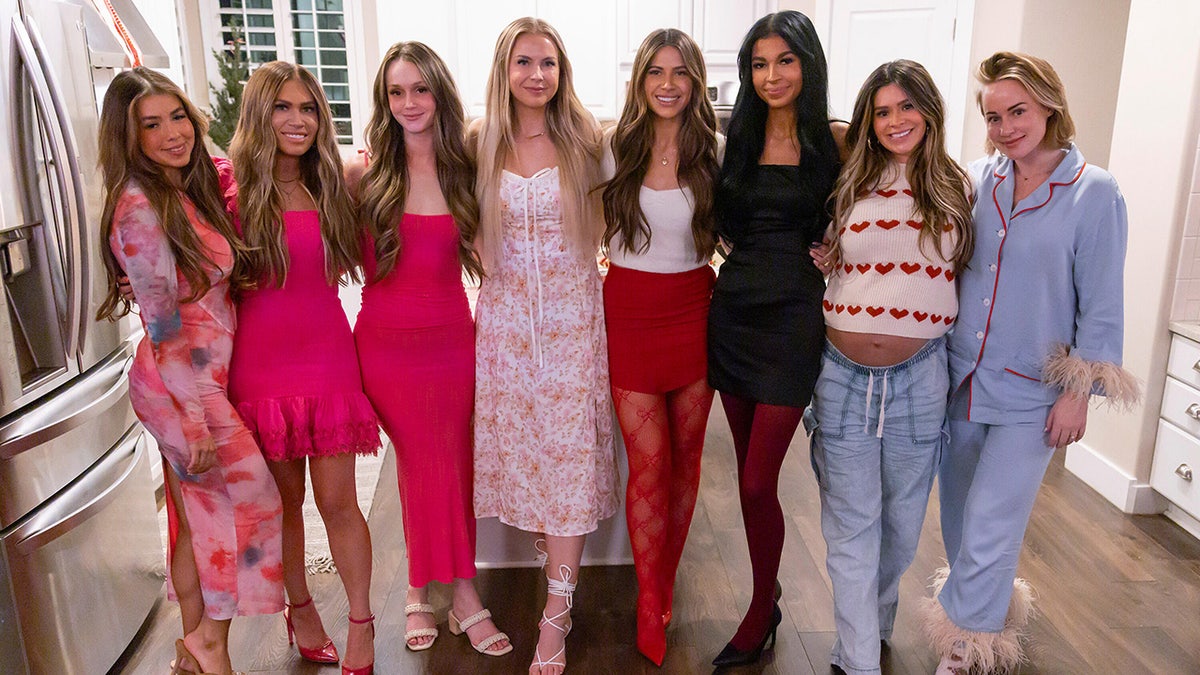
The renewal of The Secret Lives of Mormon Wives for a second production cycle marks a shift from experimental content to a verified revenue engine for Hulu. While casual observers focus on the interpersonal friction of the cast, the underlying logic of the show's success rests on a specific intersection of platform-native clout, religious counter-signaling, and algorithmic audience retention. Production resumes not because of a specific plot point, but because the first cycle successfully established a "Conflict-to-Consumption" pipeline that minimized acquisition costs while maximizing organic social reach.
The Mechanics of Subculture Arbitrage
The series operates on a principle of Subculture Arbitrage. This occurs when a production entity identifies a high-friction, insulated community—in this case, the Church of Jesus Christ of Latter-day Saints (LDS)—and extracts value by broadcasting the tension between traditionalist dogma and modern influencer culture.
The value extraction follows a predictable three-stage sequence:
- Isolation Identification: Identifying a group with strict internal social codes.
- The Deviance Catalyst: Introducing or highlighting behaviors that violate those codes (e.g., "soft swinging" or aesthetic non-conformity).
- Audience Polarization: Leveraging the resulting friction to drive engagement from both defenders of the tradition and voyeurs of the rebellion.
The second production cycle will transition from introducing these characters to managing the Feedback Loop Erosion. In the first cycle, the cast responded to real-world social pressures. In the upcoming cycle, the primary driver of behavior will be the metadata from the first cycle's performance. The cast members are no longer just "Mormon Wives"; they are now professionalized media assets whose market value is directly proportional to their ability to sustain high-intensity conflict.
The Lifecycle of Reality Asset Appreciation
Reality television assets typically follow a specific depreciation curve, but The Secret Lives of Mormon Wives has inverted this through a Multi-Platform Synergistic Loop.
- Platform A (TikTok/Social): Serves as the high-frequency testing ground for storylines. The "Momtok" drama predates the series, providing a pre-validated dataset for producers.
- Platform B (Hulu/Streaming): Acts as the high-fidelity archive. It provides the narrative structure and "official" version of events that legitimizes the social media noise.
The resumption of production indicates that the Customer Acquisition Cost (CAC) for new viewers remains lower than the Lifetime Value (LTV) of the existing subscriber base. Because the cast maintains their own social media presence between seasons, the "marketing" for the show never actually stops. This creates a perpetual awareness state, reducing the need for expensive traditional advertising blitzes.
Structural Risks in the Second Production Cycle
While the commercial outlook is positive, the production faces structural limitations inherent to the "Rebel vs. Religion" framework.
The Authenticity Paradox
The show's initial appeal was the "secret" nature of the wives' lives. Once the cameras are permanently installed and the cast becomes wealthy through the platform, the "secret" is gone. They are no longer Mormon housewives navigating a strict society; they are professional reality stars. This creates a risk of Narrative Sterility, where the conflict feels engineered rather than systemic.
Ecclesiastical Pressure and Community Attrition
The LDS Church's institutional response (or lack thereof) creates a ceiling for the show’s longevity. If the church takes a hardline stance and excommunicates members, the "Mormon" hook is lost. If the church ignores it, the "transgressive" thrill dissipates. The show exists in the narrow margin of Tolerated Rebellion. If the cast drifts too far toward secular influencer norms, they lose the very friction that makes them unique in a crowded media market.
The Economic Engine of the 'Momtok' Brand
To understand why production is resuming, one must quantify the Engagement Velocity of the cast. The series is not just a show; it is an incubator for personal brands.
- Direct Stream Revenue: Hulu’s internal metrics for completion rates and "bingeability."
- Affiliate and Sponsorship Spillover: The cast members’ ability to move product (skincare, energy drinks, fast fashion) during the broadcast window.
- Ancillary Media Cycles: Podcast appearances, tabloid coverage, and social media commentary that extend the show’s relevance beyond its airtime.
The production team uses Narrative Weighting to decide which cast members receive more screen time. This isn't based on "likeability" but on Volatility Ratios. A cast member who generates 1,000 negative comments is more valuable to the production than one who generates 500 positive ones. Conflict drives the algorithm, and the algorithm drives the renewal.
The Regulatory and Ethical Bottleneck
As production resumes, the legal and ethical framework surrounding the "Mormon" brand remains a point of contention. The use of religious identity as a commercial trope creates a unique set of challenges regarding intellectual property and cultural sensitivity. However, from a purely strategic consulting perspective, these risks are currently mitigated by the cast's self-identification. As long as the participants claim the identity, the production remains shielded from accusations of religious exploitation.
The second cycle must solve for the Sequel Inflation Problem. Viewers who saw "soft swinging" in season one will expect a higher level of scandal in season two. This creates an unsustainable trajectory where behaviors must become increasingly extreme to maintain the same level of audience dopamine response.
Strategic Forecast and Deployment
The success of the next production phase depends on the transition from Discovery to Expansion.
The producers must pivot the narrative from the "Momtok" scandal to the Inter-Group Power Struggle. In season one, the "enemy" was the social pressure of the LDS Church. In season two, the conflict must become internal. This is a standard pivot in reality TV architecture—moving from "Us vs. The World" to "Me vs. You."
To maintain market dominance, the production should:
- Decentralize the Lead: Relying too heavily on a single central figure (like Taylor Frankie Paul) creates a single point of failure. The narrative must be distributed across the "B-plot" cast to ensure longevity if the lead asset becomes compromised.
- Leverage Metadata Insights: Use the viewing data from season one to identify specific "drop-off points" in episodes. If viewers tuned out during sincere religious discussions, expect those elements to be truncated in favor of high-conflict social gatherings.
- Incorporate Meta-Narrative: Acknowledge the fame of the cast within the show. Pretending they are still "ordinary" housewives is a strategic error that alienates a sophisticated audience. The show must become about the consequences of the show itself.
The resumption of production is a calculated bet on the Stigma Premium. People will pay (with their time and subscriptions) to watch others violate the norms they themselves feel constrained by. As long as the tension between the conservative LDS backdrop and the modern influencer lifestyle exists, this asset will continue to yield high returns. The strategic play is to manage the burn rate of the cast’s personal lives to ensure the drama lasts for at least four to five cycles before the inevitable brand dilution occurs.