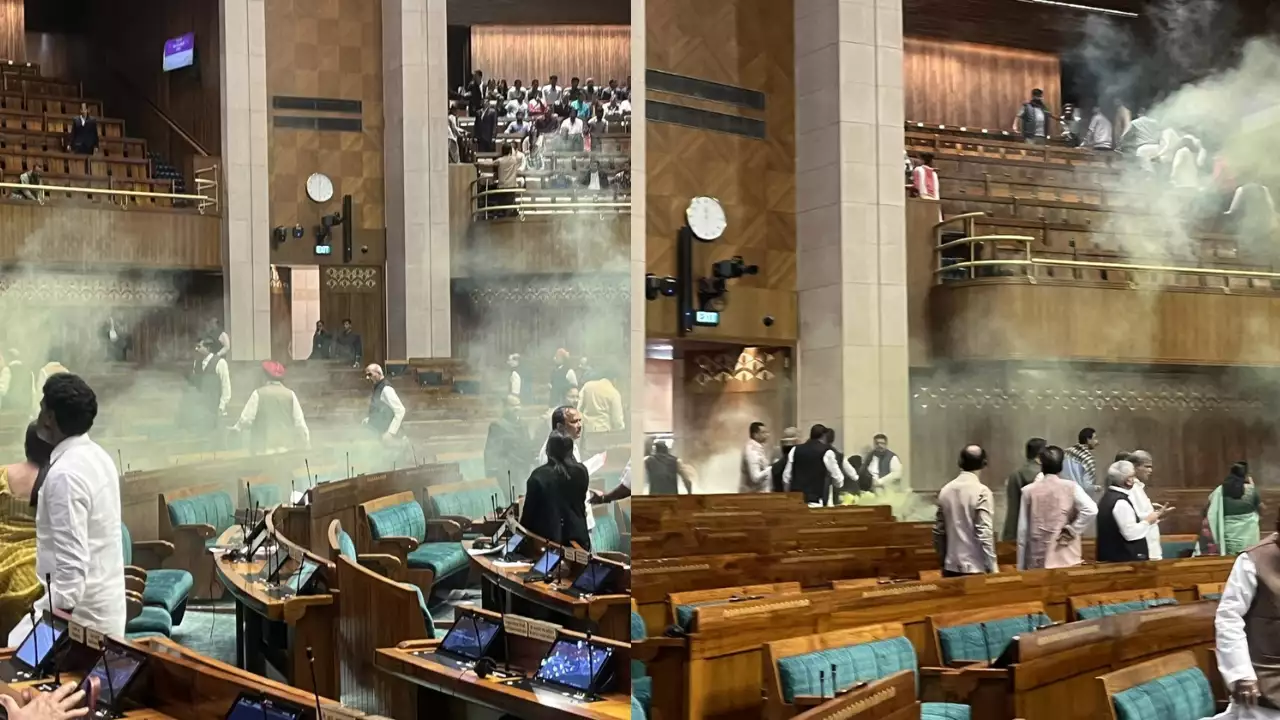
The ink was barely dry on Ahmad’s midterm paper when the first shell whistled over the ridgeline.
In a classroom at Kunar University, silence is usually a sign of deep concentration or the respectful pause before a professor speaks. But on this afternoon, the silence was a vacuum, a sudden withdrawal of air that preceded a deafening roar. When the projectile struck the campus grounds in eastern Afghanistan, it didn't just shatter glass. It punctured the fragile illusion that a university could be a sanctuary in a borderland defined by decades of friction.
Ahmad—a name we will use to represent the hundreds of students who scrambled for cover—didn't see a "geopolitical incident." He saw the dust of pulverized stone coating his textbooks. He felt the vibration in his teeth. While officials in Kabul and Islamabad began the familiar, weary dance of accusations and denials, the students of Kunar were left staring at craters where there should have been a courtyard.
The Geography of a Grudge
To understand why a university becomes a target, you have to look at the dirt. Kunar province clings to the Durand Line, a frontier drawn by a British civil servant in 1893 that has remained a bleeding wound ever since. It is a place where the mountains are tall enough to hide armies and the valleys are narrow enough to trap them.
For years, the Pakistani military has maintained that militants use the Afghan side of this border as a springboard for attacks. They speak of "terrorist sanctuaries" with the clinical detachment of a surgeon describing an infection. But when the "surgery" involves heavy artillery launched across an international boundary, the scalpel is a blunt instrument that often finds the wrong flesh.
The accusation leveled by Afghan officials was specific: Pakistani forces fired rockets that landed directly within the university’s perimeter. Pakistan, as it often does, remained silent or issued a blanket rejection of the claims. This is the rhythmic, agonizing heartbeat of the region. Strike. Deny. Counter-strike. Lament.
But look closer at the map. Kunar University isn't a military base. It doesn't house bunkers or drone bays. It houses the future of a generation trying to outrun a history of perpetual war. When a shell lands there, it isn't hitting a strategic asset. It is hitting the very idea that an Afghan youth can choose a pen over a rifle.
The Invisible Stakes of the Borderlands
We often talk about border skirmishes as if they are a game of Risk played on a board of mahogany. We count the shells. We measure the caliber. We analyze the trajectory.
What we miss is the psychological erosion.
Imagine being twenty years old. You have grown up in a country where the sky has always been a source of anxiety. You worked, perhaps against the wishes of your village or the constraints of poverty, to secure a seat in a lecture hall. You believe that if you study hard enough, the world outside those walls will finally make sense.
Then, the world outside decides to remind you that it doesn't care about your degree.
The shells that fell on Kunar were not just iron and explosive. They were messages. To the Afghan government, they said: Your borders are porous and your sovereignty is a myth. To the students, they said: There is no such thing as a safe space. This is the hidden cost of the "war on terror" and the regional power plays between Kabul and Islamabad. The collateral damage isn't just the brickwork of a building; it is the confidence of a population. Every time a campus is hit, a dozen families decide it is too dangerous to send their children to school. The brain drain doesn't happen at the airport; it happens in the moments of terror when a student realizes their classroom is a frontline.
A History of Cross-Border Friction
This wasn't an isolated spark in a dark room. The tension between the two nations over the Kunar border has been a slow-motion train wreck for over a decade.
- The Sanctuary Argument: Islamabad frequently claims that the Tehrik-i-Taliban Pakistan (TTP) operates out of the rugged Kunar and Nuristan provinces, slipping across the border to kill Pakistani soldiers before retreating into the Afghan mist.
- The Shelling Strategy: In response, Pakistan has historically used "unprovoked shelling"—as Kabul calls it—to create a buffer zone or to pressure Afghan authorities to act.
- The Human Toll: Between 2012 and the present day, thousands of rockets have crossed that line. They have hit homes, forests, and now, a center of higher learning.
The tragedy of the Kunar University incident is its predictability. When two states refuse to agree on where one ends and the other begins, the people living on the seam are the ones who get pinched.
Consider the logistical nightmare of a university under fire. How do you maintain a library when you don't know if the roof will exist tomorrow? How do you recruit faculty to a region where the "commute" involves dodging artillery? The university becomes a skeleton, a ghost of an institution that exists in name only because the physical reality is too volatile to inhabit.
The Language of Deniability
There is a particular kind of cruelty in the official statements that follow these attacks. They are written in a "diplomatic-speak" designed to obscure the blood on the ground.
"We are investigating the reports."
"External elements are trying to sabotage bilateral relations."
"Our forces only respond to incoming fire."
These phrases are a cold comfort to a student who just watched a piece of shrapnel tear through a chalkboard. The reality is that for those on the border, the source of the fire doesn't matter as much as the fact that the fire exists. Whether the shell was a "mistake," a "retaliation," or a "targeted strike," the result is a punctured education.
The geopolitics of the region are a tangled mess of proxy wars and ethnic ties. The Pashtun people live on both sides of the line, often ignoring the colonial border entirely to visit cousins, trade cattle, or attend weddings. Yet, the states that govern them use that same line as a justification for violence. It is a paradox: the border is ignored when it is convenient for the people, and weaponized when it is convenient for the governments.
The Weight of the Rubble
Let's return to the classroom.
After the smoke clears, there is the cleanup. This is the part the news cameras rarely stay for. It is the sound of brooms on tile. It is the sorting of papers—some charred, some torn. It is the look in a professor's eyes when they try to resume a lecture on civil engineering or Persian literature while the smell of cordite still hangs in the curtains.
How do you teach a student about the "social contract" when they have just seen the ultimate breach of it?
The attack on Kunar University is a microcosm of the larger Afghan struggle. It is the story of a people trying to build something permanent in a landscape where everything is treated as temporary. The university is an act of defiance. Every book on a shelf is a middle finger to the chaos of the border. Every girl and boy who walks through those gates is making a bet against the odds of their own geography.
When we read about "Pakistan attacking a university," we shouldn't just think about the military tension. We should think about the silence that follows the blast. It is a heavy, expectant silence. It asks: Will you come back tomorrow?
The Choice to Stay
The easy path for the students of Kunar is to leave. To head for the relative safety of Kabul, or to join the millions who have crossed into Iran or Turkey, looking for a life where the sky is just the sky.
But many stay. They stay because the university is more than a collection of buildings. It is the only bridge they have to a life that isn't defined by the Durand Line or the whims of generals in distant cities.
The tragedy of the shelling isn't just the physical damage. It is the exhaustion of the soul. It is the weariness of having to prove, over and over again, that your life has value beyond being a statistic in a border dispute.
As the sun sets over the Kunar River, the mountains cast long, jagged shadows across the campus. The craters are still there. The glass hasn't all been replaced. But somewhere in a dormitory, a student is lighting a lamp, opening a book, and reclaiming the space that the rockets tried to take away.
The manuscript survives the mortar, but only if someone is brave enough to keep writing.