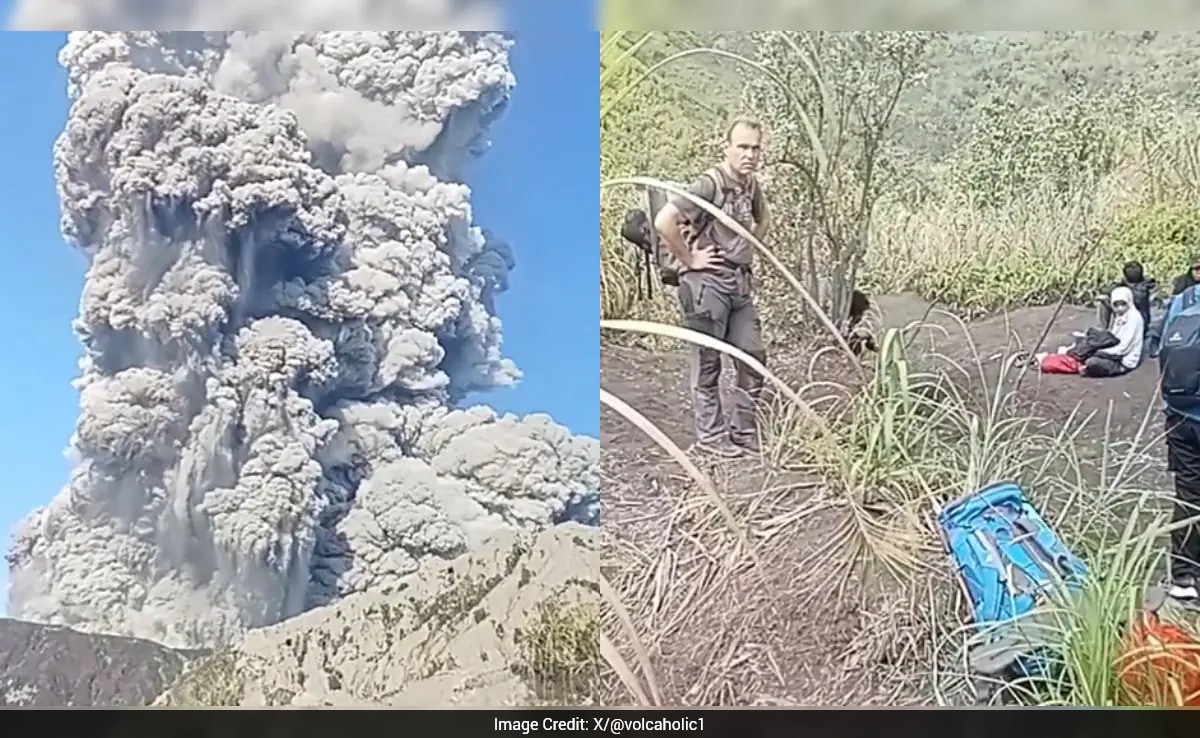
Mount Dukono in Indonesia doesn't care about your Instagram photos. It’s one of the most active volcanoes in the world. Yet, a group of hikers recently thought it was a good idea to climb right up to the rim of its crater while it was actively spitting fire and ash. A viral drone video caught the exact moment a massive phreatic eruption exploded behind them. They ran for their lives. It wasn't a "close call." It was a miracle they didn't end up as statistics.
If you haven't seen the footage, it’s terrifying. One second, people are standing on the edge of a gray, desolate ridge. The next, a tower of dark ash shoots hundreds of feet into the air. The hikers look like ants scurrying away from a giant, black cloud. If the wind had shifted or the eruption had been slightly more lateral, those people would be dead. Period. If you enjoyed this post, you should read: this related article.
Why Mount Dukono is a Death Trap for the Unprepared
Dukono sits on the remote island of Halmahera. It’s been in a state of near-continuous eruption since 1933. This isn't a dormant giant waking up. It’s an active, volatile system that vents gas and ash almost daily. The Indonesian Center for Volcanology and Geological Hazard Mitigation (PVMBG) has maintained a "Level II" alert status here for a long time. This means no one—absolutely no one—is supposed to be within three kilometers of the crater.
The hikers in the video ignored these warnings. They crossed a "red zone" designed to keep them alive. When you’re dealing with a volcano like Dukono, you aren't just worried about lava. You’re worried about volcanic bombs. These are molten rocks the size of Volkswagens that the mountain can hurl miles from the vent. Then there's the ash. Inhaling hot volcanic ash is like breathing in shards of glass. It shreds your lungs and suffocates you instantly. For another perspective on this development, check out the recent update from NPR.
The Psychology of Risk at the Crater Rim
Why do people do this? It’s the "it won't happen to me" mindset. Social media has turned dangerous natural wonders into backdrops for likes. We see professional photographers or volcanologists near craters and think we can do it too. We can't. Experts carry gas masks, wear heat-resistant gear, and spend hours studying seismic charts before they even think about an ascent.
Most tourists who climb Dukono are hiring local guides who might not be prioritizing safety over a paycheck. Or worse, they’re navigating themselves using GPS tracks from people who got lucky in the past. Just because a trail is on an app doesn't mean it's safe today. Volcanic conditions change in seconds. A tremor you can't even feel can precede an explosion that levels the ridge you’re standing on.
The Science of a Sudden Eruption
What we saw in that chilling video was likely a phreatic explosion. This happens when water—usually from rain or groundwater—seeps into the volcano and hits magma or superheated rock. The water flashes into steam instantly. This creates a massive buildup of pressure that eventually blows the top off.
These eruptions are notoriously hard to predict. They don't always give the classic warnings like earthquakes or ground swelling. They just happen. One minute the crater is quiet; the next, you're in a life-or-death sprint against a pyroclastic surge.
Survival is Not a Strategy
The people in that video didn't survive because they were fast. They survived because the eruption was vertical. If that ash cloud had collapsed and roared down the slope as a pyroclastic flow, no amount of running would have saved them. Those flows can move at over 100 miles per hour. You can't outrun a wall of 1,000-degree gas.
What You Need to Know Before Hiking Active Volcanoes
Indonesia has more active volcanoes than anywhere else on earth. It’s a hiker's paradise, but it’s also a minefield for the ignorant. If you're planning to trek a mountain like Dukono, Merapi, or Anak Krakatau, you need to stop treating it like a walk in the park.
- Check the PVMBG Status Every Morning. The Magma Indonesia website and app provide real-time updates on alert levels. If it’s at Level II or III, stay away from the summit.
- Hire Certified Guides Only. Don't just grab a guy with a moped. Look for guides certified by the Indonesian Tourist Guide Association (HPI) who have specific mountain training.
- Understand the Buffer Zones. When authorities say "3km radius," they aren't being cautious for the sake of it. They’re measuring the "ballistic zone" where rocks are most likely to fall.
- Pack for the Worst Case. Even if you stay outside the danger zone, ash fall can happen anywhere. Carry a high-quality N95 mask and eye protection.
Stop Risking Lives for the Shot
The rescuers in Indonesia are tired of risking their own lives to save people who ignore basic safety signs. Every time a hiker gets stranded or injured in a restricted zone, a team of volunteers has to head into the line of fire to get them out. It’s selfish. It’s dangerous. And frankly, it’s stupid.
Nature doesn't have a safety rail. Mount Dukono proved that it can and will erupt without a moment's notice. If you want to see a volcano, use a long lens from a safe distance. Don't be the person in the next drone video running for your life while the mountain tries to bury you.
Before your next trek, go to the official Magma Indonesia portal. Look at the current activity levels for the North Maluku region. If the mountain is screaming, listen to it. Stay off the rim and stay alive.



