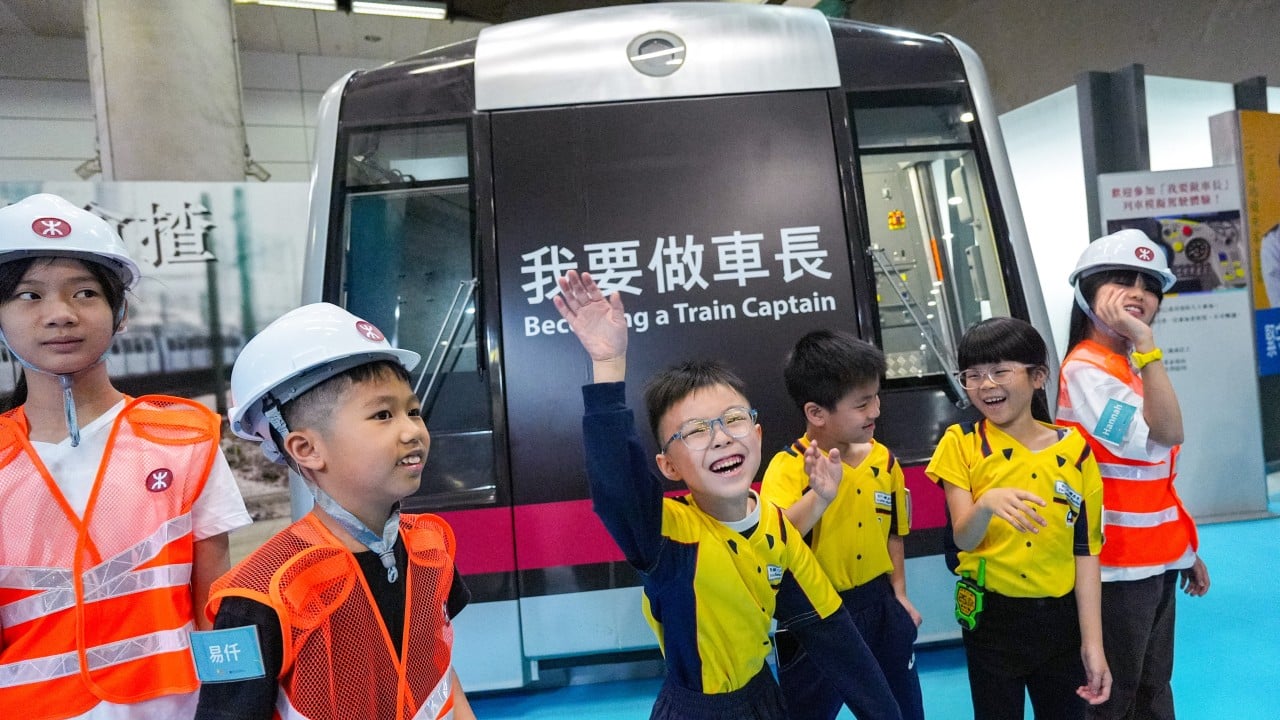
Hong Kong’s MTR Corporation is pivoting from its reputation as a relentless, modernizing machine to an unlikely guardian of the city's transit history. The rail giant recently launched a multi-year exhibition at the Hung Hom Station, showcasing retired rolling stock and a driving simulator that allows the public to step into the shoes of a train captain. This move serves as more than just a weekend activity for families. It is a calculated response to a growing public outcry over the rapid disappearance of the city’s industrial identity. By opening the "Station Rail Voyage" exhibition, the MTR is attempting to bridge a widening gap between its high-tech future and the sentimental attachment citizens have to the steel and grease of the past.
The centerpiece of this display isn't just a static piece of metal; it is the Yellow Head train. These first-generation electric multiple unit (EMU) trains served the East Rail Line for decades, transitioning from the colonial era into the handover and beyond. For many, these carriages represent the literal backbone of Hong Kong’s northern expansion. Seeing them preserved inside a station that has faced its own share of modernization controversies is a heavy, intentional choice by the corporation.
Engineering Nostalgia in a City of Constant Change
The logistics of preserving heavy rail equipment in one of the world's most expensive real estate markets are staggering. Most retired trains are destined for the scrap heap or, in rare cases, used as artificial reefs. Keeping them in a station environment requires a massive commitment of space and maintenance. The decision to house these relics at Hung Hom—a station that recently saw its long-distance platforms silenced by the transition to the Tuen Ma Line—repurposes underutilized infrastructure into a cultural asset.
It is a rare moment of reflection for a company usually obsessed with efficiency metrics and property development. The MTR operates with a precision that leaves little room for sentiment. Yet, the "Station Rail Voyage" signals a realization that brand loyalty isn't just built on 99.9% on-time performance. It is built on the shared experience of millions of commuters who grew up hearing the specific hum of a motor or the mechanical hiss of a sliding door.
The Driving Simulator and the Gamification of Transit
While the vintage trains cater to the older generation, the inclusion of a high-fidelity driving simulator targets a younger demographic. This isn't a simple arcade cabinet. It is a tool designed to show the complexity of operating a train through one of the densest urban environments on earth.
By allowing the public to sit in the captain’s seat, the MTR is subtly addressing a long-standing PR challenge: the perception that the trains "run themselves." In reality, the interplay between automated systems and human oversight is constant. The simulator demystifies the technical pressure of the job. It puts the user in control of a multi-ton vehicle where stopping distances are measured in hundreds of meters and every second counts during peak hour.
The Cost of Preservation Versus Progress
Critics often point out that the MTR is a property developer first and a transport provider second. This exhibition could be seen as a "heritage-washing" exercise, a way to soften the blow of demolishing older stations or replacing iconic rolling stock with standardized models. However, the depth of this exhibition suggests otherwise. The curators have gone beyond mere aesthetics, including components like the signaling equipment and even the specific types of seating that defined different eras of Hong Kong travel.
There is a financial reality at play here too. Maintaining a museum-grade collection is an overhead that brings in zero direct fare revenue. Yet, the "Rail Gen" initiative—the MTR's broader program for youth engagement—sees this as a long-term investment. They aren't just selling tickets; they are cultivating the next generation of engineers and technicians. The city is currently facing a labor crunch in skilled technical trades. What better way to recruit a future workforce than by letting a ten-year-old "drive" a train through a virtual version of their own neighborhood?
A Tale of Two Systems
The exhibition also highlights the technical evolution from the Kowloon-Canton Railway (KCR) era to the post-merger MTR. This distinction is vital for understanding the city's history. The KCR was once a distinct entity with its own culture and technical standards. When the two systems merged in 2007, much of that unique identity began to dissolve into the red-and-white MTR branding.
By showcasing KCR-era rolling stock, the MTR is finally acknowledging its predecessor’s contribution to the city’s growth. It is an admission that the story of Hong Kong rail didn't start with the opening of the Modified Initial System in 1979. It started with steam, then diesel, then the electrification of the line to the border. The exhibition includes artifacts that date back to when the rail was a lifeline for goods and livestock, not just office workers.
The Challenge of the "Yellow Head"
Preserving the Yellow Head train presented unique challenges. These units were built in an era when materials like asbestos were common in insulation, and the electrical systems were never designed to sit idle in a humid, underground environment. The restoration process involved stripping back decades of grime and ensuring the structures were safe for public boarding.
Walking through these carriages today is a sensory experience. The smell of the interior, the height of the grab handles, and the layout of the longitudinal seating are exactly as they were in the 1980s. It provides a stark contrast to the modern R-Train fleet currently running on the East Rail Line, which prioritizes passenger capacity and safety above all else.
Why This Matters Beyond the Tracks
Hong Kong is currently obsessed with its own history. As the city changes, there is a frantic effort to document what remains. We see this in the preservation of old neon signs and the battle to save "tong lau" tenement buildings. The MTR’s exhibition taps into this zeitgeist. It isn't just about trains; it is about the collective memory of a city that has always been in transit.
For the investigative eye, the real story is how the MTR will manage this transition from a purely functional utility to a cultural custodian. They have set a precedent. Now that they have shown they can preserve the Yellow Head, the public will inevitably ask what happens to the M-Trains (the iconic "Metro-Cammell" trains) when they are fully phased out over the next few years.
The Logistics of Public Access
The exhibition operates on a pre-registered basis, a move that prevents the chaos of overcrowding but also limits the reach of the display. This "scarcity" has turned the exhibition into a hot ticket, further elevating the status of rail heritage in the public eye.
The staff on-site aren't just security guards; many are retired MTR employees who volunteered to share their stories. This human element is what elevates the project. You might be looking at a piece of heavy machinery, but you are hearing about the night in 1992 when that specific train broke down during a typhoon and the crew had to walk the tracks to ensure passenger safety.
The Future of Hong Kong’s Industrial Relics
The success of the Hung Hom exhibition raises a critical question about the permanent home for these assets. Hong Kong lacks a dedicated, large-scale transport museum like those found in London, Tokyo, or York. The current Railway Museum in Tai Po is charming but physically limited by its historical site. It cannot house a full-length EMU train or a modern simulator.
The MTR is currently testing the waters. If the public interest remains high, it puts pressure on the government to consider a more permanent solution for industrial heritage. The city cannot continue to rely on temporary exhibitions to tell its most important stories. There is a clear appetite for a space where the evolution of the city's infrastructure is laid bare, showing the grit and the genius that allowed a mountainous island to become a global financial hub.
Every bolt and every seat in the Hung Hom exhibition is a testament to a period of unprecedented growth. It serves as a reminder that while we look forward to the Northern Metropolis and the next generation of autonomous rail, we are riding on the foundations laid by those who sat in the cabs of the Yellow Heads. The MTR has finally realized that you cannot build a future without respecting the machine that got you here.
The "Station Rail Voyage" is not a funeral for old tech; it is a long-overdue homecoming for the steel that built Hong Kong. Take a long look at the scuff marks on the floor of the old carriages. They are the only physical evidence left of the millions of journeys that defined this city’s last fifty years.

/cdn.vox-cdn.com/uploads/chorus_asset/file/7896743/Screen_Shot_2017_01_30_at_12.25.24_PM.png)