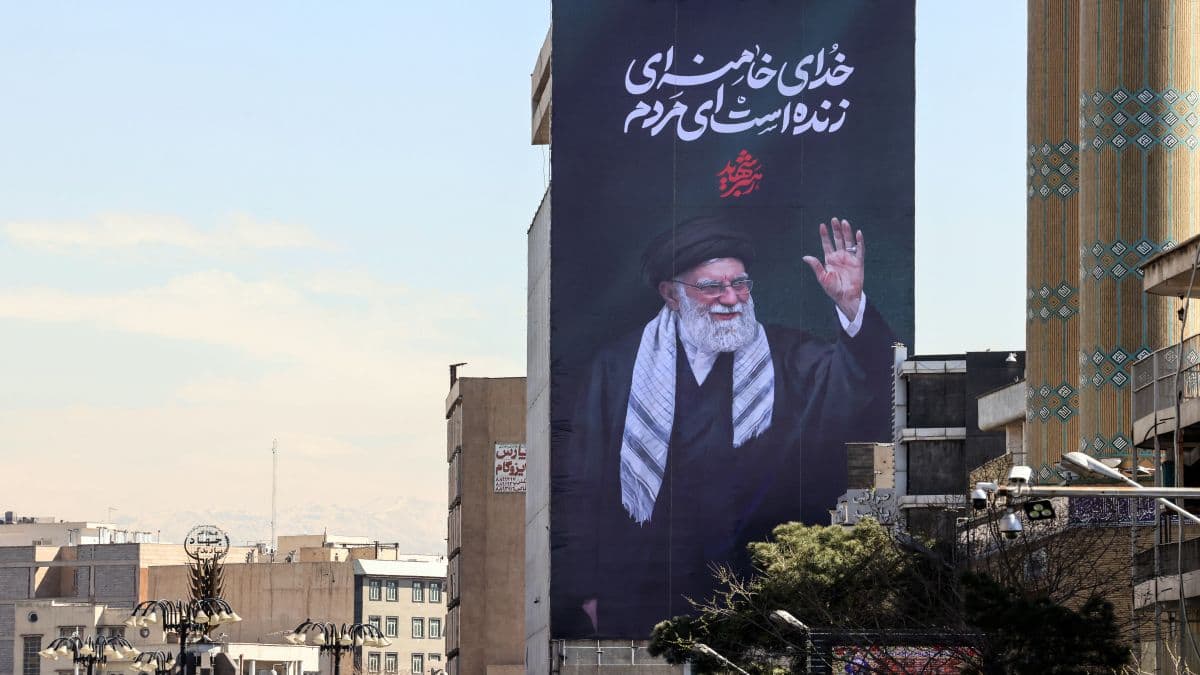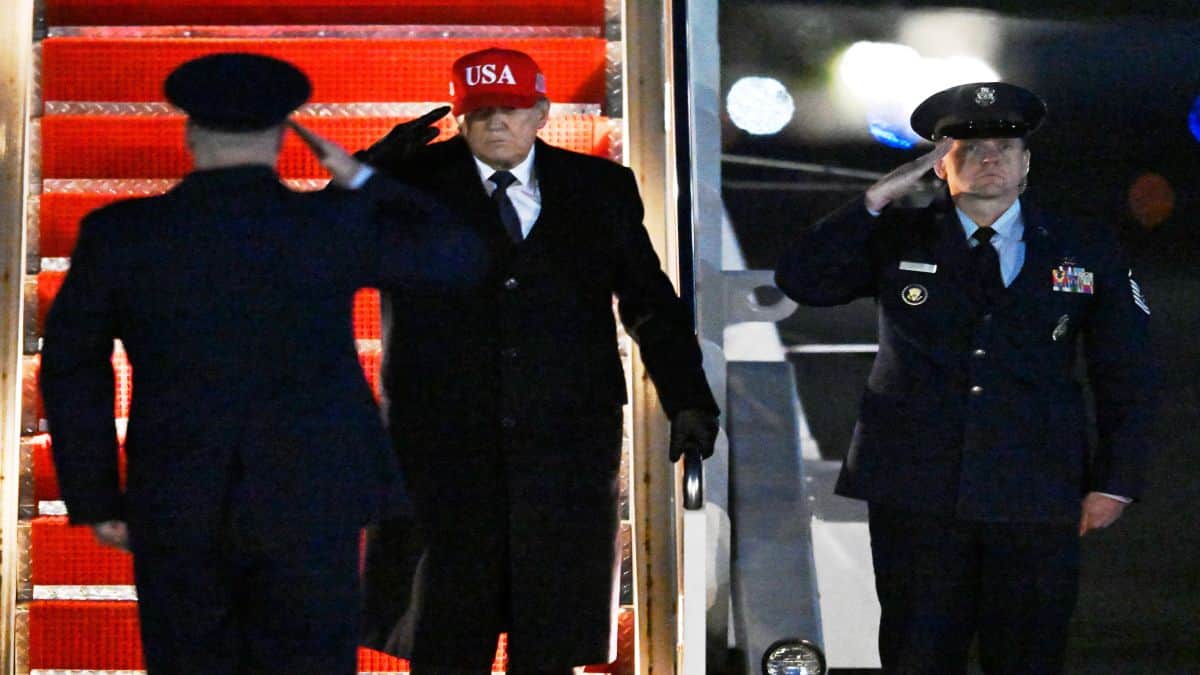
The strike on the al-Taba’een school complex in Gaza City, which local health officials report killed over 175 people, represents a catastrophic failure of intelligence, technology, or intent. While President Donald Trump quickly shifted the narrative toward Iranian technical incompetence, the reality of the strike reveals a much more complex and chilling failure of modern precision warfare. The incident has laid bare the limits of "surgical" strikes in densely populated urban environments and the political theater that follows mass casualty events. To understand how a single strike can claim nearly 200 lives, we have to look past the campaign trail rhetoric and into the ballistics, the targeting cycle, and the deteriorating quality of the munitions being deployed in this theater.
The core of the issue isn't just who made the missile. It is how the missile was used.
The Myth of the Surgical Strike
For decades, the defense industry has sold the world on the idea of the "surgical strike." We are told that GPS-guided munitions and sophisticated thermographic sensors have turned war into a scalp-level operation where combatants are removed with minimal "collateral damage." The al-Taba’een massacre proves this is a convenient fiction. When a munition is dropped on a structure housing thousands of displaced persons, the physics of the explosion ignore the intent of the operator.
Modern munitions like the GBU-39 Small Diameter Bomb (SDB) are designed to minimize footprint, but in an urban school setting, the "footprint" includes concrete shards, secondary fires, and the structural collapse of multi-story buildings. If the goal was to neutralize specific high-value targets supposedly hiding in the basement, the choice of ordnance and the timing of the strike—during morning prayers—suggests that "precision" was defined solely by hitting a set of coordinates, rather than protecting human life.
Ballistic Failure or User Error
The political finger-pointing toward Iran serves a specific purpose: it creates a buffer of plausible deniability. By claiming Iranian-made munitions are "inaccurate," political figures attempt to frame the high death toll as a technical glitch rather than a policy choice. However, forensic analysis of similar strikes in the region often points to a mix of Western-supplied guidance systems and locally modified delivery platforms.
Accuracy in modern warfare is measured by Circular Error Probable (CEP).
$$CEP = 0.59 \cdot (R_x + R_y)$$
Where $R_x$ and $R_y$ represent the standard deviations of errors along two perpendicular axes. For a high-end precision weapon, the CEP is often under five meters. If a weapon hits within five meters of a crowded prayer hall, it hasn't "missed." It has performed exactly as programmed. The horror of the school strike isn't that the weapons were inaccurate; it's that they were devastatingly accurate in a location where they should never have been used.
The Intelligence Vacuum
Every strike begins with a "target packet." This is a collection of data points—SIGINT (Signals Intelligence), HUMINT (Human Intelligence), and satellite imagery—that justifies the use of force. In the case of the Gaza school strike, the claim was that the facility served as an active command center for militant groups.
The problem with this intelligence is its shelf-life. In a fast-moving conflict, a "command center" can be a single person with a radio who left the building ten minutes before the bomb arrived. When the military relies on aged or low-confidence intelligence to greenlight strikes in "safe zones," the resulting massacre is a systemic certainty. We are seeing a breakdown in the verification process where the pressure to eliminate targets outweighs the requirement to confirm the absence of non-combatants.
The Logistics of Urban Ruin
We must also talk about the munitions themselves. As stockpiles of high-end, late-model precision weapons dwindle due to global demand and supply chain bottlenecks, older or "dumb" bombs retrofitted with guidance kits are being pulled from deep storage. These kits, such as the JDAM (Joint Direct Attack Munition), are reliable but not infallible.
A failure in the fin-actuator or a loss of GPS signal during the terminal phase can cause a weapon to veer off course. In a city like Gaza, a veer of fifty feet is the difference between a vacant lot and a crowded classroom. The rhetoric blaming Iranian manufacturing ignores the fact that the entire region is currently a laboratory for mismatched, aged, and experimental weaponry.
The Cost of Proximity
Urban warfare experts use the term "Proximate Lethality" to describe the danger posed to civilians even when a target is hit perfectly. When a school is used as a shelter, the density of people is so high that the blast pressure wave alone can be fatal across the entire floor of a building.
The physics of a blast in an enclosed space are governed by the Friedlander waveform, which describes the pressure jump and subsequent decay.
$$P(t) = P_s e^{-\frac{t}{t^}} (1 - \frac{t}{t^})$$
In this equation, $P_s$ is the peak overpressure. In a school hallway, this pressure reflects off walls, magnifying the trauma to internal organs. This is why the death toll in Gaza strikes is consistently higher than what might be expected from the weight of the explosives used. The architecture of the shelter becomes a weapon against those inside.
The Geopolitical Blame Game
Blaming Iran is a tactical move designed to shift the focus from the supplier of the bombs to the alleged supplier of the targets. It is a way to frame the conflict as a proxy war where "their" technology is the problem, while "our" technology is inherently moral. This ignores the reality on the ground: the rubble doesn't care who manufactured the fuse.
The school strike has fundamentally changed the diplomatic pressure. It has made it nearly impossible for international mediators to argue that "red lines" are being respected. When 175 people die in a single morning, the technical discussion about CEP and guidance fins becomes an insult to the victims. The failure is not in the wiring of the missile; it is in the ethical framework that allows a school to be classified as a legitimate target.
The next time a politician blames "inaccurate munitions" for a mass casualty event, look at the crater. If the crater is exactly where the military said the target was, the munitions weren't inaccurate. They were exactly what they were meant to be: instruments of total destruction.
Demand a full audit of the targeting data and the specific ordnance logs before accepting the narrative of a "technical mishap."