The global financial narrative suggests that emerging markets have grown a thick skin. According to the prevailing wisdom on Wall Street and in the City of London, these developing economies have spent the last decade fortifying their balance sheets, diversifying their energy sources, and weaning themselves off the volatile whims of Middle Eastern geopolitics. But this confidence is a dangerous veneer. As tensions between Iran and its regional adversaries oscillate between gray-zone skirmishes and the threat of open warfare, the vulnerability of the Global South is not disappearing. It is merely changing shape.
The core premise being sold to investors is that a "shock" from the Persian Gulf—specifically one involving Iran—is no longer the existential threat it was in the 1970s or even the early 2000s. Proponents of this view point to the rise of American shale, the transition to green energy, and the fact that many emerging nations now hold larger foreign exchange reserves. They are wrong. While the direct "oil price heart attack" may be less likely to kill a developing economy instantly, the secondary infections of debt servicing costs, currency devaluations, and fractured supply chains are more lethal than ever.
The Debt Trap Beneath the Surface
Emerging markets are walking into this period of geopolitical instability with a crushing weight of dollar-denominated debt. Unlike previous cycles, this debt is not just concentrated in sovereign bonds. It is buried in corporate ledgers and quasi-state entities. When Iran makes a move that threatens the Strait of Hormuz, the immediate reaction is not just a spike in Brent crude. It is a flight to quality.
Investors pull capital out of "risk assets"—a category that includes almost every developing nation—and pile into the U.S. Dollar. This "dollar smile" effect creates a pincer movement on countries like Turkey, Egypt, and Pakistan. First, their energy import bills rise because oil is priced in dollars. Second, the cost of paying back their existing loans jumps because their local currencies are crashing against that same dollar. They are paying more for the fuel they need to run their factories while simultaneously seeing their debt principal swell in real terms.
This is a structural flaw, not a temporary market fluctuation. Many of these nations have burned through the "buffers" they built during the easy-money era of the 2010s. When a drone strike hits a processing plant in Abqaiq or a tanker is seized in the Gulf, the algorithmic trading desks in New York don't stop to ask if Vietnam or Brazil has improved its manufacturing base. They sell.
The Strait of Hormuz and the Logistics of Despair
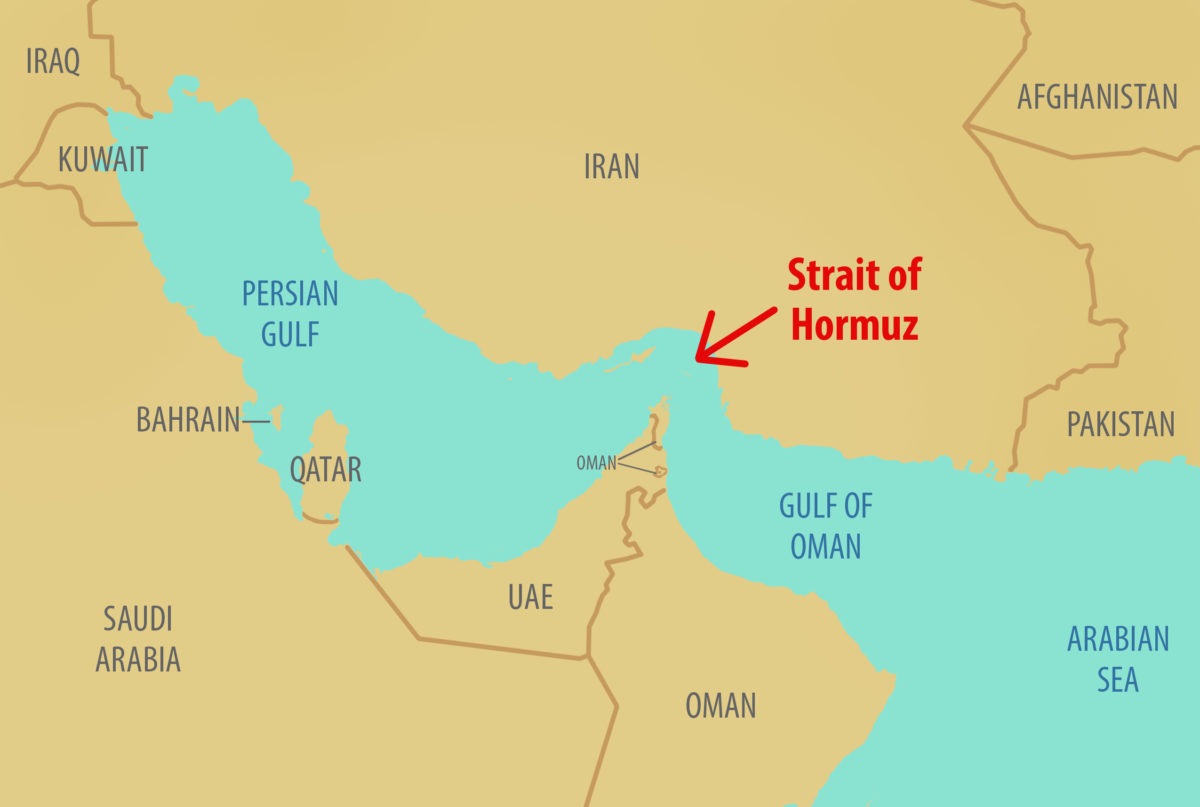
The geography of the Persian Gulf remains the world’s most significant choke point. Approximately 20% of the world’s liquid petroleum passes through the Strait of Hormuz. For an emerging giant like India, which imports over 80% of its oil, there is no "less danger" scenario.
The Refined Product Reality
It isn't just about crude oil anymore. The modern industrial economy runs on refined products and Liquefied Natural Gas (LNG). Iran knows this. Their strategy is no longer just about closing the Strait—an act that would be a declaration of war against the entire world—but about "calibrated friction." By making insurance premiums for shipping unmanageable and causing delays in the delivery of chemical feedstocks, Iran can choke the industrial output of East Asia without firing a single missile at a refinery.
Consider the "just-in-time" manufacturing hubs in Southeast Asia. These economies operate on thin margins. A sustained 15% increase in shipping insurance and a 10% increase in energy costs doesn't just lower their GDP growth by a fraction of a percent. It wipes out the profit margins of their primary exporters, leading to layoffs and social unrest. This is the "how" of the modern Iranian shock. It is a slow-motion strangulation of supply chains rather than a sudden explosion.
The China Factor and the Illusion of Neutrality
Many analysts argue that China’s heavy investment in Iran acts as a stabilizer. The theory is that Tehran will not bite the hand that feeds it by causing a global economic meltdown that hurts Beijing. This overlooks the internal desperation of the Iranian regime and the shifting priorities of the Kremlin.
Russia and Iran have formed a "sanction-buster" alliance that thrives on chaos. For Moscow, higher energy prices caused by Middle Eastern instability are a lifeline for its war machine in Ukraine. For Tehran, regional leverage is a survival mechanism. If the Iranian leadership perceives a domestic threat or an imminent strike on its nuclear infrastructure, the economic interests of China will be a secondary concern.
Emerging markets that have hedged their bets on Chinese patronage are finding that Beijing’s umbrella has holes. China is an oil importer. If the Gulf burns, China will prioritize its own internal stability and its "Strategic Petroleum Reserve" over the economic health of its Belt and Road partners in Africa or Latin America. The "protection" these nations think they have is an illusion.
The Social Cost of the Risk Premium
We must look at the human and political cost of these "shocks." In the West, a spike in oil prices means higher prices at the pump and perhaps a grumpy electorate. In an emerging market, it means the end of food subsidies.
Countries like Jordan, Tunisia, and Lebanon are balance-of-payment disasters waiting to happen. When geopolitical risk premiums rise, the first thing to go is the government's ability to subsidize bread and fuel. We saw this during the Arab Spring and again during the 2022 inflationary spike. Iran understands that its regional influence is amplified by the fragility of its neighbors. By keeping the region on a knife-edge, Tehran forces its rivals to spend billions on defense and internal security—money that should be going into economic development.
The Failure of Diversification
There is a loud contingent of "green" optimists who claim that the transition to renewables is insulating the developing world from oil shocks. This is a half-truth at best. The infrastructure required for a green transition—solar panels, wind turbines, lithium-ion batteries—requires massive amounts of capital and stable global trade.
When a conflict involving Iran looms, the "cost of capital" skyrockets. Projects that were viable at a 5% interest rate become impossible at 12%. Furthermore, the mining and processing of the minerals needed for these technologies are themselves energy-intensive processes. You cannot build a green future on a foundation of expensive, volatile energy and high-interest debt.
The Asymmetric Weaponry of the Future
Iran has pioneered the use of low-cost, high-impact asymmetric warfare. A drone that costs $20,000 can disable a multi-billion dollar piece of infrastructure or force a million-dollar interceptor missile to be fired. This asymmetry is now being exported.
From the Houthis in Yemen to various militias across the Levant, the "Iranian model" of disruption is being decentralized. This means the "danger" is no longer localized to a single map coordinate. It is a distributed network of risk. For an investor looking at a 10-year bond in an emerging market, this is a nightmare. How do you price the risk of a non-state actor in a third country using Iranian technology to disrupt a shipping lane?
You don't. You simply add a "chaos premium" to the interest rate you charge that country.
The False Narrative of the Buffer
The "more debt, less danger" argument is a sedative for the nervous investor. It relies on the idea that because we haven't seen a total systemic collapse yet, the system is robust. This is survivorship bias. The buffers are thinner than they look because the threats have become more sophisticated.
The reality is that emerging markets are more integrated into the global financial system than ever before, which makes them more—not less—vulnerable to the contagion of a geopolitical crisis. A shock in the Persian Gulf travels at the speed of a fiber-optic cable through the currency markets before it ever reaches a tanker at sea.
Central banks in the developing world are running out of maneuvers. They cannot raise rates indefinitely to protect their currencies without crushing their domestic economies. They cannot spend their reserves forever. And they cannot ignore the fact that the geopolitical map is being redrawn by actors who view economic stability as a Western luxury they are happy to dismantle.
The next time a headline suggests that the world is "ready" for an Iranian escalation, look at the spread on Kenyan bonds or the valuation of the Thai Baht. The markets aren't signaling resilience. They are signaling a quiet, desperate bracing for a storm that no amount of debt can outrun.
Governments must stop pretending that "managing" the debt is the same as solving the underlying vulnerability. True resilience requires a total decoupling from the volatility of the fossil-fuel-geopolitical complex—a task that most emerging markets are currently too broke to even begin. The danger hasn't diminished. It has simply moved from the oil fields to the central banks, and that is a much harder place to fight a fire.