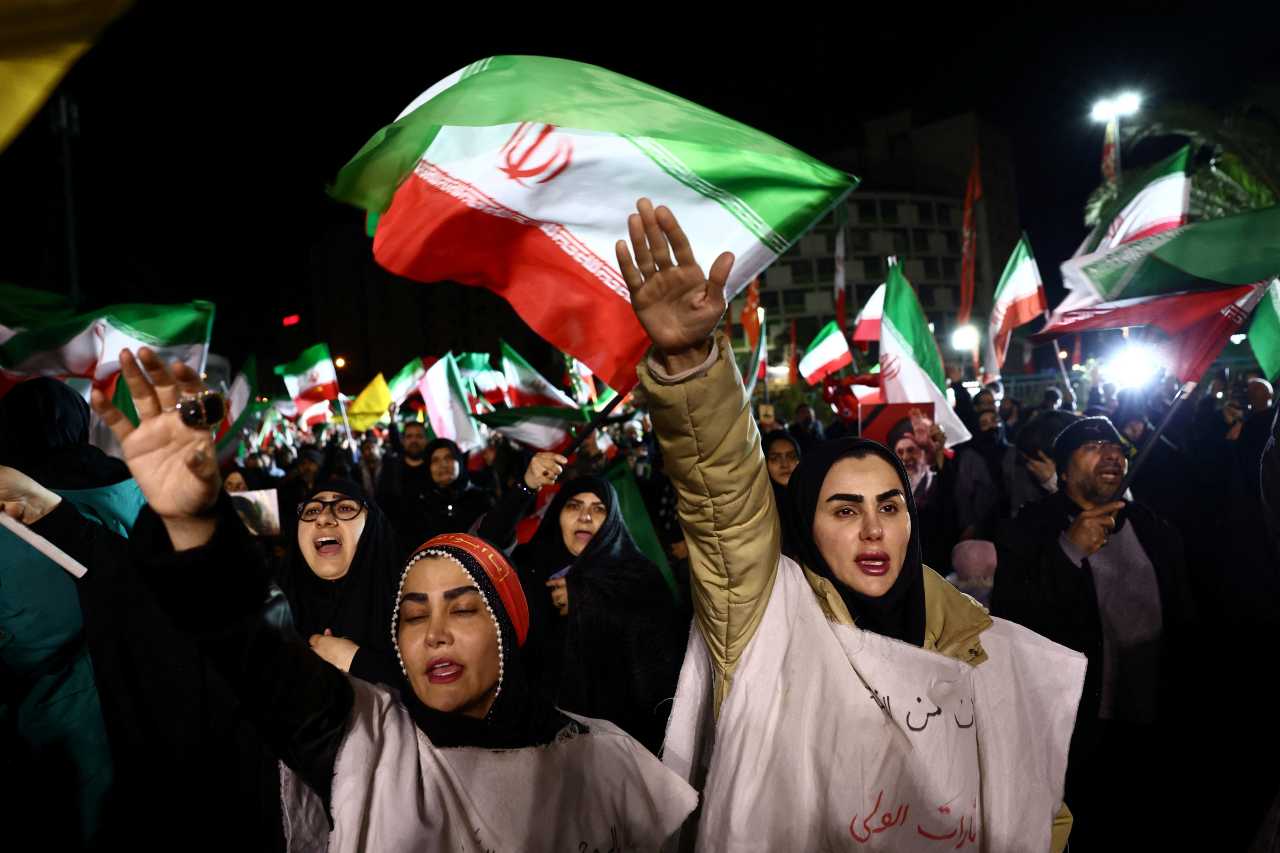
The mainstream media is currently obsessed with a press release. Iran issues a statement about "using all tools to secure national interest," and suddenly every geopolitical analyst on your feed acts as if we’ve hit a historic crossroads. They treat these declarations like a chess move. They aren't. They are the background noise of a machine that has already won the psychological war by convincing the West that "negotiation" is a goal rather than a stalling tactic.
If you believe the standard narrative, we are watching a delicate dance of diplomacy where sanctions and treaties serve as the primary weights and measures. This is a fundamental misunderstanding of how power functions in the Middle East. The "lazy consensus" suggests that Iran is backed into a corner, desperate to trade its nuclear or regional ambitions for economic relief. This view is not only wrong; it’s dangerously naive.
The Leverage Illusion
Western diplomats love the word "leverage." They think they have it because they control the SWIFT banking system and the price of oil. But leverage is only useful if your opponent plays the same game. While Washington obsesses over percentage points of GDP and the technicalities of the JCPOA, Tehran is busy building a "ring of fire" that renders traditional diplomacy obsolete.
When Iran says they will use "all tools," they aren't talking about a seat at a conference table in Geneva. They are talking about a decentralized network of asymmetric assets that no treaty can regulate. You cannot negotiate away a militia’s ideological loyalty with a trade agreement. You cannot "inspect" a shadow economy that has spent forty years learning how to bypass every barrier the Treasury Department throws at it.
The reality? The status quo suits the Iranian establishment perfectly. Chaos is their primary export, and chaos doesn't require a signed contract.
Why Sanctions are a Failed Metric
We’ve been told for decades that sanctions will eventually "bring them to the table." I’ve watched policymakers pour over satellite imagery of empty factory lots in Tehran, claiming victory. They miss the point. Sanctions don’t weaken a revolutionary state; they consolidate it.
When you cut off a nation from the global market, you don't empower the "moderates." You empower the smugglers, the military-industrial complex, and the hardliners who control the black markets. In this environment, the "national interest" becomes synonymous with the survival of the elite. The suffering of the middle class is not a bug of the Iranian system; it’s a feature that ensures dependency on the state.
Think of it this way: If you are an official in the IRGC, do you want a deal that opens the country to Western competition and transparency? Of course not. You want a state of "permanent negotiation"—a perpetual limbo where you can blame the "Great Satan" for economic woes while you rake in billions through gray-market oil sales to East Asia.
The Nuclear Program is a Distraction
Everyone is looking at the centrifuges. It’s the shiny object meant to keep the West distracted while the real work happens on the ground. The nuclear program is not a weapon; it’s a permanent insurance policy. The goal isn't necessarily to build a "device" tomorrow; it’s to remain five minutes away from building one forever.
This "threshold status" provides more power than an actual bomb ever could. A bomb gets you isolated like North Korea. Threshold status gets you billions in frozen assets released every time a Western administration needs a "win" for the news cycle. It’s the ultimate subscription model for geopolitical relevance.
The Asymmetric Advantage
While the West argues about enrichment levels, Iran has effectively reshaped the map of the Middle East. From the Bab al-Mandab Strait to the Mediterranean coast, they have established a presence that doesn't rely on formal statecraft.
- Proxies as Sovereignty: In Lebanon, Iraq, and Yemen, the lines between "militia" and "government" have blurred.
- The Drone Revolution: Low-cost, high-impact technology has leveled the playing field. A $20,000 drone can take out a billion-dollar air defense system or a vital oil refinery.
- Cyber Persistence: This isn't about "hacking." It’s about a constant, low-level disruption of Western infrastructure that never quite reaches the threshold of war but keeps the adversary on the defensive.
These are the "tools" mentioned in the statement. They aren't rhetorical devices. They are kinetic realities.
The Diplomacy Trap
The biggest mistake we make is assuming that "no deal" is a failure for Iran. In truth, the negotiation process itself is the victory. Every time a high-ranking Western official flies to Vienna or Doha, it validates the Iranian strategy. It proves that despite the rhetoric, the West is terrified of the alternative.
Imagine a scenario where the West simply stopped caring about the statement. Imagine if, instead of reacting to every press release from the Foreign Ministry, the global powers addressed the actual logistical networks that sustain the regime’s influence. But that requires a level of long-term commitment that doesn't fit into a four-year election cycle.
The Iranian leadership knows this. They play the long game while we play the news cycle.
Stop Reading the Statements
When you see a headline about Iran "securing national interests," understand what is actually being said. They are telling you that the era of Western-led regional order is over. They aren't asking for a seat at the table; they are building their own table in a different room, and they’ve invited half the neighborhood.
The "tools" are already in use. The "interests" are already being secured. The "negotiations" are just the smoke and mirrors used to keep the bureaucrats busy while the map continues to shift.
Stop looking for a breakthrough. There won't be one. There is only the slow, grinding reality of a power that has learned how to thrive in the gaps of a broken international system.
The West keeps looking for an exit ramp. Iran is busy building a fortress on the highway.