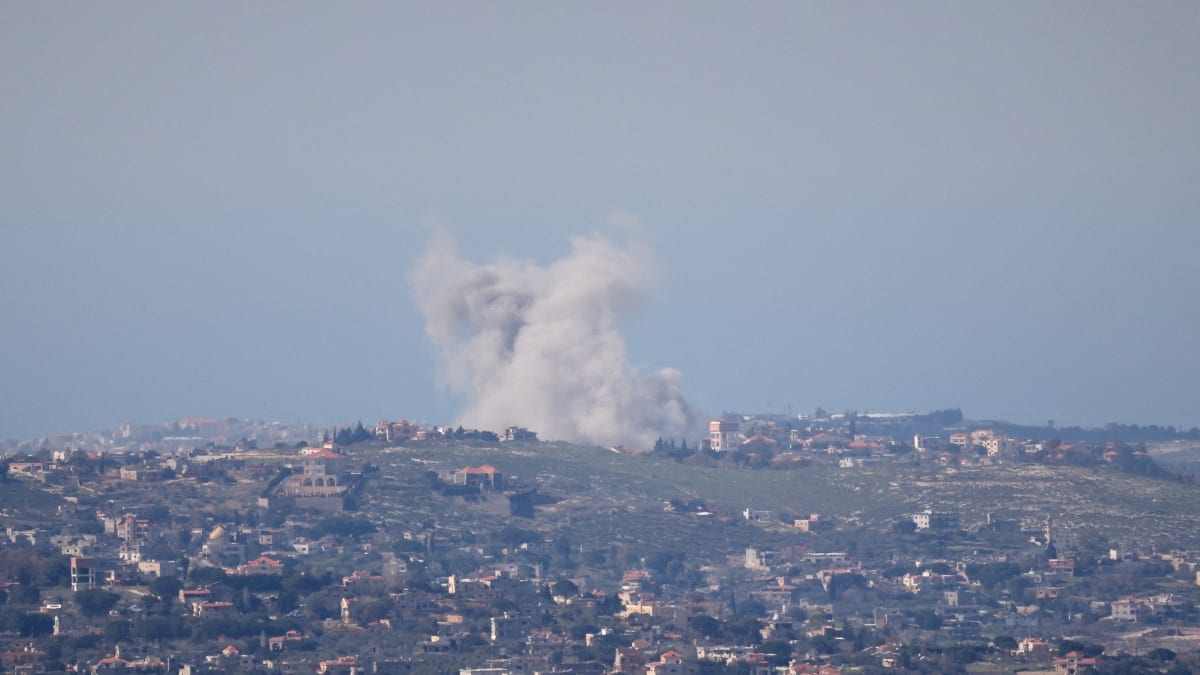
The headlines are screaming about a "historic" move. The Lebanese government has supposedly banned Hezbollah’s military activity, citing actions "outside the law" in the wake of Israeli strikes. If you believe this marks a shift in the regional power dynamic, you haven't been paying attention to the last thirty years of Levantine history. This isn't a policy shift. It's a PR stunt designed to keep the IMF checks coming and the Western embassies from packing their bags.
Most analysts are treating this as a sudden spine-growing moment for the Lebanese state. They are wrong. To understand why this ban is functionally meaningless, you have to stop looking at Lebanon as a traditional Westphalian state and start looking at it as a collection of competing franchises where the loudest shareholder also happens to have the most missiles.
The Sovereign Delusion
The "lazy consensus" suggests that a decree from Beirut carries weight in the south. It doesn't. When the Lebanese government "bans" Hezbollah's military activity, they are essentially a tenant telling the landlord they aren't allowed to use the basement.
Hezbollah isn't a "state within a state." It is the infrastructure upon which the current Lebanese political class survives. The Lebanese Armed Forces (LAF) and Hezbollah have operated in a state of "coordination" for decades. I’ve sat in rooms with regional security advisors who privately admit that the LAF’s primary role in the south hasn't been to disarm Hezbollah, but to provide a veneer of legitimacy that prevents total state collapse.
When you see a headline about a "ban," you are seeing a tactical retreat in language, not a strategic shift in hardware.
Why This Ban is a Mathematical Impossibility
Let’s look at the raw mechanics of power. For a ban to be effective, you need two things: the monopoly on the use of force and the logistical capability to enforce it. The Lebanese government has neither.
- The Force Gap: Hezbollah’s veteran fighting force and its arsenal of precision-guided munitions dwarf the capabilities of the national army. You don’t "ban" an entity that can outgun you in your own capital.
- The Sectarian Veto: The Lebanese political system is built on a delicate confessional balance. Any genuine attempt to forcibly disarm Hezbollah would trigger a sectarian civil war that would make the 1975–1990 conflict look like a playground dispute.
- The Social Contract: In the south, Hezbollah provides the schools, the clinics, and the security that the central government abandoned decades ago. You cannot legislate away a social safety net when you have nothing to replace it with.
Imagine a scenario where the LAF actually tried to set up checkpoints to seize Hezbollah assets. Within hours, the political facade in Beirut would crumble as ministers resigned and the streets erupted. The government knows this. The "ban" is a document intended for consumption in Washington and Paris, not in Dahieh or Nabatieh.
The "Outside the Law" Irony
The irony of citing "outside the law" is thick enough to choke on. Hezbollah has been the law in southern Lebanon since the 1980s.
The competitor's piece focuses on the "illegality" of Hezbollah’s strikes. This misses the point. In the eyes of their supporters, Hezbollah’s legitimacy isn't derived from a piece of paper in Beirut; it's derived from the concept of Muqawama (Resistance). To a significant portion of the population, the government’s failure to defend the borders is what is actually "outside the law."
The status quo is a theater of the absurd. The government denounces the group in the morning and relies on its political wing to pass a budget in the afternoon.
Dismantling the "People Also Ask" Nonsense
- Will the Lebanese Army disarm Hezbollah? No. To do so would require a level of domestic consensus and external military support that simply does not exist. The LAF is a stabilizing force, not an expeditionary one meant for internal conquest.
- Is Lebanon finally siding with Israel? Absolutely not. This move is about self-preservation, not a diplomatic pivot. Beirut is trying to avoid being turned into rubble by association. It’s a "it wasn't us" defense, not a "we’re on your side" handshake.
- Does this stop the war? It doesn't change the calculus of the IDF or the IRGC by a single millimeter.
The Dangerous Truth about International Aid
Why issue the ban now? Follow the money. Lebanon is a failed state in every sense of the word except for its seat at the UN. The economy is a smoking crater. The banking sector is a Ponzi scheme that finally collapsed.
For the Lebanese political elite to receive any form of international bailout or reconstruction funds, they have to demonstrate "sovereignty." This ban is a compliance checklist item. It’s the political equivalent of checking a box on a Terms of Service agreement that you have no intention of reading, let alone following.
The downside to calling this out? It ruins the diplomatic narrative. It forces the West to admit that the billions spent "strengthening state institutions" in Lebanon have yielded a government that can only issue press releases while an Iranian-backed militia dictates the country’s fate.
The Only Path Forward (That Nobody Wants)
If you actually wanted to "ban" Hezbollah, you wouldn't do it with a decree. You would do it by making the Lebanese state more useful than the militia.
- Financial Autopsy: You would have to gut the central bank and replace the entire political class that is currently shielded by Hezbollah's guns.
- Infrastructure Dominance: The state would have to rebuild the south better and faster than Hezbollah's Jihad al-Bina construction arm ever could.
- Security Integration: You would have to offer Hezbollah's rank-and-file a legitimate path into a national defense structure that isn't beholden to sectarian quotas.
None of this is happening. Instead, we get a "ban."
Stop reading the news as if it’s a series of legal developments. Read it as a series of survival signals. Lebanon isn't asserting its authority; it's begging for its life while pretending it still has the keys to the house.
If you’re waiting for the "ban" to manifest as a change on the ground, don't hold your breath. The missiles will still fly, the IAF will still strike, and the politicians in Beirut will still pretend they are in charge of something more than a few square blocks of administrative offices.
The law in Lebanon isn't what is written in the books. The law is what you can enforce with a Grad rocket.
Buy the narrative of a "sovereign crackdown" if you want to feel better about the chaos. But if you want to understand the Middle East, recognize a desperate bluff when you see one.
Go ahead and refresh the feed. You’ll see more "bans," more "condemnations," and more "emergency meetings." None of it changes the fact that the Lebanese government is a ghost haunting its own ruins.


