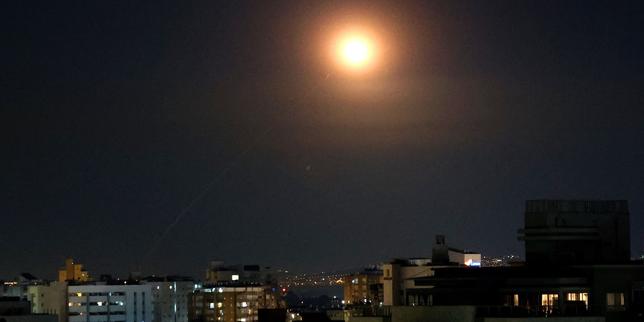
The headlines are obsessed with the optics of rescue. They want you to look at the tarmac in Paris, at the weary faces of repatriated citizens, and feel a sense of resolution. It’s a classic distraction. While mainstream outlets track flight paths and count suitcases, they are missing the brutal reality of the chess pieces being moved in the Levant. If you think these evacuations are merely humanitarian "safety measures," you’ve already fallen for the PR.
Evacuations aren't just about safety; they are a loud, geopolitical signal that the diplomatic floor has collapsed. When a Western power pulls its people, it isn't just protecting lives—it is clearing the battlefield to allow for a higher threshold of violence.
The Evacuation Fallacy
The "lazy consensus" in modern reporting suggests that repatriation is a sign of de-escalation or a "last resort" before peace talks. That is a lie. In reality, large-scale repatriations are a logistical green light for intensified military operations. By removing their citizens from the line of fire, Western nations are effectively telling regional actors: "The human shields of our passports are gone. Do your worst."
I’ve spent a decade watching these cycles repeat. In 2006, in 2011, and again today. The moment the civilian flights stop and the military charters land, the rules of engagement shift. Media outlets frame this as "protecting our own," but the strategic subtext is "unburdening our allies."
If France or the US truly believed in a diplomatic off-ramp, they would keep their civilian presence as a stabilizing friction. Pulling them out is the ultimate admission that the "large waves" of strikes reported by the IDF aren't just a response—they are a new baseline.
Why Your "Regional Stability" Data is Garbage
Most analysts are still using 20th-century models to predict Middle Eastern stability. They look at state-on-state capability and assume rational deterrence. They’re wrong. We are currently witnessing the total decoupling of military action from political objectives.
- The Sunk Cost of Air Superiority: Israel’s "large waves" of strikes are often characterized as tactical successes. But look at the math. If you drop $100 million in precision-guided munitions to destroy $2 million worth of decentralized drone launchers, you aren't winning an attrition war. You are hemorrhaging capital for a headline.
- The Intelligence Gap: The media reports "targets hit" as if it’s a scoreboard. In the intelligence community, we know that hitting a target is the easy part. Knowing if that target actually mattered to the enemy’s long-term operational capacity is where the consensus fails.
- The Proxy Paradox: You cannot "cripple" a network like the one Iran has built through air power alone. These are hydras. Cut one head, and the logistical burden simply shifts to a different node in the "Axis of Resistance."
The Brutal Truth About "Surgical" Strikes
The term "surgical strike" is a marketing term, not a military one. It’s designed to make the public feel better about the inevitable collateral damage. When Israel announces a "large wave" of strikes on Iranian interests, the mainstream press treats it as a contained event.
Let’s be precise. In an urban or semi-urban environment, there is no such thing as a contained strike when the target is an embedded proxy. $F_{net} = ma$ applies to debris just as much as it does to the missile. The kinetic energy released in these "surgical" operations creates a vacuum of power and a surge of radicalization that no amount of precision can mitigate.
If you want to understand the current conflict, stop looking at the maps of where the bombs land. Start looking at the logistical chains that remain untouched. The strikes are theater. The real war is being fought in the banking systems of Nicosia, the shipping lanes of the Red Sea, and the dark fiber networks of Tehran.
The Repatriation Industry
There is a massive, unspoken economy behind these evacuations. Private security firms, insurance underwriters, and logistics conglomerates make more money during a "crisis" than they do during peace.
I’ve seen governments pay 5x the market rate for charter flights because they waited until the last possible second to trigger an evacuation order. This isn't incompetence; it’s a feature of the system. The "emergency" creates a state of exception where oversight vanishes and budgets explode.
When you see a report about the "first French citizens" landing in Paris, don't just think about their safety. Think about the millions of euros transferred to private contractors to make that photo-op happen. We are subsidizing the failure of our own foreign policy.
The Question You Aren't Asking
People always ask: "When will the strikes stop?"
The better question is: "Why would they?"
For the current Israeli administration, perpetual conflict is a survival mechanism. For Iran, it’s a way to test Western resolve without ever putting a single Iranian soldier at risk. For the West, it’s a convenient way to justify defense spending and maintain a presence in a region that is increasingly looking toward the East.
The status quo isn't broken. It’s working exactly as intended for the people at the top. The only people for whom it’s "failing" are the civilians on the ground and the taxpayers funding the "rescue" flights.
Stop Watching the Tarmac
The next time you see a news ticker about "rapatriés" or "vagues de frappes," ignore the emotional hook.
- Look at the fuel prices: Not the ones at your local pump, but the futures for delivery in six months. That’s the real indicator of whether the market believes a wider war is coming.
- Watch the embassies: If the diplomats stay but the teachers and engineers leave, it’s a skirmish. If the diplomats burn their files, it’s a war.
- Check the currency: The rial and the shekel tell a truer story than any government spokesperson.
The media wants you to believe this is a tragedy with a beginning, middle, and end. It’s not. It’s a permanent state of managed chaos. The evacuations are just a costume change between acts.
The "large wave" of strikes isn't a climax. It's a placeholder. It's what you do when you have no real strategy but need to look like you're in control. While Paris welcomes its citizens back with cameras rolling, the real infrastructure of the next decade of conflict is being laid down in the silence between the explosions.
Get comfortable with the chaos. It’s the only thing that’s actually "robust" in this entire mess.
Stop waiting for the "conclusion" to this story. There isn't one. There are only more flights, more strikes, and more taxpayers footing the bill for a theater production that never closes.
Go look at the shipping manifests in the Persian Gulf if you want the truth. The rest is just noise for the evening news.